
Israel’s Election Ignores Its Riskiest Foreign Bet
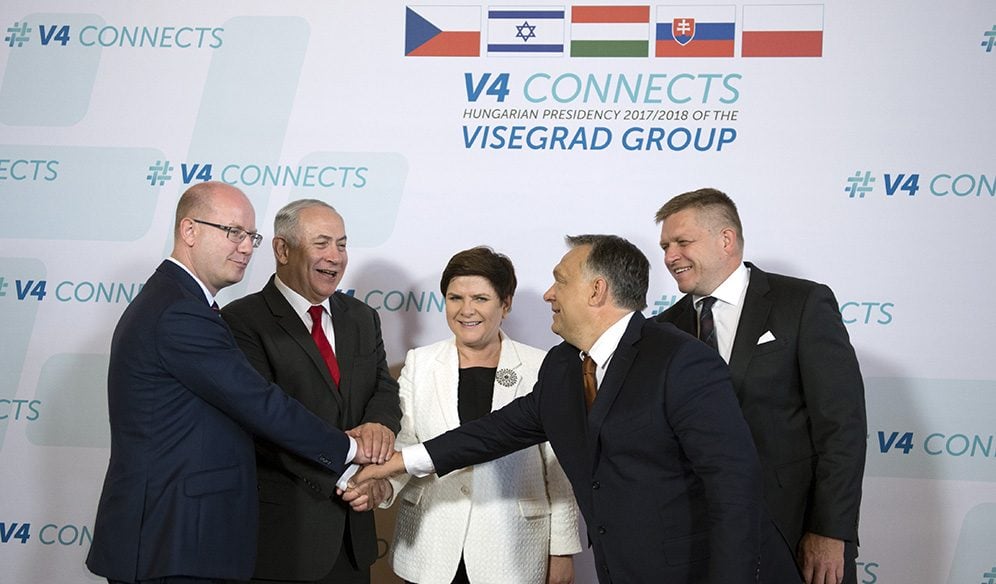
Whoever wins Israel’s election on October 27th will inherit a bet on Europe’s nationalist right. It is a bet on factions rather than states, and the odds are poor.
For sixteen years Viktor Orbán was the most useful friend Israel had in the European Union. Hungary blocked joint statements critical of the war in Gaza, watered down others and, when the International Criminal Court issued a warrant for Binyamin Netanyahu, simply left the court so that Israel’s prime minister could visit Budapest in comfort. On April 12th Hungarian voters ended all that. Péter Magyar, the victor, spoke warmly of a “special relationship” with Israel. He then added that Hungary could no longer be counted on to veto EU decisions, and that it would rejoin the ICC.
It is tempting to put the loss down to bad luck. It was something more instructive: the predictable result of a strategy that has quietly replaced one of the oldest rules of Israeli statecraft. Israel used to look for friends among states. It now looks for them among factions. Factions, unlike states, lose elections. In three days Israelis go to the polls themselves, in a race that is close to a dead heat: a Maariv poll on October 2nd put Mr Netanyahu’s bloc on 51 seats and the opposition, led by Gadi Eisenkot, a former army chief, on 53. Neither seems able to reach the required majority of 61. The campaign has barely mentioned Israel’s foreign alignments. Whoever forms the next government will have to.
From nations to factions
For most of its history the “Israel question” divided countries from one another. Some capitals were sympathetic, others cool, and the map shifted slowly with oil prices and cold-war loyalties. Within each country, though, support tended to be bipartisan. German chancellors of left and right alike called Israel’s security a matter of state; in Washington, backing Israel was one of the few things both parties agreed on. That durability, support which outlasted changes of government, was Israel’s real diplomatic asset.
It has eroded fast. The dividing line now runs through countries rather than between them. In a Gallup poll in February, 65% of American Democrats said they sympathised more with the Palestinians and just 17% with the Israelis; 70% of Republicans took Israel’s side. The partisan gap is not new, but it is now nearly three times its average between 2001 and 2023. In Europe the sorting has been formalised. Likud is the first observer member of Patriots for Europe, a group in the European Parliament founded by Mr Orbán and led by Jordan Bardella of France’s National Rally. Amichai Chikli, Israel’s diaspora minister, hosts conferences whose guest lists read like a directory of the continent’s nationalist right.
Who moved first
Israel’s defenders insist that it did not abandon the left; the left abandoned Israel. They have a point. Progressive sympathy began draining away long before Mr Netanyahu and Donald Trump discovered each other, hastened by the collapse of the peace process after 2000, an occupation that came to look permanent and a string of wars in Gaza. Left-wing hostility to Israel, and the antisemitism that sometimes travels with it, are real. Nor did Israel make the first move towards the far right. In 2010 Austria’s Freedom Party, Belgium’s Vlaams Belang and the Sweden Democrats arrived in Israel to sign a “Jerusalem Declaration” naming Islam as the common foe. Israeli officials kept them at arm’s length.
The arm has since bent. Mr Netanyahu’s address to Congress in 2015 against Barack Obama’s nuclear deal with Iran, arranged with the Republican leadership, treated one American party as Israel’s own. Years of intimacy with Mr Trump followed, then party-to-party ties in Europe. Each step told centre-left voters that supporting Israel meant siding with their domestic opponents. That is how a policy dispute becomes an identity. Polls cannot prove which way causation runs. But the pattern looks like a loop: the left drifted, Israel leaned right, the left drifted further. Only one side can break it. Israel cannot set the ideology of Western progressives; it does choose its own friends.
Three strategic costs
The trouble with the new friendships is less moral than strategic. They cut against the logic Israel has followed for decades, in three ways.
The first is fragility. During the cold war Israel’s “periphery doctrine” yoked it to the Shah’s Iran, Kemalist Turkey and Haile Selassie’s Ethiopia. Those partnerships rested on regimes rather than national interests, and died with them. Partnerships with parties are flimsier still: no revolution is required to end them, merely a bad night at the polls, as Budapest showed.
The second is Russia. Israel’s gravest threat is Iran, and Iran’s most important great-power backer is Russia. Yet many of Israel’s new European friends are the continent’s most Kremlin-friendly politicians. The European mainstream, which Israel increasingly treats as hostile, has meanwhile been tightening the screws on Tehran; in April EU foreign ministers agreed to widen sanctions and insisted that any deal must cover missiles and proxies as well as the nuclear programme.
The third is the nature of populism itself. Nationalist populists need an enemy, an outsider or elite on whom to blame the nation’s ills. For now Muslims and migrants fill that role, and Israel is cast as a fellow front-line state. But casting can change. Several of Israel’s new friends grew out of movements with antisemitic roots: Austria’s Freedom Party was founded by former Nazis, and Jean-Marie Le Pen, who founded what is now the National Rally, called the gas chambers a “detail” of history. A politics that runs on scapegoats can always find a new one, and in Europe Jews have played that part before. Israel is staking its standing on the hope that it will not be next.
The case for, and the arithmetic against
The best case for Mr Chikli’s courtship is not foolish. European governments have long been warmer towards Israel than European voters. As publics cool, elite goodwill becomes a wasting asset. Nationalist parties offer what governments cannot: a growing electorate that actually likes Israel. On this view the bet is not on regimes but on a rising coalition.
The arithmetic says otherwise. Sanctions on violent settlers require unanimity among the EU’s 27 members, which is where a single friendly government helps. But the measure that would hurt Israel most, a partial suspension of its trade privileges under the EU–Israel Association Agreement, needs only a qualified majority. A handful of small, nationalist-led states cannot stop it. What has stopped it so far is Germany and Italy, the former being a mainstream government, whose patience the far-right flirtation tests.
Nor are the new friends reliable even now. America’s right offers a preview: Republican support for Israel remains high but has slipped over the past two years as the “America First” wing asks why Israel deserves special treatment. And Jews outside Israel pay the bill. When Mr Chikli invited Mr Bardella and figures from Spain’s Vox to a conference on antisemitism, the president of the European Jewish Congress protested; when he invited Tommy Robinson, a British far-right agitator, so did Britain’s Jewish leaders.
A choice for the next government
The campaign has been fought over October 7th, the conscription of ultra-Orthodox men and Mr Netanyahu himself. Analysts at PISM, a Polish think-tank, expect even an opposition victory to leave policy towards America and the EU largely unchanged.
That would be a missed chance. On most big security questions government and opposition agree, but the turn to the far right is not one of them. It is a party project, run largely by Likud ministers rather than debated as national doctrine. If Mr Netanyahu returns, it will deepen by default. A new government led by Mr Eisenkot, or by Naftali Bennett and Yair Lapid, would be tempted to leave it alone, since it costs nothing to keep. It should not. Nobody is asking Israel to snub elected governments; it should deal with Giorgia Meloni’s Italy as any state would. The line lies elsewhere: no more cultivating nationalist parties in opposition, no more borrowing their anti-Islam rhetoric, and a sharp distinction between the mainstream centre-right and the Kremlin-friendly fringe. The harder work is rebuilding cross-party ties with Europe’s centre-left and centre-right, and with American Democrats, so that they do not hinge on one leader’s rapport with one president.
Mr Orbán’s fall was a warning, not an accident. Israel built a wall inside the EU out of a single government, and it came down in a night. Israel once had friends in every country. Increasingly it has friends in every country’s far-right. That works only until they lose.