
Published author, Jewish educator and scholar
Israel’s Elections: Abraham, Sodom, and the Society We Choose
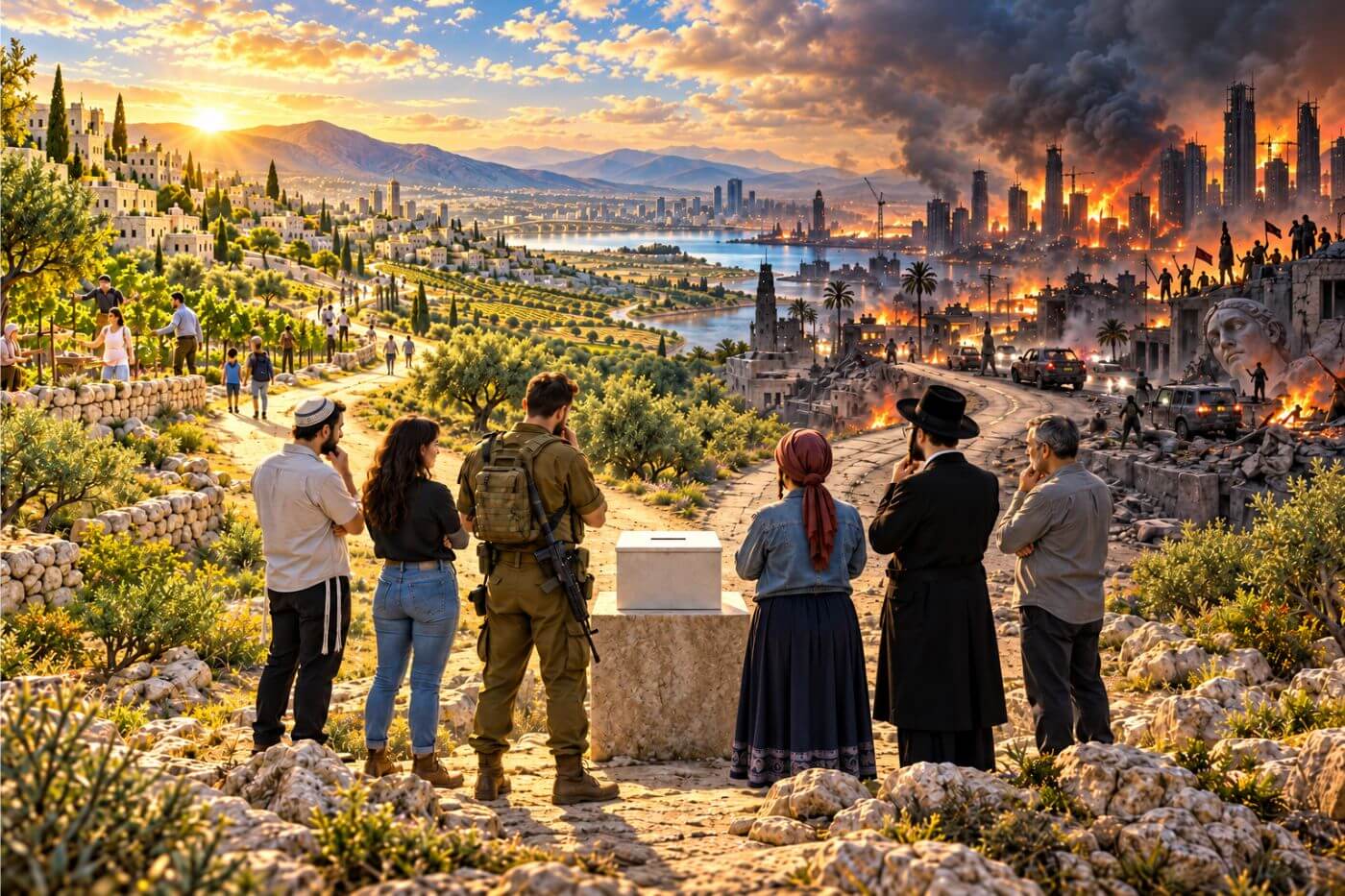
ChatGPT
As Israelis prepare to go to the polls next Tuesday, October 27, we face a question that goes far beyond which party will win or who will become our next prime minister. We face a question about the very character of the society we wish to build in the Land of Israel. Remarkably, this is precisely the question that emerges from one of the central narratives in this week’s parasha, Lech Lecha.
After returning from Egypt, Abraham and his nephew Lot settle near Bethel. Both have accumulated considerable wealth, but the land cannot sustain their growing flocks and herds. As tensions develop between their herdsmen, Abraham suggests that they separate, generously offering Lot the first choice of where to settle.
Lot looks eastward and sees the well-watered plain of the Jordan, a fertile region that the Torah compares to “the garden of the Lord” (Genesis 13:10). Lot chooses this region for himself, while Abraham remains in the Land of Canaan. Yet the Torah immediately adds a seemingly incidental observation: “Now the inhabitants of Sodom were very wicked sinners against the Lord” (Genesis 13:13).
Why does the Torah interrupt the narrative to tell us about the moral character of Sodom?
Perhaps because the separation between Abraham and Lot was not merely geographical or economic. It was also a separation between two fundamentally different visions of human society.
Lot chooses a place of material abundance, seemingly indifferent to the moral character of its inhabitants. Abraham, by contrast, remains in the land to which God has directed him, where he and his descendants are meant to fulfill a very different mission.
What exactly is that mission?
Several chapters later, as God prepares to destroy Sodom, He explains why He has chosen Abraham: “For I have chosen him, that he may instruct his children and his posterity to keep the way of the Lord by doing what is just and right” (tzedakah u’mishpat) (Genesis 18:19).
Abraham’s mission, then, is not merely to establish a new religion or transmit a particular set of beliefs and rituals. It is to create a family, and ultimately a nation, committed to building a society founded upon justice and righteousness. Whereas Sodom represents a society characterized by wickedness, cruelty, and disregard for others, Abraham is called upon to create one governed by moral responsibility and concern for human dignity.
And that brings us to next week’s elections.
Israelis will disagree passionately about security, economics, religion and state, and the future of the territories. These are legitimate disagreements about which patriotic people can hold profoundly different views. But underlying these debates is a more fundamental question: What kind of society do we wish to create?
Do we want a society in which officials working in the prime minister’s office may simultaneously receive payments from Qatar, a country that has supported Hamas, or one in which public servants understand that their loyalty must be exclusively to the people they serve?
Do we want a society in which political opponents are dismissed as “monkeys,” or one in which we recognize that those who disagree with us may be no less patriotic or devoted to Israel’s future than we are?
Do we want a society in which Jewish settlement is advanced through hooliganism, intimidation, and violence against innocent Palestinians, or one in which our attachment to the Land of Israel is expressed through respect for the rule of law, human dignity, and morality?
And do we want a society in which only some are expected to work, pay taxes, serve in the army, and risk their lives defending the country, while others enjoy the benefits of living here without accepting a fair share of its responsibilities?
These questions are not merely political. They go to the heart of the vision articulated in our parasha and developed throughout the story of Abraham.
God did not bring Abraham to the Land of Canaan simply so that his descendants could possess it. He brought him there so that they could create a society embodying tzedakah u’mishpat, justice and righteousness.
Nearly four thousand years later, we have been granted the extraordinary privilege of returning to that land and rebuilding Jewish sovereignty. But sovereignty is not an end in itself. It is an opportunity—and a responsibility—to realize the moral vision for which Abraham was chosen.
As we enter the polling booth next Tuesday, we must remember that the choice before us is about more than who will govern the State of Israel. It is about the values by which the State of Israel will be governed.
We have returned to the land of Abraham. The question now is whether we will build the society of Abraham—or import the values of Sodom.
For more thought-provoking articles exploring the Torah’s relevance to contemporary Israel and the Jewish world, visit my website at https://davidharbater.com/
Related Topics
Related Posts