
Israel’s little-known allies in the South Pacific
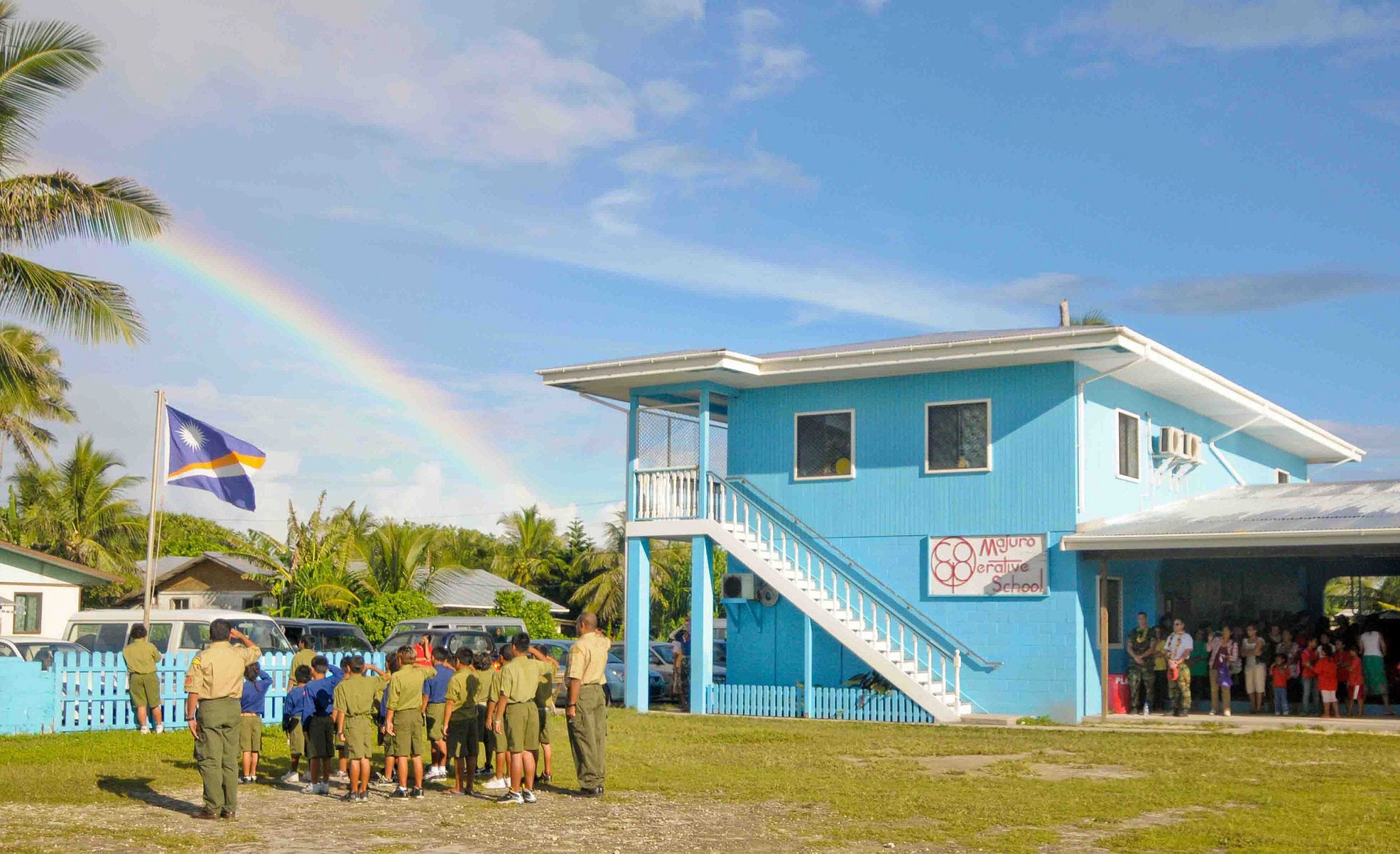
Every time UN members vote on anything Israel and Palestine-related, South Pacific islanders wake up to an endless stream of derogatory comments on social media. That’s the price Oceania pays for being the one and only region in the Global South where support for Israel is the norm, not an exception.
The small island states of Nauru, Micronesia, Palau and the Marshall Islands* are some of Israel’s most consistent and long-standing allies when it comes to UN resolutions. According to the UN Watch database, Micronesia hasn’t cast a single vote against Israel in the past 10 years—a record even the United States can’t claim. Oceania is also the only region where support for Israel has been growing. The South Pacific Kingdom of Tonga voted for Israel for the first time shortly after October 7th, contrary to the global trend.
These unexpected alliances often leave anti-Israel commentators puzzled. Barring outright racist comments and offensive claims that these countries are too small and irrelevant to be allowed to participate in global politics, the most common reactions are “They’re just following orders from Washington” or “Israel must be buying their votes.” But is it really so?
Formerly colonized by Germany and Japan, Palau, Micronesia and the Marshall Islands were administered by the United States as a UN trust territory in the aftermath of World War II. Acquiring independence in the late 20th century, these island states chose to keep close ties to the US. Citizens of these countries enjoy financial aid and the right to live and work in the US without a visa in exchange for America’s continued military presence in the region. With this in mind, the “orders from Washington” allegations may seem justified—until you look a little closer.
In 2015, the UN General Assembly voted on a resolution called “The risk of nuclear proliferation in the Middle East.” The five countries that voted against it were Israel, Argentina, the US, Palau and Micronesia. Notice the absence of the Marshall Islands? That’s not a mistake—they voted for the resolution, i.e. against Israel, which is unusual for that country but makes total sense if you know a bit about its history.
The Marshall Islands were the site of multiple nuclear tests by the US Army in the 1940s and 1950s. These tests forced entire villages to relocate and their impact on the country’s ecology and the population’s health is felt to this day. Naturally, the Marshall Islands are extremetly allergic to all things nuclear—and their dream of a nuclear-free world is more important to them than their otherwise consistent support for Israel.
The Marshall Islands’ vote against Israel in this specific instance makes it clear that the country isn’t blindly following American orders—its pro-Israel stance is conditional and depends on domestic opinions. In my eyes, this only makes their other votes, the ones in favor of Israel, more valuable and genuine.
Despite their similarly strong ties to the US, Palau and the Federated States of Micronesia have very different foreign policies. Palau recognizes the Republic of China as the one true government of China and maintains an embassy in Taipei, Taiwan, whereas Micronesia only has ties with the Beijing-based People’s Republic of China.
At the same time, and perhaps surprisingly, Micronesia is the most anti-Russian state in the region. In 2022, then-president David Panuelo officially cut diplomatic ties with Moscow after Russia invdaded Ukraine. Palau and the Marshall Islands didn’t follow suit, again showing that each of the three former US colonies has its own policy. And if their stances on Russia and China reflect independent judgment rather than foreign influence, why should their support for Israel be viewed any differently?
So where does this support come from? Each island country has its own story, and with how small many of them are, it can often be tracked to a single Jewish and Zionist person or family that has contributed to their independence and well-being. In the case of Palau, it was Stuart Beck, a Jewish American lawyer who helped negotiate a treaty between Palau and the US that made the country independent. He was then granted honorary citizenship and became the country’s first Permanent Representative to the United Nations.
Sean Oppenheimer is a successful entrepreneur and ex-politican in Nauru. His business empire on this island of just 10 thousand people includes a supermarket, a hotel, two restaurants and more. He was a Member of the Nauruan Parliament for the district of Anetan where most of his businesses are located. He is also a great-nephew of Nauru’s first president—that’s on his mother’s indigenous Nauruan side. And his paternal side? Jewish! Oppenheimer was Israel’s first honorary consul to Nauru among other things, and it’s fair to assume that his country’s pro-Israel votes are at least in part influenced by his views.
Sometimes you don’t even need local Jews for a South Pacific island state to start supporting Israel. Tonga did that for a different reason: a group of Tongan Christian pilgrims got stuck in Israel when flights were canceled in the aftermath of the October 7th attack. In this small island country where everyone knows each other, the entire population was worried and followed updates from the Middle East closely. As a result, Tongans became sympathetic to everyone affected by the attack—not just their compatriots—and have been voting for Israel at the UN ever since. Lastly, other South Pacific countries such as Fiji and Papua New Guinea occasionally vote for Israel purely out of Christian Zionist views.
In my opinion, Israel’s little-known allies in the South Pacific deserve more interest, love and support from us. Sure, Israeli aid organizations are active in some of them, but the general public here doesn’t know much about the region. In this time when many Israelis feel that most of the world hates them, both our allies on the other side of the world and we could benefit from visiting each other and engaging in cultural exchange.
Nauru is perhaps the only country in the world where the dominant and official language still lacks a modern descriptive grammar and even textbooks. Why don’t we send an Israeli linguist or two to help? The Marshall Islands are suffering from climate change, with king tides flooding the small, low-lying atolls more and more often. Maybe someone from Weizmann knows what to do? It’s not just about UN votes, it’s about relationships we should value.
–
*Update: This post was originally adapted from an article I wrote in Yiddish for The Forward in March 2024. Thanks to an attentive reader, I just learned that the Marshall Islands have since then appointed a new ambassador to the UN who has been consistently voting against Israel, single-handedly raising the country’s number of anti-Israel votes from the one I mentioned to over ten in less than two years. It’s an unexpected and perhaps discouraging development, but it doesn’t erase the Marshall Islands’ long-standing relationship with Israel. Hopefully, this shift is temporary. My point still stands when it comes to many other South Pacific nations that continue to voice strong support for Israel to this day.