
When Europe’s Political Language Shapes Jewish Life
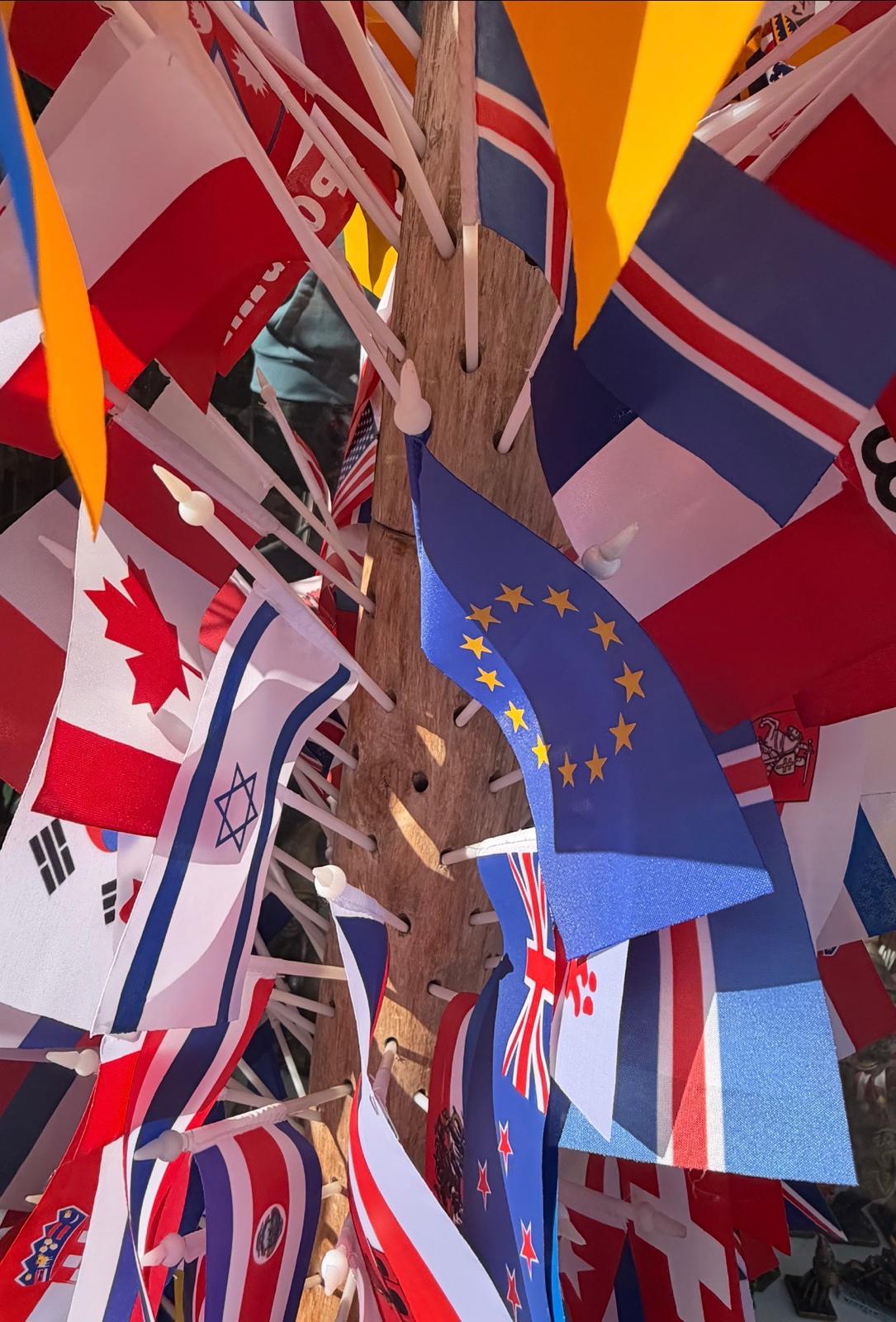
A recent report published by Euractiv has raised troubling questions not only about European Union (EU) foreign policy but also about the future of Jewish life in Europe.
According to the report, EU foreign policy chief Kaja Kallas compared Israel’s treatment of Palestinians in Gaza and the West Bank to apartheid era South Africa during confidential meetings with Mexican officials in May. Diplomats cited by Euractiv reportedly expressed concern that the remarks departed from established EU policy, with one official describing it as a serious problem if such statements were being made by the person tasked with representing all 27 member states on the world stage.
Predictably, the debate that followed has focused on the Middle East. Was the comparison justified? Did Kallas overstep her mandate? Does her position reflect a broader shift within EU institutions?
These questions matter. Yet they risk obscuring another issue that may ultimately prove more consequential: what happens when the language used to judge the Jewish state begins to shape the way Jewish communities themselves are perceived?
That question should concern anyone who cares about the future of democratic pluralism in Europe.
For decades, European leaders have insisted on an important distinction. Criticism of Israeli government policy is not the same as hostility toward Jews. In principle, that distinction is both correct and essential. Democracies require open debate, and Israel should be subject to scrutiny like any other democratic state.
The problem begins when criticism shifts from specific policies to sweeping judgments about the nature of the state itself.
The term apartheid is not simply another political accusation. It carries immense historical and emotional weight. It refers to one of the most notorious systems of racial oppression in modern history. It evokes a regime that became a global symbol of institutional injustice and moral illegitimacy.
When such language is used by the EU’s highest foreign policy representative, the implications become far greater.
The issue is not merely whether the comparison is accurate. The issue is that such language reshapes the framework through which Israel is understood.
Israel is no longer presented as a democracy confronting difficult security challenges while making controversial decisions. Instead, it is cast as the contemporary equivalent of a regime whose very existence came to be regarded as morally indefensible.
That shift does not remain confined to diplomatic discussions.
It influences public debate. It shapes media coverage. It reaches universities, workplaces, civic and cultural institutions, and social media platforms. Over time, it contributes to a climate in which support for Israel becomes increasingly suspect and identification with Israel increasingly controversial.
For European Jews, the consequences are often personal rather than theoretical.
Since the October 7 massacre, Europe has witnessed a sharp resurgence of antisemitism. Jewish communities have endured terrorist attacks alongside a disturbing increase in threats, harassment, vandalism, and physical violence. For many European Jews, this is not a distant political trend but an everyday reality. At the same time, they are often treated as stand-ins for the actions of a government over which they have no influence. As a result, debates about Israel are rarely experienced as abstract questions of foreign policy. Their consequences are felt in Jewish schools, community centers, and synagogues, in workplaces and universities, and in public spaces across the continent. For many Jews, discussions about Israel are inseparable from concerns about their own security, belonging, and place within European society.
Unlike most minority communities in Europe, Jews are frequently expected to explain, justify, condemn, or distance themselves from the actions of a foreign state. Whether fair or not, they are often treated as representatives of a conflict taking place thousands of kilometers away. That reality helps explain why the language used by senior EU officials about Israel rarely remains confined to foreign policy.
When Israel is cast as the contemporary equivalent of apartheid South Africa, the consequences extend far beyond the Middle East. Many European Jews find themselves judged through the prism of that accusation. Expressions of solidarity become suspect. Silence is treated as complicity. The distinction between criticism of a government and perceptions of an entire community begins to erode, leaving many Jews to navigate suspicions and expectations that no other minority is routinely asked to bear.
This is not necessarily because those making such accusations harbor hostility toward Jews. Most do not.
The problem is that political narratives often produce consequences far beyond the intentions of those who create them.
When a state closely associated with Jewish identity is repeatedly portrayed as uniquely malevolent, some people inevitably begin to view Jewish communities through the same framework. The distinction between Israel and Jews, so carefully defended in theory, becomes increasingly difficult to sustain in practice.
European leaders should understand this dynamic better than most.
The continent’s history offers repeated examples of how exclusion rarely begins with dramatic acts of persecution. More often, it begins with narratives that place minorities outside the moral mainstream. It begins with assumptions that certain groups require special scrutiny or are somehow uniquely responsible for broader social and political problems.
No serious observer would suggest that Europe today resembles the Europe of darker eras. Such comparisons would be both inaccurate and irresponsible.
Yet history remains relevant because it demonstrates how public attitudes are shaped. Language matters. Symbols matter. Narratives matter. The way political leaders frame events influences how societies understand entire communities.
This is why the Euractiv report matters far beyond Brussels.
The concern is not simply that Kallas may have diverged from official EU policy. The concern is that one of the Union’s most influential voices appears willing to adopt a framework that many citizens will interpret not as criticism of particular policies but as a broader indictment of the Jewish state itself.
That matters because Europe’s Jewish communities are confronting growing uncertainty about their place in the societies they call home. Antisemitism does not emerge from a single source, nor can it be reduced to a single cause. Yet responsible leadership requires an understanding that rhetoric from positions of authority helps shape the moral climate in which societies operate.
Political language is never neutral. The words of senior officials carry weight. They help define the boundaries of acceptable discourse, shape public perceptions, and influence attitudes long after the headlines have faded.
European leaders have every right to criticize Israeli policies. They have every right to advocate for Palestinian rights and for a peaceful resolution to the conflict.
What they should avoid is adopting language that reduces a complex and tragic conflict to a simple morality tale, one that portrays Israel not as a state whose policies can be debated and criticized, but as a uniquely illegitimate actor on the world stage.
The real significance of the Euractiv report extends far beyond a dispute over foreign policy.
It raises a broader question about the responsibility of the EU’s political leaders. Do they fully understand what happens when language used to judge the Jewish state begins to shape the way European Jewish communities themselves are perceived?
Words spoken behind closed doors rarely stay there. When they come from those who speak on behalf of the EU, they help define the moral vocabulary of the continent itself. That reality should give Europe’s leaders pause.