
Israel’s Navy Steps into the Global Spotlight
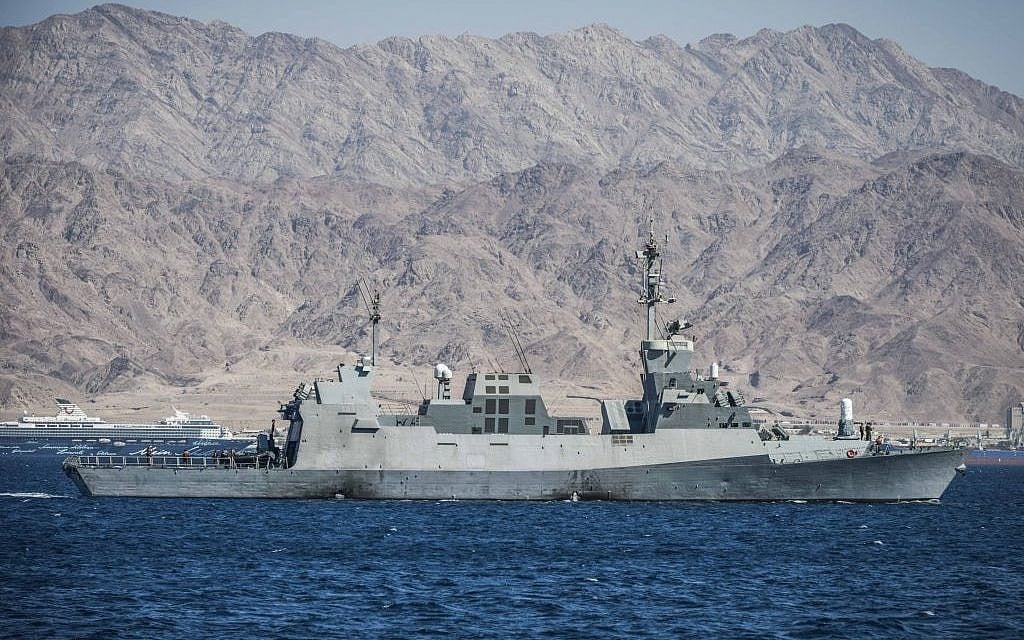
Once the IDF’s quiet powerhouse, the Israeli Navy is now shaping maritime innovation – from Red Sea strikes to United States-Korea shipbuilding alliances
For years, I have proudly called myself a “self-claimed IDF historian.” I have studied its campaigns, celebrated its air dominance, and marveled at its technological leaps. But today, I want to turn my attention to an unsung hero within the Israel Defense Forces – one that rarely gets the spotlight it deserves: the Israeli Navy.
When most people think of Israeli military prowess, they picture the Iron Dome intercepting rockets, the Air Force dominating skies, or elite IDF units carrying out daring missions. But the story beneath the waves – and increasingly above them – is just as fascinating. The Israeli Navy is quietly reshaping what naval dominance looks like in the 21st century. And after what I saw during the recent 12-day Iran-Israel conflict, it is time the world paid attention.
When the Navy launched precision strikes on Houthi energy infrastructure in Yemen, over 2,000 kilometers from Israel’s shores, the operation barely made headlines. Yet, the display of technological mastery was extraordinary. At the heart of the mission was the Sa’ar 6 missile ship, part of a new generation of cutting-edge naval platforms designed to project power far beyond Israeli borders.
Equipped with the C-Dome system, the maritime adaptation of Iron Dome, the Sa’ar 6 forms part of Israel’s layered air and sea defense network. Flotilla 3, Israel’s Red Sea task force, now protects strategic energy routes and offshore platforms, with over 1,000 personnel deployed.
And then there are the Dolphin-class AIP submarines, capable of operating undetected near Iran itself, a reminder that Israel’s reach is not limited to what the world sees on radar.
But what excites me most is the next frontier: unmanned maritime vessels (UMVs). Israeli companies like Elbit, Rafael, and IAI are transforming the naval battlefield. From Elbit’s Seagull USV to Rafael’s Protector and IAI’s Blue Whale unmanned submarine, these systems are redefining how nations secure coastlines, protect offshore rigs, and intercept threats.
This is Israel at its finest – leveraging innovation not for aggression, but for precision and protection. And it is why the world is finally taking notice.
Recognition is arriving not just from the Middle East, but from afar. The United States, South Korea, Japan, and now Israel are preparing for what could become one of the most strategically significant naval partnerships of our time.
So, why the strategic quadruple partnership? The balance of global power is shifting, and the seas will decide the future. With China dominating shipbuilding and expanding its naval power, the United States needs reliable allies to secure sea lanes, counter aggression, and maintain freedom of navigation.
That is where South Korea’s massive shipyards, Japan’s engineering excellence, and Israel’s unmatched defense-tech innovation converge. According to recent reports, United States planners are now exploring a tri-nation collaboration to develop the next generation of naval ships – Korean-built, Japanese-refined, and Israeli-enhanced.
Israel does not build the biggest ships. It builds smarter ships.
Consider the impact of Israeli startups redefining maritime innovation: Civan Lasers is transforming shipbuilding with next-generation welding technology that makes construction faster, stronger, and more efficient. Orca AI leverages advanced computer vision to prevent maritime collisions and enhance fleet safety. Windward delivers real-time intelligence to track threats and optimize global trade security. And Cydome protects entire fleets against sophisticated cyberattacks – an emerging battlefield where Israel is already setting the global standard.
Israel’s role is simple but powerful: It innovates the tools that keep fleets effective, efficient, and secure.
The Yemen strikes, the Sa’ar 6 deployment, the unmanned systems – these are not just military milestones. They are part of a larger story of resilience and renewal. While enemies seek to close off sea lanes, Israel is expanding access. While others invest in blockades, Israel invests in bridges of technology and cooperation.
And perhaps most fascinating is how Israel’s partnerships across Asia are rewriting old geopolitical assumptions. Once viewed as a country isolated in its region, Israel is now an indispensable partner for Asian economies and militaries alike. From defense agreements with India to emerging collaborations with Japan and South Korea, Israel has become a trusted source of solutions – especially at sea, where technology, energy, and security intersect.
Adversaries underestimate Israel because they think small nations cannot make big waves. But innovation does not measure power in square kilometers; it measures it in ideas that change the game. And in naval warfare, Israel is changing the game.
As I write this, the conversation in Washington, Seoul, and Tokyo is no longer about whether Israel’s naval innovation matters; it is about how much more of it they can integrate. That tells you everything.
The Israeli Navy may be the quietest branch of the IDF, but it is also becoming one of its most consequential. From protecting offshore rigs in the Mediterranean to striking threats in the Red Sea and shaping the future of global shipbuilding, it is redefining Israel’s role on the world stage.
And it embodies the spirit of the nation: never loudest, always boldest.
In an era when control of the seas may decide control of the future, Israel’s Navy proves that small nations can lead big revolutions. Because the future is not only about having the largest fleet; it is about having the smartest one.