
Israel’s Rising Power in NATO Markets
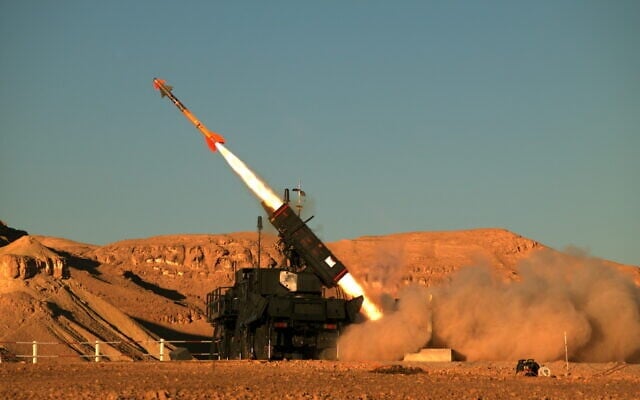
NATO’s new defense spending is a boost for Israel’s resilience, renewal, and global reach
Whenever I read stories about Israeli reservists transforming battlefield experience into groundbreaking tech startups, I’m never surprised. In my own small way, I have helped nurture that spirit of innovation – because I have taught them.
During a guest lecture at the College of Management Academic Studies in Rishon LeZion, I addressed a master’s class on innovation and entrepreneurship. Among the students were reservists, security professionals, and those with direct experience on Israel’s front lines. Even our conversations afterwards revealed sparks of startup brilliance – ideas rooted in lived experience, sharpened by necessity.
That is what makes Israeli innovation so distinct. It is not theory-bound or detached. It is forged in moments of urgency and refined in times of adversity.
Just weeks after the 12-day war with Iran, as Israeli skies were lit by a near-constant barrage of missile interceptions and reservists raced to defend the home front, another front opened, quieter, but just as powerful. At the NATO summit in The Hague, member nations reached a historic agreement: to increase defense spending to 5% of GDP by 2035. Hailed as a “big win for Western civilization” by United States President Donald Trump, this decision also marks a quiet triumph for Israel.
Because behind the IDF’s battlefield brilliance lies a powerful, agile ecosystem, where soldiers become inventors, reservists become startup founders, and necessity becomes the mother of national innovation.
Take Zach Bergerson, a reservist who saw fellow troops exposed to deadly enemy drones. He did not wait for help. He built it. His startup, SkyHoop, developed a wearable mobile-based system that alerts soldiers to incoming aerial threats. It is now being piloted in Ukraine and has attracted interest from the United States Department of Defense.
And Zach is not an outlier. According to Startup Nation Central, more than a third of Israel’s defense tech startups were founded after October 7. That is not coincidence – it is resilience in action. It is renewal, forged through urgency. It is the Israeli way, where hardship is not a stop sign but a launchpad.
More than 20% of Israel’s reservists also work in the high-tech sector. That unique civilian-military fusion is part of the country’s DNA. Israel’s innovation does not sit idle in labs – it marches, it learns, it builds. Fast.
Now, with NATO’s new defense commitments set to unlock hundreds of billions of dollars, Europe is poised to become the largest market for these battle-tested Israeli technologies. In fact, over 50% of Israel’s record-breaking $14.8 billion in defense exports in 2024 went to European countries, up from just 35% the year before. The demand is growing not despite the war, but because of it.
Let us be clear: this is not about war profiteering. It is about survival. About democracies seeking the agility, clarity, and precision Israel has come to master in defense.
In a world facing rising threats – drones, cyberattacks, disinformation – Israel’s reservists are designing tomorrow’s defense solutions today. From drone-jamming wearables to AI-driven battlefield tech, these startups are rewriting the future of military readiness. American and Israeli venture capital firms, once wary of the sector, are now enthusiastically investing in it.
This is the quiet revolution. While traditional defense giants like Rafael, Elbit, and Israel Aerospace Industries still lead, the momentum is shifting. Garage-born startups, led by soldiers-turned-entrepreneurs, are injecting new speed, creativity, and soul into the industry.
But the tech is only part of the story. The real engine behind this growth is cultural. It is the same civil spirit I witnessed in the aftermath of October 7, when nearly half the Israeli population volunteered. Where reservists did not just fight; they fed, coded, delivered, and cared. Where the question was not “What now?” but “How can I help?”
This is resilience and renewal in its purest form. And as the world’s democracies rearm, they are not just buying Israeli weapons, they are buying Israeli wisdom. Wisdom earned under fire.
Yes, challenges remain. Some in Europe still call for boycotts. At the Paris Air Show, some Israeli defense pavilions were shuttered. But when push comes to shove, those same nations turn to Israel, because when you are defending democracy, you do not buy ideology, you buy results.
The irony is striking: the very nations that once hesitated to embrace Israeli innovation are now our biggest clients. Israel is not just innovating for itself – it is helping secure the free world. Israel is exporting more than technology – it is exporting tenacity, grit, and hope.
So while the world celebrates NATO’s bold new defense posture, I see something deeper. I see the reservists who turned grief into growth. The investors who saw possibility in pain. The battlefield wisdom that is now informing global strategy.
And I see a nation that does not wait for peace to start building. A nation that innovate as it defends. A nation that rebuilds as it mourns. A nation that rises, even when the world is still catching its breath.
Let the world take note: Israel is not just surviving. We are innovating the future – one breakthrough, one startup, one heartbeat at a time.