The views expressed herein are solely mine.
Istanbul’s Near-Deal Boosts Hamas for Round Five
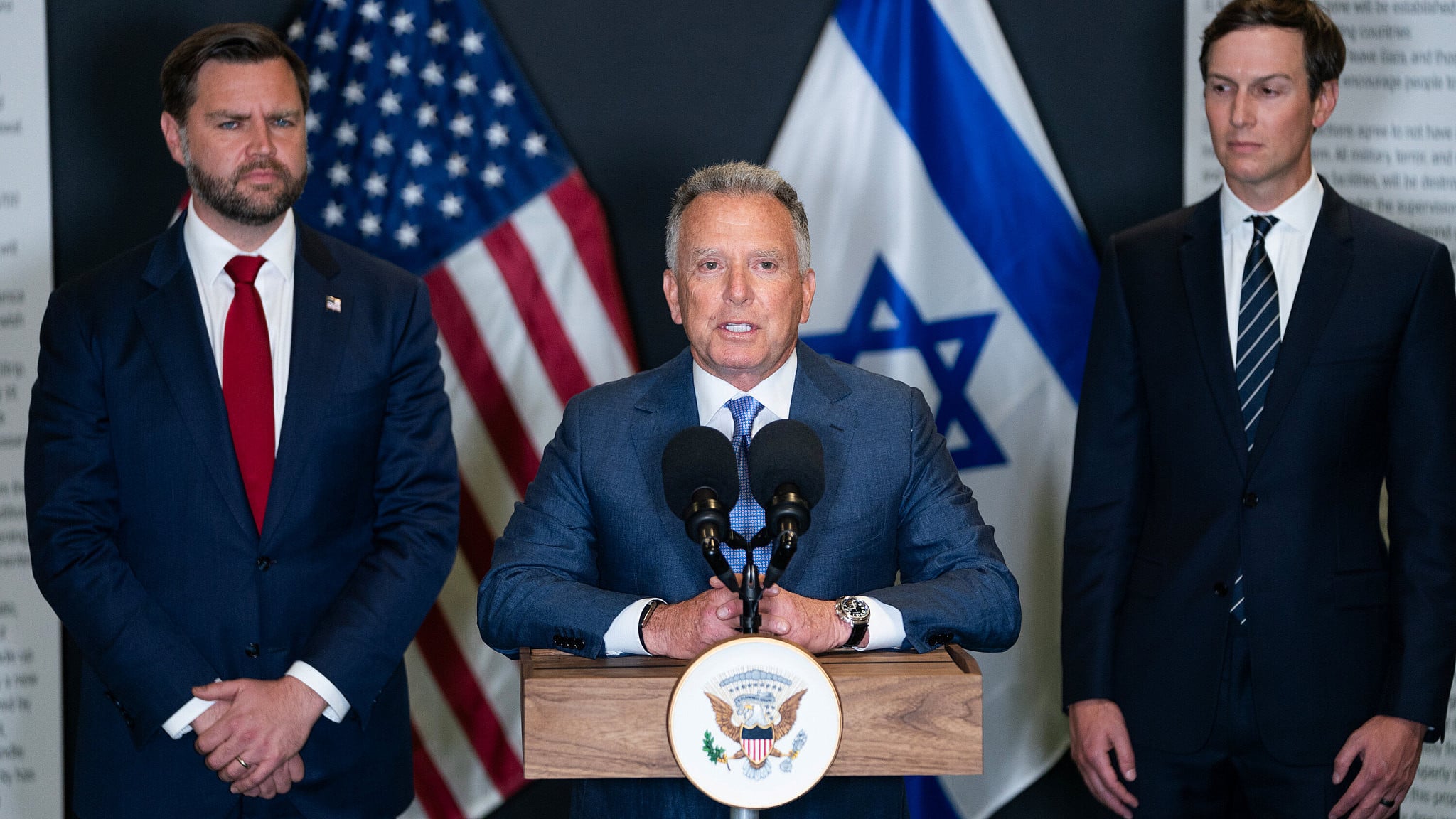
Steve Witkoff, the U.S. special envoy for peace missions, speaking at military briefing in Israel last month. Nathan Howard for The New York Times.
The rush to “rebuild Gaza” while Hamas stays armed, funded, and diplomatically courted is not peacemaking — it is state-sponsored insanity and geopolitical malpractice wrapped in moral cowardice.
And Tuesday’s near-meeting in Istanbul proves it.
Steve Witkoff — a U.S. special envoy — was scheduled to sit across from Hamas commander Khalil al-Hayya in a five-star Turkish hotel prepared by Erdogan’s Islamist machine. Only fierce Israeli pressure killed it at the last second.
But the damage was already done.
Let’s be clear: the first meeting weeks ago between Witkoff and al-Hayya, via Qatar, was tactical and unavoidable. It was about one thing — freeing Israeli hostages. That was legitimate.
This one was not.
This was political engagement — exactly what Hamas has bled for, killed for, and manipulated the world to reach.
Had it gone ahead, Hamas would have walked away with the crown jewel it has hunted for decades: international legitimacy as a “national liberation” movement worthy of shaping Gaza’s future.
Recognition without disarmament. Power without responsibility. Influence without governance. Exactly the Muslim Brotherhood playbook.
And even the attempt at this meeting sent a catastrophic message: “Keep your rockets, keep your tunnels, keep your martyrs — we will rebuild your mini-caliphate anyway.”
Turkey, Qatar, and the entire Muslim Brotherhood bloc could not have dreamed of a bigger gift.
Meanwhile, Hamas was preparing to enter that room with its war machine untouched — brigades intact, command structure intact, funding pipelines intact, and tunnel diehards still refusing to surrender even after the IDF collapsed their exits.
Without a doubt, while diplomats were leaking stories to the press about the ‘Istanbul treason’, Hamas was already planning Round Five.
That said, everyone also conveniently ignored this: Israel and the UN’s own stabilization plans require one non-negotiable condition before reconstruction — total disarmament of non-state militias.
Hamas laughed in everyone’s face and said “no.”
Why wouldn’t they?
Every previous reconstruction cycle (2009, 2014, 2021) saw Hamas divert 30–60% of materials into tunnels, bunkers, weapons labs, and surveillance hubs. Gaza did not get rebuilt — Hamas did.
And Western intel agencies now track Hamas shifting drone components, encrypted gear, Iranian circuitry, and anti-tank tech to foreign safehouses — copying Hezbollah and ISIS logistics to ensure survival.
Underground, Rafah’s 100–200 holdouts prove the real doctrine: negotiations above ground are pauses. War below ground is eternal.
That is why this Istanbul flirtation was not just naïve — it was reckless.
Hamas walked into this diplomatic theatre fully armed and operational. And it walked out — even without the meeting happening — with exactly what it wanted most: political relevance and international elevation.
Reconstruction became a bailout. Diplomacy became a shield. Turkey, Qatar, and Malaysia became the winners. And Hamas — a genocidal theocratic militia — nearly got rebranded as the legitimate voice of the Palestinian people.
The Muslim Brotherhood has been trying to launder Hamas for years. Washington almost handed them the soap.
The Istanbul near-meeting was not going to stabilize Gaza.
Doubtlessly, its only goal was to supercharge Hamas’s transformation from a terror syndicate hiding in tunnels to a political actor sitting at negotiation tables.
A movement that negotiates with one hand, reloads with the other, buries fighters underground, smiles for diplomats above, and vows — literally — to fight, die, and rise again.
And thanks to Turkey’s photo-op diplomacy — real or aborted — it now has momentum to do exactly that.
Related Topics
- Benjamin Netanyahu
- Donald Trump
- Gaza
- Gaza Border
- Gaza Disengagement
- Gaza Rocket Attacks
- Gaza Strip
- Hamas
- Hezbollah
- Hostages in Gaza
- IDF
- Indonesia
- ISIS
- Islam
- Israel At War
- Israel-Iran Conflict
- Israel-US Relations
- Israeli Foreign Policy
- Jewish-Muslim Relations
- Lebanon
- Middle East
- Muslim-Jewish Dialogue
- Qatar
- Terrorism
- The Arab World
- Trump Peace Plan
- Turkey
- United Nations
Related Posts