
It Was Not the Iran War; It Was the Ceasefire
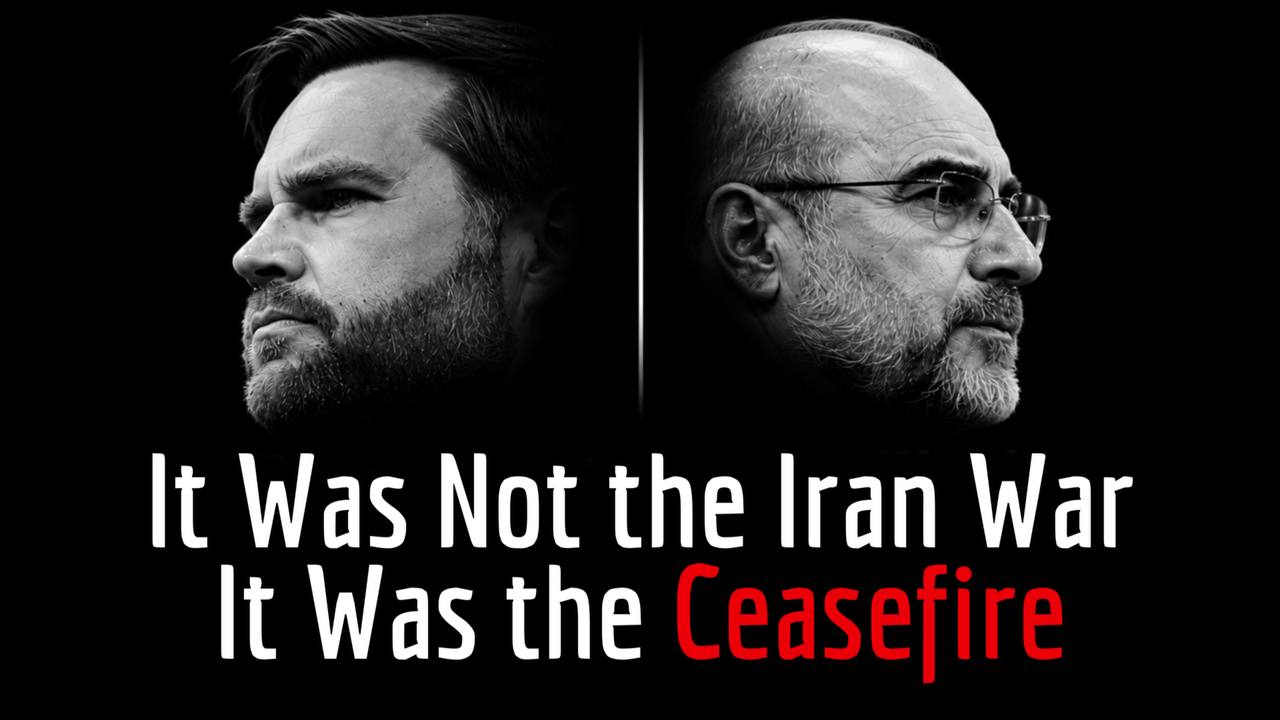
President Trump accepted the political risk of confronting the Islamic Republic. The decision itself was not the political risk critics thought it would be: Americans could have tolerated elevated oil and gasoline prices for two or three months if they believed there was light at the end of the tunnel—that the military campaign was achieving its objective. What they were far less likely to tolerate was seven to nine months of inconclusive results, a partially blocked Strait of Hormuz, persistently high fuel costs, and a regime that still remained in power. The midterm defeat of Republicans was inevitable. The core failure was not the decision to use force; it was the subsequent acceptance of a de facto ceasefire or status quo that left the regime intact and the strategic problem unresolved.
Senator Tim Sheehy put the stakes plainly in his recent Wall Street Journal article: if you think war is unpopular, wait till you see defeat. History often vindicates difficult decisions that exact a short-term political price. Truman’s decision to confront communist aggression in Korea is one example. The political consequences of an unfinished campaign in Iran risk more than one electoral cycle. A clear defeat could damage Republicans not only in 2028 but potentially into 2032, much as the British Labour Party’s earlier political failure kept it from power for more than a decade. The political cost is real, but the strategic cost of an unfinished job is far greater.
The Strait of Hormuz illustrates precisely why this matters. Leaving the world’s most important energy chokepoint effectively under the control and harassment of a regime that has already demonstrated its willingness to kill over seventy-two thousand of its own citizens, according to President Trump during the Lion and Sun January uprising, does not stabilize energy markets. It does the opposite. It institutionalizes the threat and lends credibility to actions that are anathema to American principles and ideals.
Modern American prosperity and security have long rested on two pillars: energy security and rare-earth minerals. Threats to either quickly become national-security problems capable of imposing billions of dollars in cumulative damage through higher prices, disrupted supply chains, and reduced industrial capacity. If you think gasoline prices are high now, consider what happens if the United States fails to achieve a decisive outcome.
A surviving Islamic Republic with effective control over the Strait of Hormuz would possess the ability to threaten energy supplies whenever it chooses. The United States cannot indefinitely babysit commercial vessels through one of the world’s most strategically important waterways. Maintaining a permanent military presence to keep shipping lanes open would be cost-prohibitive and unsustainable. Naval escorts can manage the threat; they cannot eliminate it. The only solution is to eliminate the regime and its ability to hold the global economy hostage.
For decades, communists have sought to constrain or control those supply lines from Africa to the Middle East, Europe, and Asia. America’s corresponding duty has been to protect the free flow of those resources. That responsibility does not disappear under an “America First” label.
This is also a question of American credibility. Retired General Jack Keane, senior strategic analyst for Fox News, and analysts such as Rebeccah Heinrichs of the Hudson Institute have repeatedly warned about the strategic consequences of American withdrawals and incomplete campaigns, whether in Iran or Ukraine, as strategic failures rather than victories. Richard Nixon’s argument in The Real War remains relevant: the United States cannot cede the field to strategic adversaries and then expect favorable outcomes. Handing effective control of the world’s most important energy waterway to the Islamic Republic, or allowing Russia and China to expand their influence through it, places America’s energy artery under the knife of hostile actors. Over time that produces dependency and market volatility, not strength.
Other consequences of stopping short follow directly. If Iranians who have risked their lives against the regime receive a clear signal that external pressure will not be sustained, despair will inevitably produce tens of millions of refugees. Persian Gulf states would be left to accommodate a still-powerful revolutionary regime as the regional enforcer, an outcome none of them should be forced to accept. Neither result lowers long-term oil prices or reduces the threat of future disruption and the necessity of further military actions.
Saudi Arabia’s role also deserves particular scrutiny. Washington and Jerusalem still view Riyadh primarily as a useful partner. In practice its conduct during this conflict has been contradictory. Missile attacks on Saudi territory are real, yet the kingdom closed its airspace to U.S. forces early in the campaign, pressed for ceasefire and later negotiations over continued military pressure, and has remained outside the Abraham Accords framework. Presenting itself as a victim of Islamic Republic aggression while advocating an approach that would result in the regime’s survival raises serious questions about the kingdom’s true strategic priorities.
There is also an ideological dimension worth examining. The Islamic concept of Taqiyya, or concealing religious beliefs under certain circumstances, is relevant here. Despite their geopolitical rivalry, Saudi Arabia and the Islamic Republic share an underlying ideological bond rooted in their commitment to preserving political Islam in the region. Their differences should not obscure the possibility that, on a deeper ideological level, they are working toward a common objective—even when their strategic interests do not fully align. Presenting itself as a victim of Iranian aggression while simultaneously buying time for the regime’s survival is not the behavior of a fully committed ally. One plausible reading is that Saudi Arabia does not want the Islamic Republic to collapse. Riyadh may even prefer a nuclear-armed Iran, believing that such an outcome would provide justification for the Kingdom to pursue and acquire nuclear weapons of its own. No matter what the underlying reason is, the net effect has been to prolong the conflict, restrain American options, and give Tehran additional room to survive.
The alternative is straightforward in strategic terms even if difficult in political ones. Regime change in Iran would remove a primary source of regional instability, reduce the long-term threat to energy flows through the Persian Gulf, and undercut the broader project of revolutionary Islamism. It would benefit the Iranian people, neighboring countries, and the global energy market. Finishing the job does not require open-ended occupation; it requires sustained pressure—military, economic, and political—sufficient to set the conditions for the regime to collapse. Short-term political pain is preferable to a longer period of strategic defeat in which high energy prices become structural rather than temporary and adversaries learn that American resolve has a fixed expiration date. The hegemonic crisis is not something America can tolerate. The consequences of an American defeat would extend far beyond the Middle East. If the United States allows the Islamic Republic to survive, it will demonstrate that military superiority cannot guarantee fundamental strategic objectives. A weak America in the Middle East would diminish America’s position as the world’s leading superpower, reducing its credibility and willingness to use that strength to defend its interests. China and Russia will draw their own conclusions and will have powerful incentives to test America’s resolve in Ukraine and Taiwan. America must secure its interests in the Middle East. A failure to do so would fundamentally weaken its claim to leadership of the international order.
The midterm losses were real and costly. They do not prove that confronting the Islamic Republic was the wrong policy. They prove that half-measures, early pauses, and the illusion of a stable status quo extract a higher price than decisive action. Finishing the job remains the clearer path to both strategic security and eventual political recovery.