
Humble with a declining sense of humor.
It’s Another Beautiful Day in Tel Aviv — and a Question for American Jews
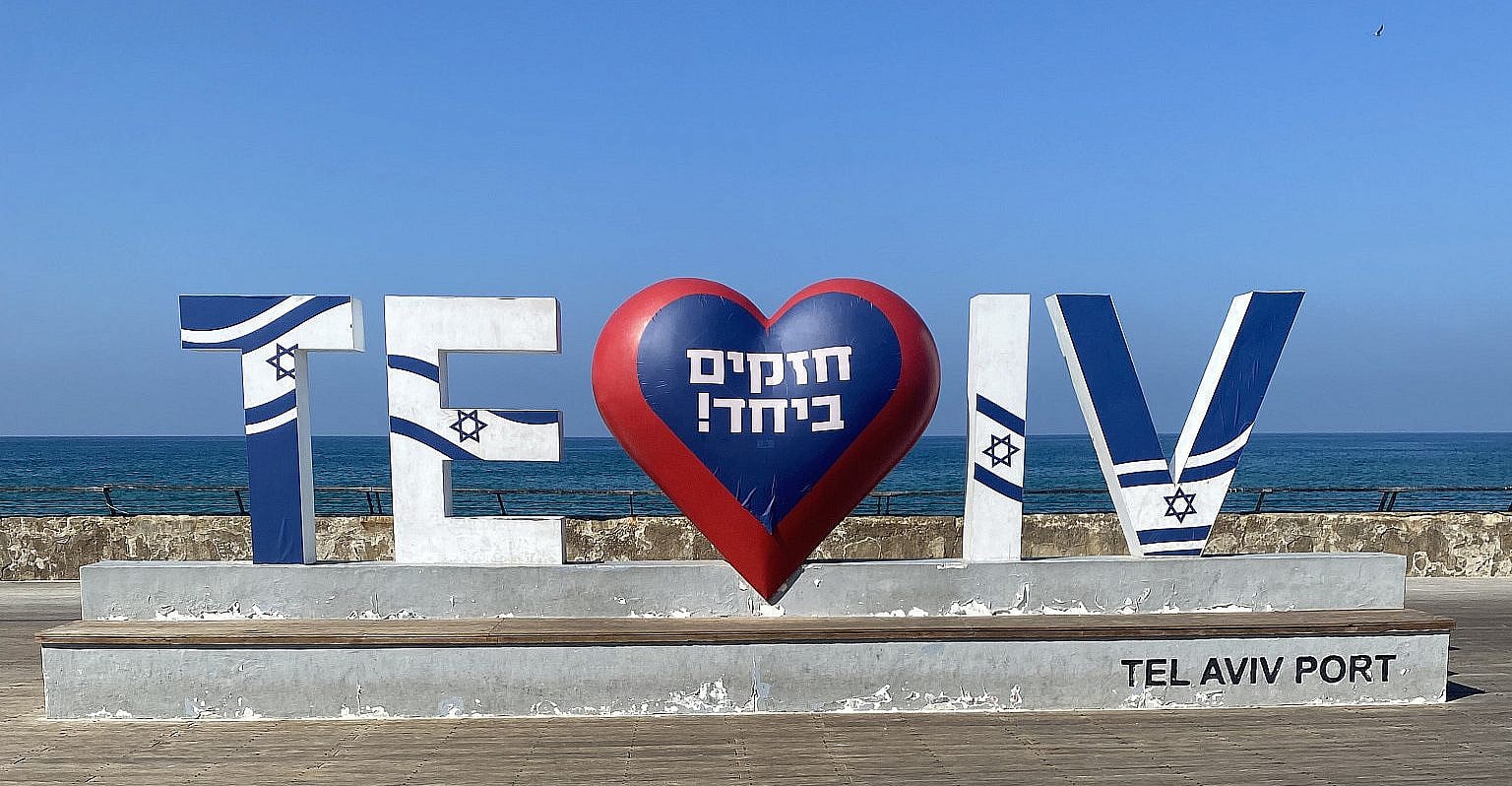
Photo by A.P. Gross
I often post messages and photos on Facebook and other social media from my time in Tel Aviv and elsewhere in Israel—moments shared with my wife, family, and friends. Sometimes I reuse the same simple caption: “It’s another beautiful day (in Tel Aviv).”
It may sound repetitive. It never feels that way.
I love watching people fill the cafés and restaurants, stroll along the beach and the Tayelet, relax in parks, and move through art galleries and museums. But mostly, I love seeing people with one another. Professionals—young and old—sit side by side with laptops open, debating politics, sharing ideas, enjoying companionship. It is unmistakably Israeli: intense, communal, alive.
That experience is deepened by the knowledge that my connection to this place stretches back thousands of years. Israel is not simply a country I visit. It is my eternal home. And it is the eternal home of the Jewish people—regardless of which government happens to be in power at any given moment.
For decades, I marveled at the sheer number of tourists who came to Israel—Jews, and in far greater numbers, non-Jews. They arrived on study missions, family visits, conferences, and pilgrimages. Israel was vibrant not only because of its people, but because people from around the world wanted to experience it.
I understood why tourism paused during the COVID pandemic, as it did everywhere. I also understand why visitors stay away during times of war. Israel has faced more wars in my lifetime than I can easily count. Yet historically, tourists always returned. Politics shifted. Governments changed. Visitors came back.
That was not always true for American Jews.
After the Lebanon War (1982–1985) and throughout the IDF’s prolonged presence there until 2000, Jewish Americans in particular seemed reluctant to visit Israel—whether for first-time trips or return visits. Israel’s government at the time, as at many times, was unpopular with much of the American Jewish diaspora.
I remember visiting Israel with my family during that period. We stayed at a kibbutz hotel near the Kinneret. When I asked the hotel manager how business was, he smiled and said it was a good thing Jesus had been born nearby. Christian tourism, it turned out, was far less affected by Israeli government policy than Jewish tourism was.
That moment stayed with me.
Today, Israel is not at war (tfu-tfu-tfu). Israelis are not under daily attack (tfu-tfu-tfu). But we are still recovering from the horrific terror attacks of October 7, 2023—the slaughter, the abductions, and the devastation inflicted by Hamas, Hezbollah, and their allies. That day, and the days that followed, will never be forgotten.
The suffering has been immense. Lives were lost. Families shattered. Homes, communities, and businesses destroyed. Yet Israelis, as always, are resilient. We are rebuilding—slowly, painfully, deliberately. This is not new. Israel has rebuilt before.
What I find myself wondering now is this: how long will it take for the tourists to return?
More pointedly, how long will some American Jews maintain what amounts to an emotional boycott of Israel—explicitly because of its government and how Israel conducted the war against Hamas militarily and politically?
How long will presence, affection, and solidarity be withheld not because Israel is unsafe, but because it is politically uncomfortable?
Let’s be honest. No one is being asked to endorse a government. Visiting Israel is not a vote. It is not an approval rating. It is an act of connection—to people, to history, to responsibility.
Israel does not belong to its politicians. It belongs to its citizens. And it belongs to the Jewish people.
If Israel is judged by standards no other country is held to, if Jews distance themselves from their own homeland in moments of difficulty rather than engagement, we should ask ourselves what message that sends—to Israelis, and to a world growing more openly hostile to Jews.
What will it take for Israel to once again be seen as a beacon—not of perfection, but of vitality, creativity, and shared destiny?
And what will it take for American Jews to internalize a hard truth of our time: that Jews cannot safely exist in today’s world without a Jewish homeland—our eternal homeland—even when its governments are flawed. Especially then.
“It’s another beautiful day in Tel Aviv” is not an act of denial. It is an affirmation—of life, of continuity, and of mutual responsibility.
The planes are flying (tfu-tfu-tfu). Hotels have vacancies. New restaurants are opening. The antiquities are waiting.
So is Israel.
Related Topics
Related Posts