A millennial, Zionist, reform Rabbi
It’s not just about Mamdani — it’s about the Jewish tent itself
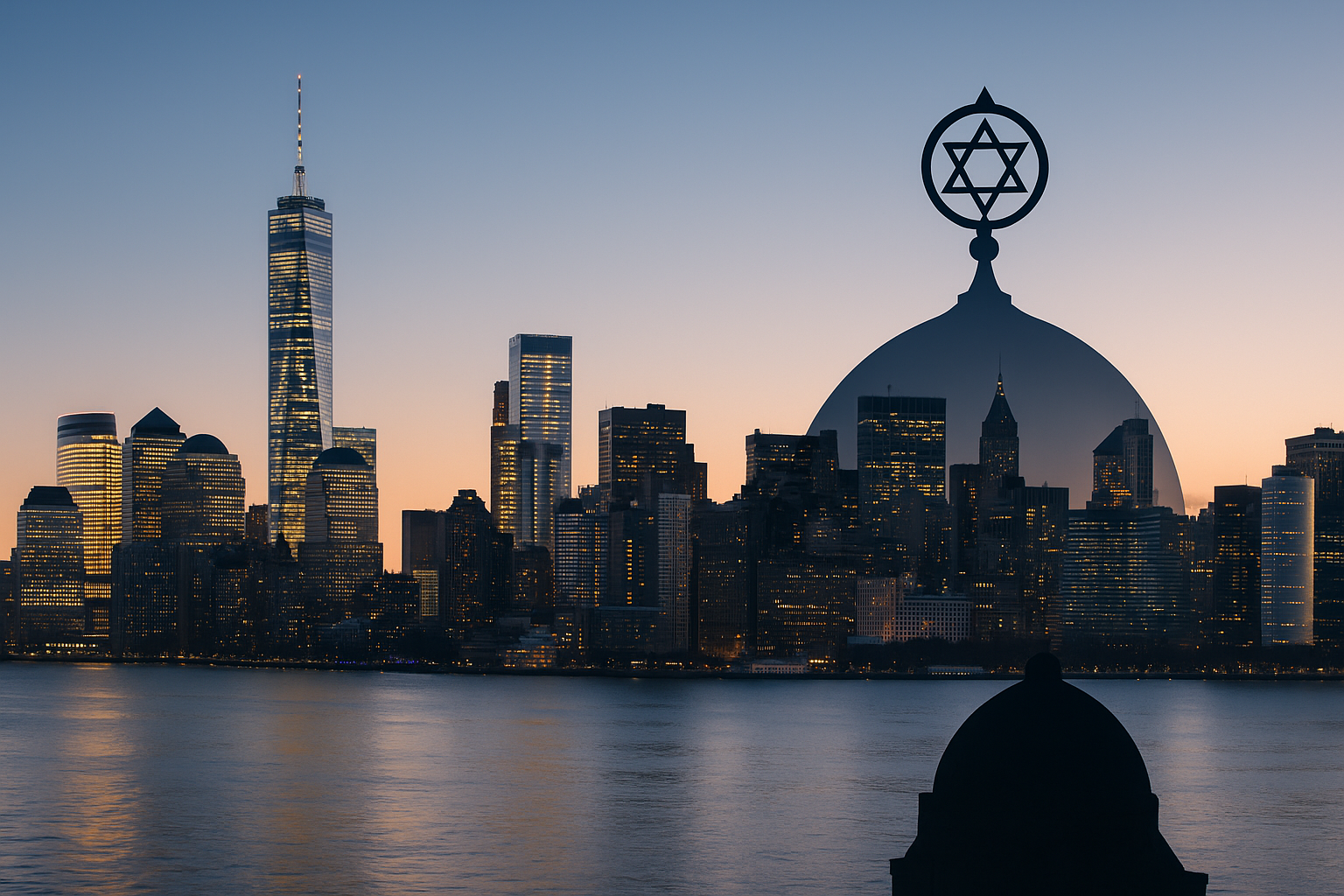
Jewish Identity and New York City (image from ChatGPT)
It’s not just about this election.
It’s about defining — and defending — the boundaries of Jewish identity.
During a recent meeting of Jewish professionals, I was moved as a woman passionately challenged us: We risk losing a generation if we don’t affirm anti-Zionism as a legitimate Jewish narrative. Her story and perspective were personal, aching. But to me, endorsing anti-Zionism within our movement feels less like an act of compassion and more like an act of self-harm — like amputating an arm to cure hunger.
New York’s mayoral race has turned this long-simmering Jewish debate into a very present conversation. After an initial rabbinic letter, “A Rabbinic Call to Action: Defending the Jewish Future”, warned that candidate Zohran Mamdani’s rhetoric on Israel normalizes hostility toward Jews — garnering 650 + signatories nationwide and climbing toward 1,000 — another, titled “Jews for a Shared Future”, pushed back, arguing that criticizing Israel, even when couched in antisemitic tropes, does not necessarily equal antisemitism.
They urge the community not to draw red lines around who counts as “in.”
This is not just a political split — it’s pastoral and existential. It asks: How open should our tent be? And how firm must its stakes remain?
Like many in the Reform rabbinate, I’ve spent my career balancing two sacred instincts:
the prophetic call to take a stand and the spiritual call to make space. One of my early mentors modeled tzimtzum — the divine act of contraction — teaching that creating room for others is holy work. Another rabbinic teacher from my youth demonstrated that authentic leadership requires risking unpopularity for the sake of principle.
Both are sacred models. Both inspire me deeply.
I want to welcome and embrace every Jewish soul who longs to feel part of our community. And yet, lately I find myself wondering: When does radical inclusion start to erode our shared foundation?
For me, a “Jewish” worldview that ignores or disavows Israel ceases to be Jewish. My Reform Zionism does not abandon social justice; it embodies it. It is an expression of progressive values fused with unapologetic love — for Israel’s promise, her potential, and her people. It calls me to push back, not walk away; to critique from within, not condemn from without.
We Reform Jews can and must wrestle with Israel — challenge her government, demand justice, dream of a better version of her — but we cannot abandon her. Israel is not an idea we can simply put down when it’s inconvenient. She is our family, our history, our spiritual homeland — the vessel through which the Jewish people re-entered history as actors rather than victims.
I am not advocating kicking anyone out of the tent.
But it is vital for us to define who we are and what we, as a movement, believe.
Individuals can choose whether they stand within those communal parameters, but some shared distinction of values must remain.
Even audacious hospitality has its limits.
Because an open tent without stakes isn’t a home — it’s a tarp blowing in the wind.
Reform Judaism must keep its flaps open, yes, but it also must hold its foundation firm — or it will come tumbling down.
Related Topics