
Is AI Good for the Jews?
It’s Time to Talk About Palestinian Arab Violence
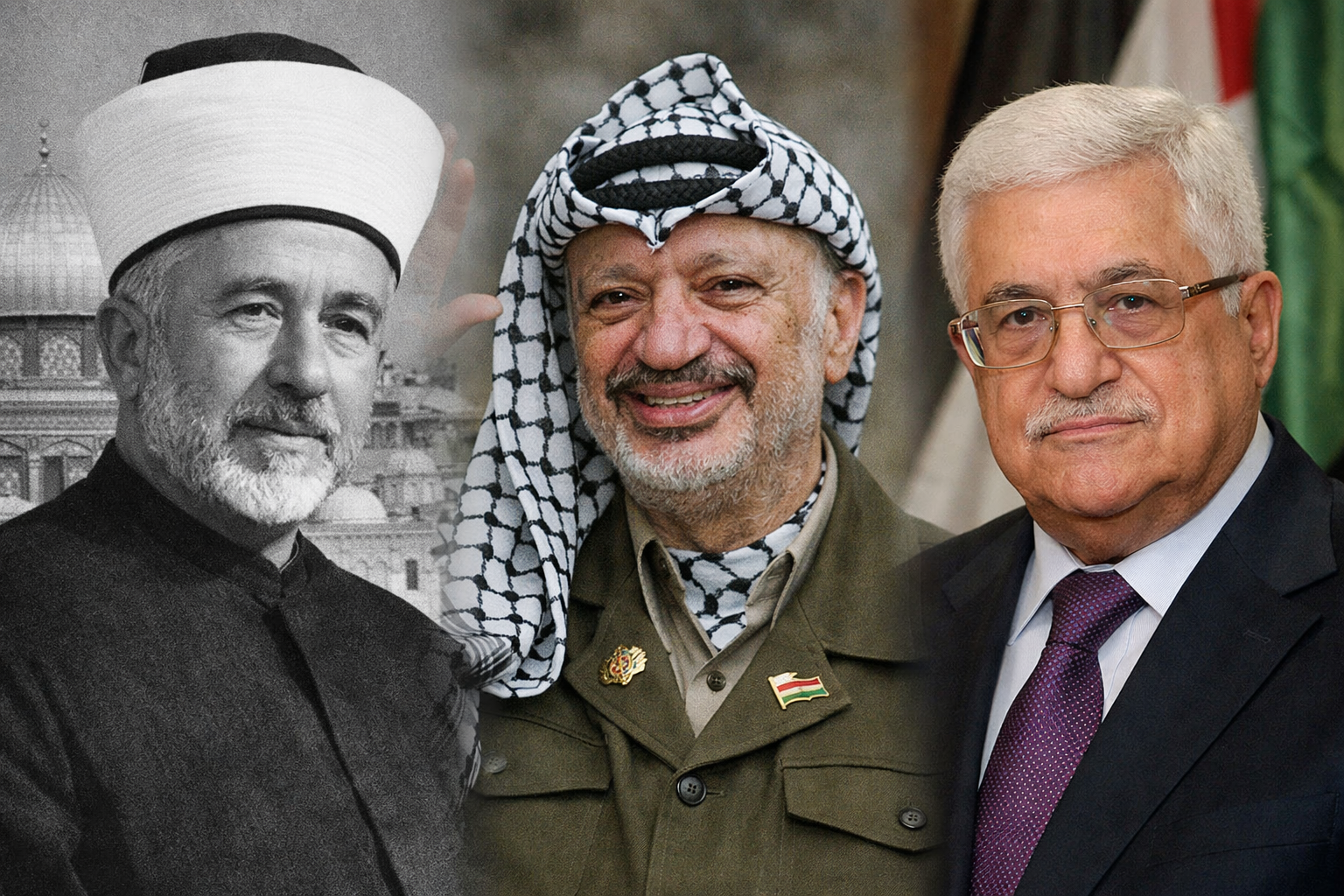
On October 7, 2023, Hamas-led attackers crossed into Israel and carried out a mass onslaught defined by intimate brutality, the rape of women, the murder of civilians in their homes, the killing of children, and the abduction of entire families. We know this because the assailants streamed their assault live on social media. The ruthlessness of the violence was almost overshadowed by its glorification.
Israelis experienced this assault as a civilizational rupture. Yet historically, Oct. 7 also reads as the most catastrophic installment of a much older pattern of organized mob violence and militant political violence by Palestinian Arab actors targeting Jews as Jews, a pattern that existed well before Israel became a state and long before the 1967 war left Israel in control of Gaza, Judea, and Samaria. Attempts to understand Oct. 7 and use it as a starting point for resolving the Israel-Palestine conflict without placing the attack within the context of historical Palestinian Arab violence risk misunderstanding not only the root causes of the conflict and its primary drivers, but also the types of reforms that are necessary if peace is to have any chance at all.
My intent is not to suggest that the conflict has only one direction of harm, nor is it to assign collective guilt. Palestinians need to be willing to confront the painful truth that the violent policies of their leaders has repeatedly backfired, morally, strategically, and materially, and has locked the Palestinians into cycles of ruin and radicalization. The Palestinian liberation ideology, put into place long before the state of Israel was even created, glorifies armed resistance and normalizes brutality against civilians, often elevating it into a moral ideal, while leading the Palestinians from nakba to nakba for more than a century.
The post October 7 reality is defined by the sobering recognition that Palestinian national aspirations will not advance without sweeping leadership and cultural reforms that redirect the Palestinian political imagination away from Israel as a permanent enemy and toward Israel as a permanent neighbor, and ultimately, a partner. That requires acknowledging how deeply anti-Jewish narratives have been embedded, at different times and in different ways, in Palestinian politics, socialization, education, and public honor-culture, and how violence against Jews is celebrated as a virtue, regardless of the consequences of such violence on the Palestinians themselves.
To grasp the depth of this problem we need to examine a specific through-line that is too often edited out of contemporary debates – the long history of Palestinian Arab attacks on the Jews of Ottoman and Mandatory Palestine prior to 1948, and the Jews of Israel subsequent to Israel’s establishment.
Intifadas as a Framework
In Arabic, intifada literally means an uprising or “to shake off.’ In English it most commonly refers to the 1987–1993 and 2000–2005 Palestinian riots. By delaying the use of the term Intifada until 1987 we risk giving the impression that it was only then that the Palestinians, motivated by the oppression of the Israeli occupation, turned to violence. This diversion does more than shift the focus away from Palestinian resistance to Jewish sovereignty over any part of Palestine, it also enables Palestinian leaders to avoid confronting (and taking accountability for) a long failed strategy of armed conflict that has brought them only defeat, displacement, death, and destruction. Through this avoidance, and by being allowed to point to the occupation as the source of their grievance, Palestinian leaders have not had to reckon with the consequences of their failures, and therefore have had no incentive to make the changes necessary for peace.
Across these 140 years of violence, the actors, slogans, and geopolitics have changed, but several recurring features appear again and again, including civilian targeting in homes, buses, schools, restaurants, marketplaces, and religious sites, acts of deliberate brutality meant to traumatize communities (not defeat an army), public legitimation of massacres and celebration of their perpetrators, the normalization of atrocities, the attaching of social honor to terrorists, and the common theme of expelling (or killing) the Jews.
In what the Israeli writer Hillel Halkin once described as the Arab denial of the concept of Jewish innocence, Palestinian Arab political and militant movements have been treating every Jew as a legitimate target since Ottoman rule, although this thinking was accelerated under the British mandate and institutionalized across Palestinian institutions and narratives since 1948.
Perhaps the first instance of Jewish blood being randomly spilled as an outlet for local Arab rage was in 1886 in the Jewish farming post called Em Hamoshavot in Petah Tikvah. On March 9, 1886, following a dispute over land, members of the Abu Kishk tribe and other local Arab residents raided the Jewish village destroying property and beating and stabbing Jews in their homes. Although transported to hospital in Jerusalem, the elderly Rachel Hadad Halevy died of her wounds. This attack previewed a pattern that would persist to this very day – Palestinian communal violence against vulnerable Jews as a means of intimidation and displacement.
Intifada # 1: Organized Violence in Jerusalem & Jaffa, 1920-1921
The first instance of anti-Jewish violence organized and encouraged by Palestinian Arab leadership was the Nebi Musa riots of 1920. Following political-religious incitement by Haj Amin al-Husseini, Palestinian Muslim worshippers in Jerusalem went on a four day (April 4-7, 1920) rampage, resulting in the death of five Jews and the wounding of hundreds more.
A year later, May 1-7, 1921, major Arab rioting against Jews in Jaffa resulted in 47 Jews killed and 146 wounded. Among the dead was the renowned Hebrew writer Yosef Haim Brenner. A primary target of this organized Arab communal violence was Beit Hehalutz or Pioneer House, a hostel for Jewish immigrants. Despite attempts at self-defense, the residents of the hostel were overwhelmed and subjected to brutal violence, with 15 Jews killed and 30 wounded.
Intifada # 2: All of Palestine Ignites into Violence, 1929
Historically labelled the 1929 Palestine Riots or Buraq Uprising, this Intifada marked the first time all of Palestine exploded into violence almost simultaneously, at the instruction of the Palestinian Arab leadership under the command of the now-appointed Grand Mufti Haj al-Husseini. Palestinian mobs were organized, funded, armed and transported to Jewish localities throughout Palestine to loot, rape, brutalize, and murder. In Hebron 67 Jews were murdered, and five days later another 20 Jews were murdered in Safed. In total 133 Jews were killed and 339 Jews were injured.
Intifada # 3: Sustained Revolt, 1936-1939
What is commonly labeled the Arab Revolt (1936–1939) is best understood as a prolonged campaign against both British authority and the Jewish presence in Palestine. An organized, multi-year escalation which included terrorism and communal attacks, resulted in 415 Jews were killed and more than 1,000 Jews wounded over the three years of violence and terror. Among the worst Arab atrocities on Palestinian Jews were the Tiberias massacre on October 2, 1938, with 19 Jews killed, including 11 children, riots in Jaffa between April 19-21, 1936, with 9 Jews dead, and the Haifa riots on July 25, 1938, where 4 Jews were killed and 13 wounded. The moral and strategic core of the Arab violence was not territorial bargaining with a Jewish state that did not yet exist, but rather the delegitimization of any Jewish life in the country.
The violence did not drive the Jews out, instead it galvanized Jewish self-defense and strengthened Jewish resolve. This could have been the moment for a Palestinian strategic re-evaluation. Instead, the ethic of elimination hardened.
The Fedayeen Era, 1949–1967
The establishment of the State of Israel in May 1948 made no difference to Palestinian Arab leadership, who continued to vow to remove the Jews from the land by force. Their effort primarily focused on organizing bands of terrorists called fedayeen who would regularly raid into Israeli territory to sabotage, steal, and murder.
The Israelis responded to Arab violence with retaliatory assaults on the Palestinian terror group that perpetrated an assault, the town in Jordan (West Bank) or Egypt (Gaza) from which the assault originated, and, after a particularly damaging terror attack, the host country’s infrastructure. The toll Israel imposed through its three-pronged retaliatory strategy should have caused another moment in history where Palestinian Arab leaders reconsidered their war against the Jews and its consequences on the Palestinian people. Instead, yet again, the dedication to armed conflict deepened.
Jewish Agency records report 400 Israelis dead and 900 wounded by fedayeen invaders between 1949-1956. High casualty attacks during this time include grenades thrown into a Jewish home in Yehud on Oct. 12, 1953, killing a mother and her two children, the Ma’ale Akrabim bus massacre of Mar. 17, 1954, in which an Israeli passenger bus traveling along the Negev road was ambushed killing 12 Israelis and wounding 2, the April 11, 1956 attack on the study hall of a Kfar Chabad synagogue (near Lod), killing six (including 5 children) and wounding 20, and the Ramat Rachel shooting on September 23, 1956 that resulted in 4 Israelis dead and 16 wounded.
Between 1957-1967 armed Palestinian terror groups expanded their reign of terror to include attempts against Israeli national infrastructure. These attempts at sabotage were part a campaign to perpetrate acts of terror that could be widely publicized and mythologized. The sabotage was not a shift in strategy away from violence, but an addition to random violence against Israelis. During this time 125 Israelis were killed and 41 wounded in Palestinian attacks.
Post Six Day War, 1968-1986
The Israeli occupation so often used to justify or explain Palestinian terrorism was itself a consequence of Arab violence. Even while Palestinian terrorism evolved after the war to include assaults on Israelis and Jews abroad, in Israel the attacks continued. During this period another 692 Israelis were killed and 2,556 were wounded by Palestinian terrorism. Among the more notorious attacks during this period are the May 8, 1970, bombing of a school bus in the Upper Galil moshav Avivim killing 9 Israeli children and 3 adults and wounding 19 children, the Kiryat Shmona massacre of April 11, 1974, killing 18 Israelis, including 8 children, and wounding 15 others, the Ma’alot school massacre of May 15, 1974, where an attack on an Israeli school left 25 Israelis dead, including 22 children, and the March 11, 1978 Coastal Road massacre that killed 28 Israelis, including 12 children, and wounded 71 more.
Intifada # 4: The First to be Labelled an Intifada, 1987-1993
This shaking off of the Israeli occupation learned nothing from the failed tactics that had, in no small part, hardened the occupation. Well organized and led first by local Palestinian leaders, and later directed by the PLO from Tunis, this Intifada included violent protests with rioters throwing stone and Molotov cocktails at Israeli civilians and soldiers alike. In all, more than 200 Israelis were killed and 3,100 wounded in what is often misremembered as a non-violent uprising.
Indeed this era was not without the same type of random terror attacks that have been the core of so-called Palestinian resistance since the 1880s. On Oct 30, 1988, an Egged bus was firebombed, killing 5 Israelis, including 3 children, and wounding 5 others, on July 6, 1989, a Palestinian seized the steering wheel of an Egged bus, forcing it off the road and into a ravine, killing 16 civilians, and injuring 27 more (in what might be the first ever Palestinian suicide terror attack), and on March 17, 1992, an assailant with a knife killed 2 and wounded 20 in Jaffa.
Intifada # 5: Post Oslo Violence as a Rejection of Peace, 2000 – 2005
The Oslo Accords, a series of agreements between Israel and the Palestine Liberation Organization created a potential inflection point for the Palestinians to soften their views on the partition of Palestine, abandon violence and terror, and leave behind their demand for all of Palestine (from the river to the sea) for the sake of peace. The Palestinians were led by Haj Amin’s disciple and cousin Yassir Arafat who assumed the leadership of the PLO in 1968 and was a faithful adherent to his mentor’s commitment to victory through arms. When presented with an opportunity for compromise Arafat could not abandon violence or the commitment to all of Palestine, and despite an Israeli offer that included 95% of the West Bank and Gaza, land swaps to compensate for land Israel was retaining along the 1967 Green Line, and a shared Jerusalem. He, like his cousin before him, rejected compromise and launched a wave of violence against the Jews. This incarnation of Palestinian institutionalized mass-casualty attacks included suicide bombings against buses, cafes, markets, and holiday gatherings. In all, this wave of terror claimed approximately 1,219 Israeli lives, wounding another 8,341 people.
October 7: Not Just Another Atrocity
All in all, prior to Oct 7, 2023, more than 4,872 Israelis have been killed and 18,551 have been wounded since the founding of the State of Israel in 1948, with another 685 killed and more than 4,000 wounded in pre-State anti-Jewish Arab violence.
Oct. 7, with 1,219 killed (including 364 at the Nova festival), 3,400 wounded and 251 taken hostage, was more than merely the boldest and most successful terror assault on Israel. While it was born of the same violent rejection of any Jewish presence in any part of the land that has dominated Palestinian political thought for the last century, its ferocity, its boldness, and the international responses it provoked has placed a spotlight on the need to resolve the Israeli-Palestinian conflict. That spotlight has, in turn intensified Western demands for Palestinian Authority reforms as a prerequisite for peace. The core of these reforms is a Palestinian political commitment to Jewish sovereignty over parts of pre-1948 Palestine and the total cessation of the 140 year campaign of terrorism.
Yet the killing continues. Since Oct. 8, 2023, 61 Israelis have been killed, including 2 in Beit Shean on December 26, 2025, and over 100 have been wounded in Palestinian violent attacks inside Israel.
Even as the Palestinian tragedy in Gaza unfolds, Palestinian leadership continues to call for armed resistance, martyrdom, and sacrifice, unable or unwilling to see the disaster their policies impose on their own people.
A Strategic & Moral Backfire
From Rachel Hadad Halevy to Aviv Maor, the Palestinian war against the Jews has been tragic for the Jews, and catastrophic for the Palestinians. Each wave of civilian-targeting violence has produced the opposite of Palestinians objectives, with stronger Israeli security measures, less Israeli trust, reduced diplomatic flexibility, harsher retaliation, more Jewish presence, deeper Palestinian impoverishment, and new traumas that radicals exploited to recruit the next generation of terrorists. Violence has not liberated Palestinians, it has only deepened the very conditions Palestinians claim to most resent.
Palestinian Arab violence against Jews, alongside their attempts to delegitimize Israel, deny any Jewish connection to the land, and organize boycott and lawfare campaigns against Israel, has been the central engine of Palestinian political failure. Anyone genuinely seeking peace must begin by acknowledging this truth, because the reforms required are not only territorial, but moral, cultural, and political like ending incitement, ending the glorification of civilian murder, and building a leadership capable of telling its people that coexistence is not surrender, but a necessity and a future worth building.
Related Topics