
We shouldn’t depend on US taxpayers to fund our security
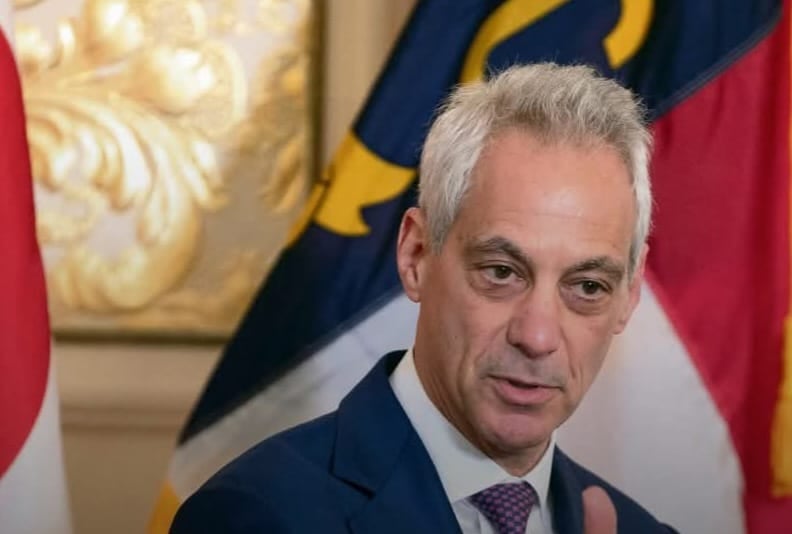
Rahm Emanuel – by his full name Rahm Israel Emanuel – is considered one of the senior Democrats with the closest ties to the State of Israel. His father, Jerusalem-born, was a fighter in the Irgun, and the son, too, has a deep personal connection to Israel. During the Gulf War in 1991, Emanuel volunteered at an IDF maintenance base, and he celebrated his son’s bar mitzvah in Jerusalem.
Throughout his long career – as a member of Congress, White House Chief of Staff, mayor of Chicago, and US ambassador to Japan – Emanuel has shown a consistent commitment to Israel. Today, his name is even being mentioned as a possible 2028 presidential candidate. Precisely for that reason, the shift in his positions carries particular significance.
Emanuel said in an interview on Bill Maher’s show:
“No more US military … financial assistance by the taxpayers for Israel. You’re a country, like all other allies of ours: Japan, South Korea, the Brits, and the Germans. You’re going to pay full price. You can buy what you want, but you have to abide by the laws.”
Emanuel is not alone. Out of 47 Democratic senators, 40 recently supported a proposal to halt the sale of bulldozers to Israel, and 36 supported halting the sale of 1,000-pound bombs. This is a clear signal: Netanyahu’s Israel is losing its grip on the Democratic Party – and not by chance. More and more Americans are unwilling for military aid to Israel to be a blank check that lets the Netanyahu government continue unnecessary wars and cause disproportionate harm to civilians.
Continuing his remarks on the show, Emanuel noted that “going to war with Iran, with the US and Israel acting together in a way that hasn’t happened in decades, is a significant policy change – one that comes with political risk, and that risk is now materializing.” While in Israel, Netanyahu’s ability to enlist Trump in a confrontation with Iran was praised. In the United States, however, the picture is different: many people on both sides of the political spectrum saw it as the manipulation of an American president by a foreign leader, a move that endangers American soldiers and harms the economy.
The reality is, of course, that past presidents have resisted pressure from Netanyahu to go to war with Iran, and the decision to go to war was ultimately Trump’s, not Netanyahu’s. But the perception that Netanyahu dragged the US into this war, along with the American public’s outrage at the war in Gaza, has brought about a real change in the politics around Israel.
Demands for a change in policy toward Israel are no longer confined to the political fringes but are coming from the center of the center – from figures like Emanuel, who have proven a deep commitment to Israel’s security over the years.
Emanuel is not the only prominent Democrat with a connection to Israel who has called for a healthier US-Israel relationship. Daniel Biss, mayor of Evanston, Illinois, and the son of an Israeli mother and a Hebrew speaker, recently won a political battle against AIPAC in the primary in Illinois’s Ninth District. AIPAC came out against him with full force, not because he doesn’t support Israel, but because he opposes unconditional US support for the policies of the Netanyahu government. The millions of dollars invested against him did not help; in fact, they made things worse. AIPAC, like Israel under Netanyahu’s rule, has become, in the eyes of many, a toxic brand, to the point that its opposition to certain candidates has become a political asset for those candidates. And this isn’t because AIPAC supports Israel – but because it demands a blank check for the Netanyahu government.
Rahm Emanuel’s warning about the political risk of dragging the US into a war with Iran should resonate in Jerusalem. Next month, talks are expected to open on a new military aid memorandum of understanding running through 2038. In Israel, there is talk of an “interim framework” toward gradually reducing dependence on American aid. But it’s uncertain whether the US will extend the military subsidy or if that would be the right decision for the relationship’s future.
Israel’s standing in the US is collapsing, and even Trump appears to understand this, as he now tries to keep a safe distance from us. Not only did he not bother to come receive the Israel Prize, but he didn’t even send a greeting. He sees polls that show 57% of Republicans under the age of 50 view Israel unfavorably and understands that, less than half a year before the midterm elections, it’s wise to keep a distance from a state of Israel that has been made more toxic than ever by our far-right government. To change this mood, drastic steps are needed – not an “interim framework,” which is a fancy name for more of the same.
Israel’s 2026 defense budget is approaching $50 million; American aid, currently standing at roughly $4 billion a year, makes up only a small share of it. If we want to begin rehabilitating our standing in the US, with the American public and decision-makers alike, a clear Israeli statement that we no longer want American taxpayer money would be a worthwhile place to start. Netanyahu took an important first step when he said Israel no longer needs the subsidy—although it’s not clear whether he did so of his own free will or because he understood that’s where the Trump administration is heading.
Of course, foregoing the aid subsidy alone will not be enough. Israel needs to change its policies too – pursuing diplomacy over endless wars. But change has to start somewhere, and the right place to start is a clear statement: Israel, like every wealthy US ally, wants security cooperation – not subsidies from American taxpayers. Our country is wealthy and strong enough to do this, and we will be even stronger after we give up the financial support that we have grown accustomed to but now serves neither America’s nor Israel’s interests.
And most importantly, it has to be understood that Netanyahu is not “Mr. America,” as many in Israel think, but rather the man who has critically damaged Israel-US relations, and the first step to improving relations between the two countries is defeating him in the next election.