
Where Objectivity Meets Reality
Jerusalem Day: Commemorating an Eternal Bond
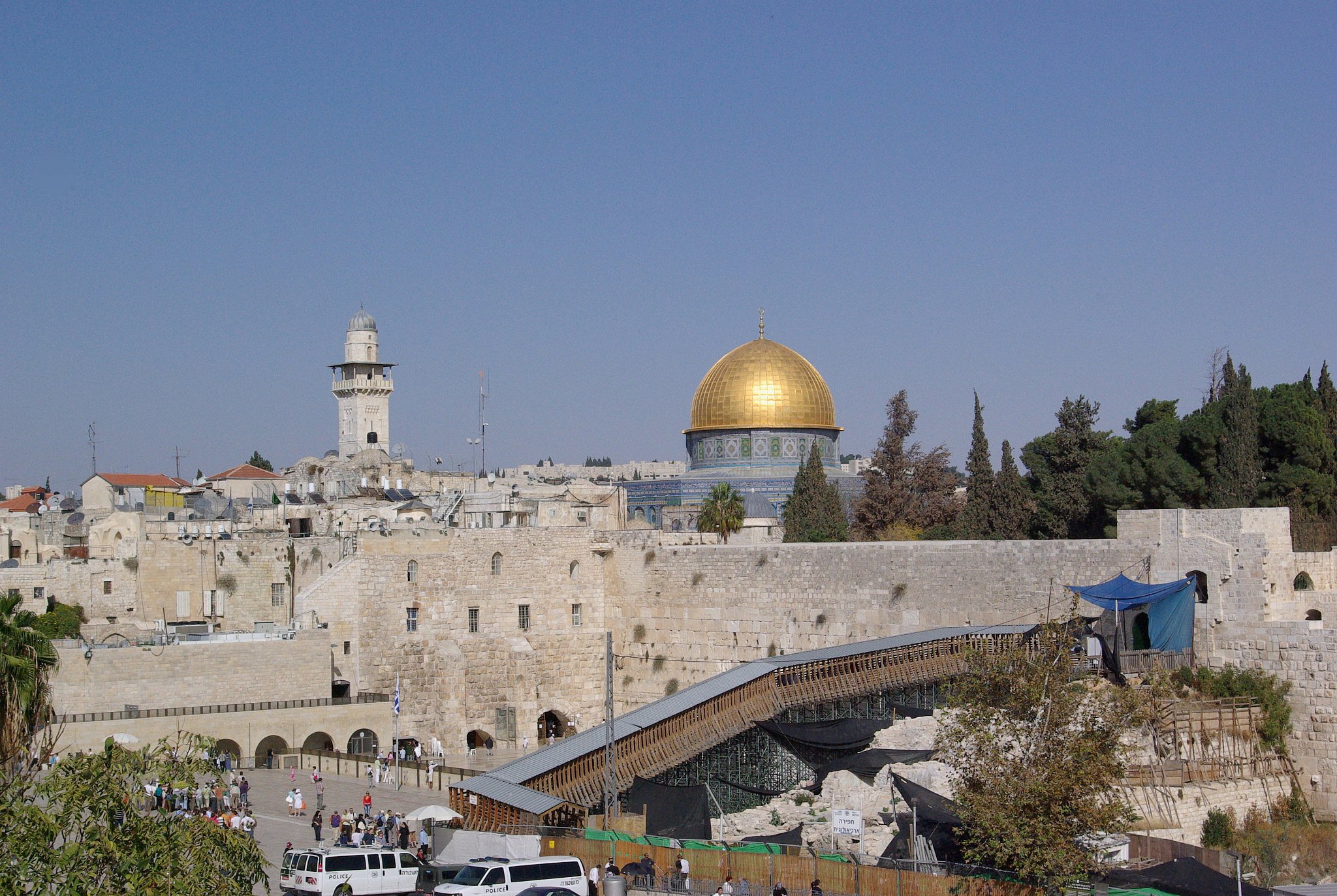
Jerusalem, Dome of the Rock and the Western Wall. (2008, Berthold Werner)
Every year on the 28th of the Hebrew month of Iyar, Israel celebrates Yom Yerushalayim—Jerusalem Day—to commemorate the reunification of Jerusalem in 1967. For many in the Arab world, it is a day of protest or anger, but for Jews around the globe, it is a day of deep joy, reflection, and connection to a city that has been the beating heart of Jewish identity for over 3,000 years.
Jerusalem: More Than a Capital
Jerusalem’s status remains a perennial source of international debate, but those who truly understand the historical and spiritual meaning of the city for the Jewish people know that Jerusalem is far more than an administrative or political capital. Since King David made it the capital of his kingdom around 1000 BCE, it has been the spiritual core of Judaism. The Temple Mount, later home to the First and Second Temples, is the place where, according to tradition, Abraham nearly sacrificed his son Isaac. It is where the divine presence—Shechina—was most palpable in Jewish belief.
Throughout centuries of exile and dispersion, Jerusalem remained the compass point of Jewish consciousness: all Jewish prayer is directed toward Jerusalem, every Passover meal concludes with the words “Next year in Jerusalem!”, and countless psalms, lamentations, and songs long for the city. No other religion or culture has such an exclusive and intense connection to Jerusalem as Judaism does.
1967: Reunification After Centuries of Denial
After nearly two millennia without sovereignty over the city—and with Jews barred from their holiest sites under Ottoman and later Jordanian rule—the capture of East Jerusalem in 1967 by Israel marked a historic turning point. For the first time since the destruction of the Second Temple in 70 CE, Jews could once again freely access the Western Wall and Temple Mount.
What some label as a military “occupation” was, for millions of Jews worldwide, experienced as a spiritual homecoming and historical justice. It was not the conquest of another people’s heritage, but the return to the sacred center of their own.
Why the Arab World Still Objects
Arab opposition to Jerusalem Day stems from a broader rejection of Israeli sovereignty over the city. Many international resolutions continue to refer to East Jerusalem as “occupied territory,” and the Palestinian Authority claims it as the capital of a future Palestinian state. Yet this claim often ignores the deep-rooted historical and religious reality of Jerusalem as the Jewish capital.
During Jordanian rule (1948–1967), Jews were denied access to their holy sites, synagogues were destroyed, and Jewish graves on the Mount of Olives were desecrated. Since Israel’s reunification of the city in 1967, all faiths have had access to their sacred places—a fact rarely acknowledged by critics.
Jerusalem Today: A Complex but Open City
Despite ongoing tensions, Jerusalem today is a mosaic of cultures. Arabs, Jews, Christians, and others live side by side, with shared markets, hospitals, universities, and schools. Coexistence is not a slogan but a reality for many Jerusalemites. Israel has invested in infrastructure and services for all residents, even as disparities—like in any major metropolis—persist.
Crucially, Israel, despite provocation and the constant threat of violence, keeps Jerusalem open to all religions. Christian pilgrims freely enter the Church of the Holy Sepulchre, Muslims pray daily on the Haram al-Sharif, and Jews return to the Western Wall—in a city that breathes its history like no other.
Jerusalem Day as Affirmation, Not Provocation
Jerusalem Day is not a show of dominance but one of survival—of a people exiled from their holiest city for centuries who never gave up hope of return. It marks a factual, historical reunification—not conquest for conquest’s sake. It is a day of hope—that Jerusalem might one day truly become a city of peace, for all its inhabitants.
In the Context of Today
Amid recent wars and instability—from Gaza to the Houthi attacks, from northern Israel to international tribunals—Jerusalem Day reminds us that Israel is more than a state in conflict. It is a place where memory, hope, and sanctity converge. In a world increasingly prone to simplification and binary narratives, Jerusalem Day offers a chance to acknowledge the complexity of history and to recognize the ancient, unwavering bond between the Jewish people and their capital.
Those who truly seek peace must begin with understanding the sacredness of the other. In that sense, Yom Yerushalayim is not an obstacle to peace, but an invitation to recognition—and, one day perhaps, even reconciliation.
Related Topics
Related Posts