Jerusalem: History, Holy Sites, Culture, and Life
Jerusalem is not a city you can see completely at once but rather comes slowly through the tiny stone alleyways and the busy markets, then calm courtyards, ringing church bells, the call to prayer and the sight of families rushing home before Shabbat. Every neighborhood seems to have its own tale and every ancient wall seems to contain the recollections of another period. But Jerusalem is not only a monument of the past, it is a living capital with schools and hospitals, also cafes and government offices with construction projects and traffic jams and regular people trying to make meaningful lives.
Jerusalem has seen more history than other cities. Its name has echoed through centuries of religious tradition, royal ambition, pilgrimage, conquest and longing. It was the focus of the spiritual and national life of the ancient Israelites. Its hills were the seats of kings, its streets the walks of prophets, and generations, though distant from the land, turned to it in prayer. The destruction of the First and Second Temples made Jerusalem a symbol not merely of loss but also of endurance and return.
Jerusalem to Christians is the place where the last days of Jesus’ crucifixion and his resurrection happened. Many pilgrims continue to walk the Via Dolorosa through the Old City on their way to the Church of the Holy Sepulchre, which sometimes bearing wooden crosses or singing hymns in languages from throughout the globe. And within the church, the faithful of the ancient Christian communities come together in one of the most hallowed and historically complex venues of Christianity.
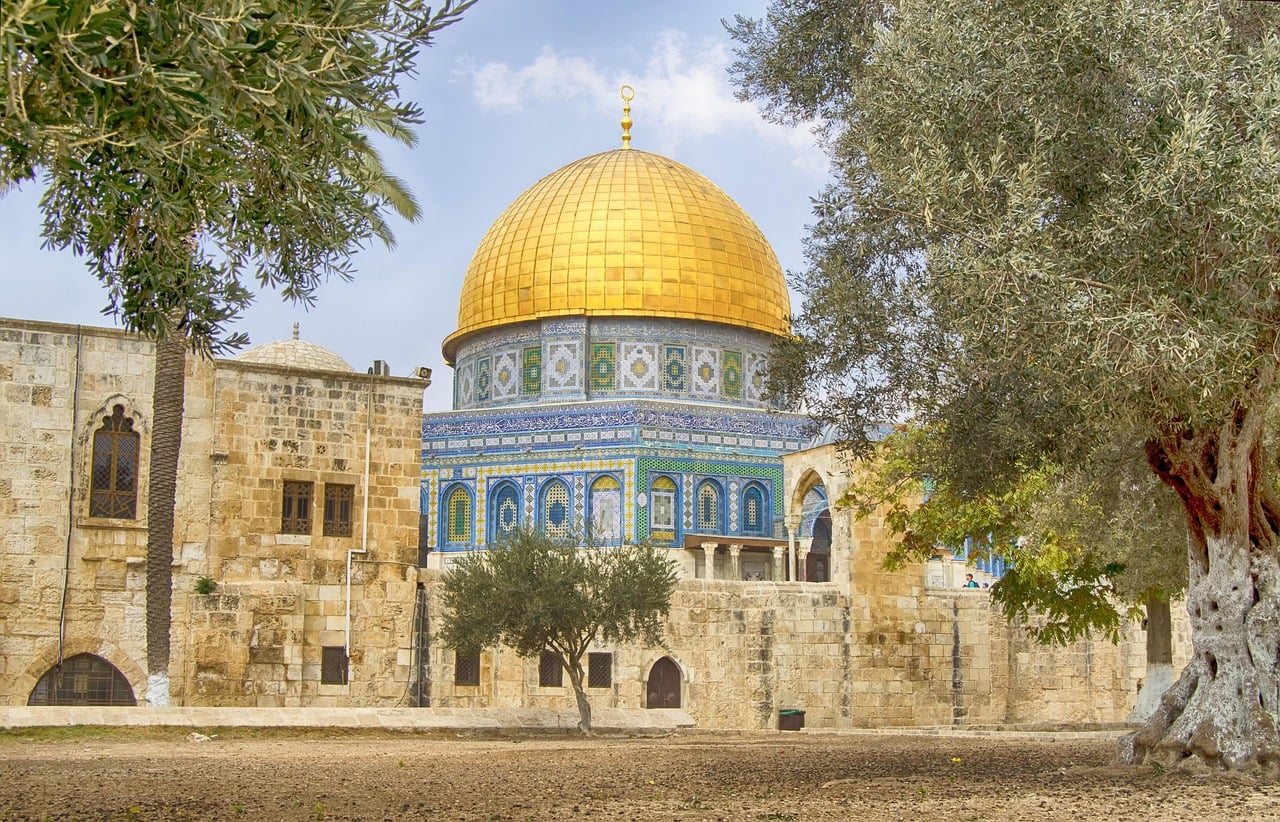
Jerusalem which known to Muslims as Al-Quds is also of great religious significance. The golden roof of the Dome of the Rock, one of Jerusalem’s most iconic features can be seen from many sections of the city. Also, nearby sits the Al-Aqsa Mosque, one of Islam’s holiest sites. The sacred constructions are part of a religious landscape that has molded Muslim faith, architecture and memory for over a thousand years.
These traditions converge on a very narrow region. The Old City and its walls, a UNESCO World Heritage Site, are home to hundreds of historic and religious sites associated with Judaism, Christianity and Islam. It is like entering many universes when you go through its gates. The usual classification into Jewish, Christian, Muslim and Armenian sectors gives a handy map, but reality is more complex. Communities, companies, religious institutions and family history intertwine in ways that cannot often be plotted on a map.
Folded prayers are tucked between the ancient stones by visitors to the Western Wall. Some come for bar and bat mitzvahs, others stand alone and meditate in silence. The atmosphere is changing during the day. The early mornings may be very introspective, the evenings before Shabbat full of song, dance and massive gatherings of believers. Above the square rises the compound that Jews refer to as the Temple Mount and Muslims as Haram al-Sharif, a site of great reverence and ongoing sensitivity.
Modern Jerusalem is a city of hills and valleys . The houses beyond the walls are built of pale stone , giving the city a visually distinctive appearance . Here are the Knesset, the Supreme Court, the president’s official residence and various government ministries. The pulse of the capital is made up of diplomats, civil servants, students, religious experts, medical professionals, artists, shopkeepers and technology workers.
Life is more diversified than the solemn images often conjured up in connection with Jerusalem. Mornings start with busses on the hilly streets, parents taking their children to school and bakeries with fresh bread. In the Mahane Yehuda Market, consumers stroll through jam-packed alleyways while sellers display fruit, vegetables, spices, fish, cheeses and pastries. During the day the market is busy and practical. At night, parts of it turn into a social hotspot, with restaurants, music and small bars behind stalls that have closed for the day.
Food is one of the best ways to grasp the city’s variety. The kitchens of Jerusalem mirror the Jewish communities whose roots are from North Africa, Eastern Europe, Central Asia, the Middle East and beyond. Hummus, falafel and grilled meats, maqluba, musakhan, stuffed vegetables and syrup-soaked desserts are among the Palestinian culinary traditions that remain an essential element of the city’s culture. Armenian bakeries, Kurdish specialties, Georgian dishes, and modern Israeli eateries provide even more layers. The debate over where to find the best hummus or pastries can be rather fierce, but it’s part of the city’s appeal.
Jerusalem’s cultural life is sometimes eclipsed by its religious and political prominence. The Israel Museum houses major archeological, artistic and Judaica collections and is home to the Dead Sea Scrolls at the Shrine of the Book. The city also features galleries, theatres, music venues, film events, libraries and independent bookshops. Jerusalem is a tough yet seductive city, where inspiration and tension appear to live side by side, writers and artists often say. Readers who want to test their knowledge can also try this Quiz about Jerusalem.
The calendar of the city has numerous rhythms at once. Jewish holidays change streets and communities, especially during Passover, Sukkot, Rosh Hashanah and Yom Kippur. Ramadan is known for its nightly get-togethers and celebratory dinners after the daily fast, especially in Palestinian districts and around the Old City. At Christmas churches and processions are filled with Christian communities and pilgrims from abroad. Sometimes part of Jerusalem is quiet, while another portion is full with celebration.
One of the most obvious weekly variations is Shabbat. In many Jewish districts stores are shuttered, traffic thins down and families gather round dinner tables. In less secular sections, fewer cafes and entertainment places might remain open, but Palestinian commercial areas continue with their normal routines. The contrast underscores a fundamental truth about Jerusalem: there is seldom a single experience of the city that is equally shared by all.
Jerusalem is home to Jewish, Muslim and Christian populations, including secular and traditional Jews, ultra-Orthodox families, Palestinian Muslims and Christians, Armenians and many smaller groups. Their lives cross paths organically at the workplace, in hospitals, in universities and other public venues. At other times they live largely apart, separated by language, education, politics, religion and geography. More background about the city can be found on Wikipedia’s Jerusalem page.
Those divisions cannot be ignored. Jerusalem is beloved, but also fiercely contested. Questions of sovereignty, boundaries, residence, housing, building, security and access to sacred sites affect daily life. Israelis consider Jerusalem as their national capital; Palestinians would like East Jerusalem to be the capital of a future Palestinian state. The wider Israeli-Palestinian dispute includes the international controversy over the city’s status.
These are not theoretical difficulties for the individuals who live here. They shape where people may build houses, what schools children can attend, how long a commute takes and whether someone feels completely represented by the institutions that govern the city. The political debates of diplomacy that the world sees are experienced here at home as permits, checkpoints, policing, municipal services and neighborhood development.
But it would also be a mistake to reduce Jerusalem in its entirety to conflict. People fall in love, have children, start businesses, prepare for examinations, look after elderly parents and gripe about the cost of life. In the city’s hospitals doctors and nurses from different communities work together. University campuses are shared by students. Shopkeepers greet customers they’ve known for decades. These interactions don’t erase the city’s conflicts but they do expose a more complex reality than the one generally presented in headlines.
Beauty in Jerusalem is in the smallest of moments. Maybe it is the twilight light gilding the stone walls, or the scent of bread from an Old City bakery, or the unexpected silence of a secret courtyard. It is heard in Hebrew, Arabic, English, Armenian, Yiddish and many other languages, all spoken within a few streets of each other. You see it in an old man carrying groceries, children playing football next to an antique wall or pilgrims gaze at a sacred spot they have dreamed of seeing for years.
Every person who enters the city demands something different. To some it is a religious aspiration fulfilled. To some it is home, with all the love and exasperation that word implies. For visitors it can be overpowering, gorgeous, puzzling or spiritually potent. Jerusalem seldom fails to impress.
To make sense of Jerusalem today you have to hold numerous truths together. It is ancient and modern, sacred and profane, inspirational and disturbed. It is the capital of Israel and the focus of Palestinian national aspirations. It is a destination for millions of believers and a hometown where locals struggle with rent, work, education and transit. Its stones tell the story of the past, but its people live strong in the present.
Jerusalem has survived because it has never been just a place in a history book. It is constantly changing, arguing, celebrating, remembering and dreaming its future. Its holiness makes it immortal, but its humanity makes it alive. It is this mix that makes Jerusalem so hard to define but also so hard to forget.