
High School Junior Dancer and Artist
Jewish-American Connectivity to Israel: a Teen’s Awakening
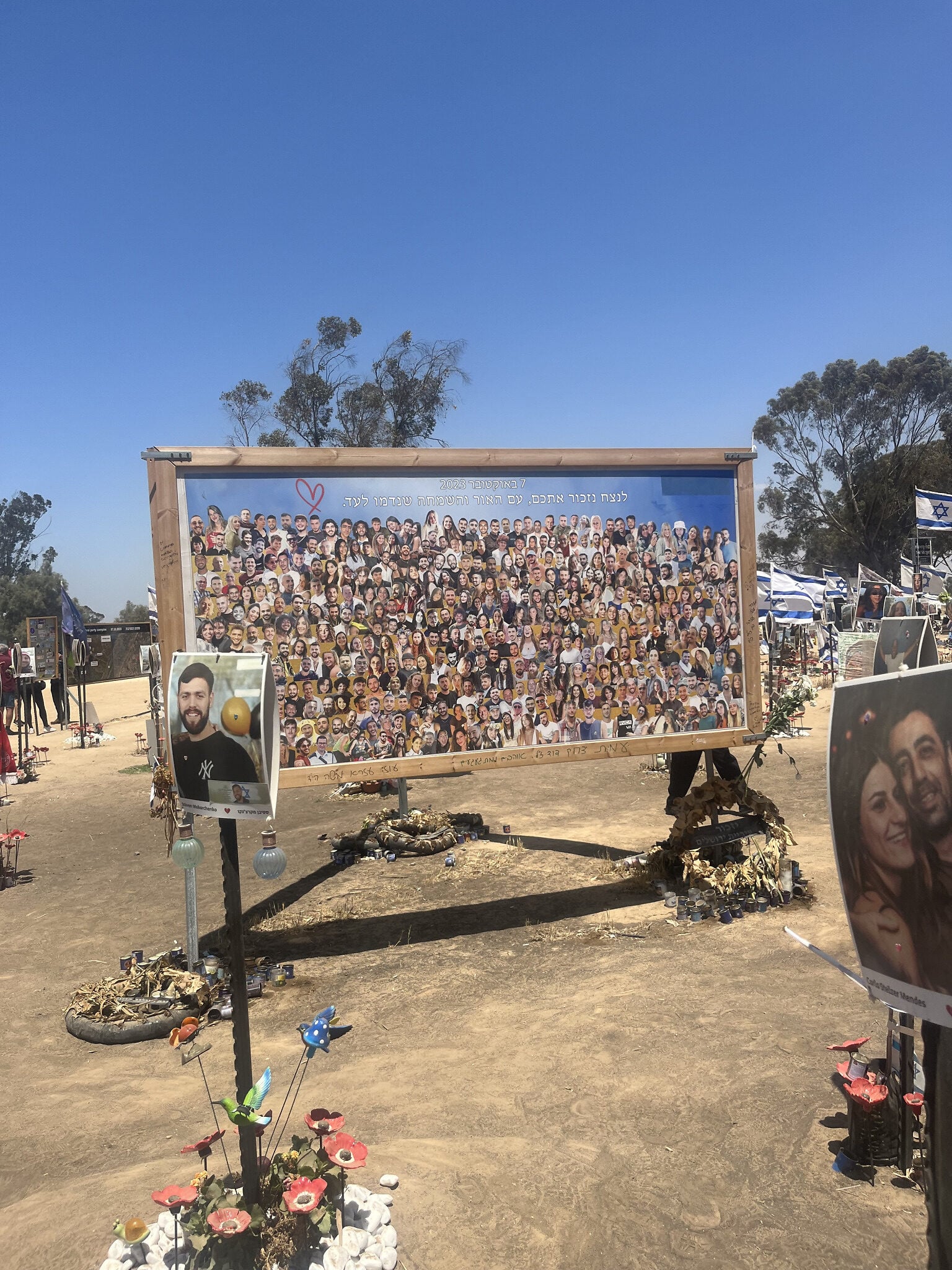
Picture From Nova Festival Site
When I was younger, I did not understand the importance of Israel. It was the place I went to visit my family, learn about my culture, and the majority there was Jewish. I never fully understood the environment Israel’s existence created for Jews in the diaspora. I only started to recognize the need for a Jewish state after October 7th, when the majority of my progressive friends, peers, and teachers rallied against the place I once innocently visited to see family and learn about my culture. I started to feel ostracized from my community, and yet I knew the one place I still belonged was Israel – the Jewish homeland.
I found myself estranged from many of the people in my social circle. They began to spew harmful rhetoric, both anti-Israel and antisemitic. As they maliciously rallied for the downfall of Israel, I rallied for peace. In a community that once felt so welcoming, so contemporary in their thought, I felt lost. They no longer supported the minority of Jews in America, making up just 2% of the country’s population. Simultaneously, as my religious and cultural identity was shunned, my political identity began to wander. I thought to myself, neither extreme is representative of what I believe in. I saw a Jewish content creator on Instagram say that her progressive, liberal community stopped supporting or standing up for her, but the opposite, conservative side seemed too insane in their thinking for her, despite offering more support to the Jewish community. So she felt “politically lost.” After seeing this sentiment, I felt it echoing in my everyday life.
How could I side with those who called my family and me “zionist bigots,” or those who did not believe in the political viewpoints I grew up with?
After October 7th, the word “Zionist” was used to degrade us. Not only was it used to shame us, but it demonized the Jewish people – much like when the Soviet Union declared Zionism racism to disconnect Jews from Israel after the Holocaust. I saw my Jewish friends denounce their standing as Zionists and side with the more woke, extreme point of view that “from the river to the sea, Palestine will be free,” but what they did not realize is that this called for the extermination of Jews, about half of whom in the world live between the river and the sea. While they fed into the media and everything they saw online, I stayed on my toes. I learned from reputable sources and spoke from personal experience. My Israeli dad taught me about events in Israeli history and told me about his time serving in the Israeli Defense Forces (IDF) unit, Sayeret Matkal. I mention his unit because he was at the top of the IDF: an elite force that experienced everything under the sun. He was able to give me his personal perspective. I didn’t stay pigeonholed into just the side I believed in. I opened up my eyes and ears, listened to a wide variety of voices, but I realized I must side with what I know is true, what is historical, and what I have learned.
The first few times I faced antisemitic remarks head-on did not end so well; I felt bombarded by the words that were being used to rebut my claims and did not know how to respond. So I went back to the drawing board. I stood firm in my beliefs and continued to learn. I wanted to feel prepared for the next time.
I have always enjoyed humanities, learning about culture and language, migration patterns, and history. So, to my benefit, I did not lose interest or stop speaking out just because I didn’t know how to respond the first time; rather, I became more outspoken.
Contributing to this sense of wanting to learn about the humanities was the Eurovision Song Contest. From a young age, I had always heard Israel’s song entries such as “Golden Boy” by Nadav Guedj, or winners Netta Barzilai with “Toy” and Dana International with “Diva.” However, after October 7th, when the contest’s fan base became the enemy of Israel, I felt saddened. I watched as Eden Golan, Yuval Raphael – a Nova Festival survivor – and Noam Bettan took the stage. As they were booed and received death threats, they did not let it affect them, but instead placed in the top 5 year after year out of a selection of about 40 other countries (Notably, Bettan placed 2nd even after the European Broadcasting Union (EBU) changed voting rules after controversy surrounding Israel’s participation and voting campaigns). That is Jewish resilience. Standing on a global stage and facing antisemitism head-on. Israel’s incredible showcase of talent and artistry encouraged me to keep learning about Jewish and Israeli culture and language.
On the note of the Hebrew language, an ancestor of mine, David Yellin, had assisted Eliezer Ben-Yehuda in reviving modern Hebrew. His family also had been part of the first wave of Ashkenazi Jews to make aliyah to Israel. He eventually formed the “Assembly of the Land of Israel (הכנסייה הארצישראלית),” which led to the formation of the first Jewish labor union in the Ottoman land. Yellin once said, “the unity and beauty which caused the whole people of the homeland to be brothers in one endeavor—the success of the homeland and its people and the pride of membership in one family: the Ottoman family.” Judaism is not exclusive, although it is not proselytizing. We align with others and unify because we understand that being together in society is better than being apart. Time and time again, we offer peace, and it is not accepted. Additionally, my great-grandfather, Menachem Livneh, would not have survived the holocaust without Israel – it offered a place of sanctuary, a safe haven from the coming terror to be enacted upon the Jews all across Europe; he would have been sent to Auschwitz along with the rest of his family.
I mention these anecdotes to share how even in just one individual family tree, Jewish resilience has always been present.
I once was speaking to an Israeli friend, and I called Israel a “home” of sorts to myself. She responded sarcastically, saying, “I love that you call it your home.” To Jews in Israel, it is simply living in a land surrounded by other Jews. But to the diaspora, Israel is a true home; it creates a sense of belonging and a knowing that somewhere in the world you belong.
That is why I will never stop believing in Israel. Israel is the Jewish people’s ancestral homeland. Even facing antisemitism in my school and on social media, I continue to battle it, to make people aware, to let them know that we’re not demons, we don’t run the world, and we certainly do not want to get rid of all other cultures. Jewish people are resilient and bold, and will continue to be.
Related Topics
Related Posts