
Armed, loaded, and ready for a threatening antisemite
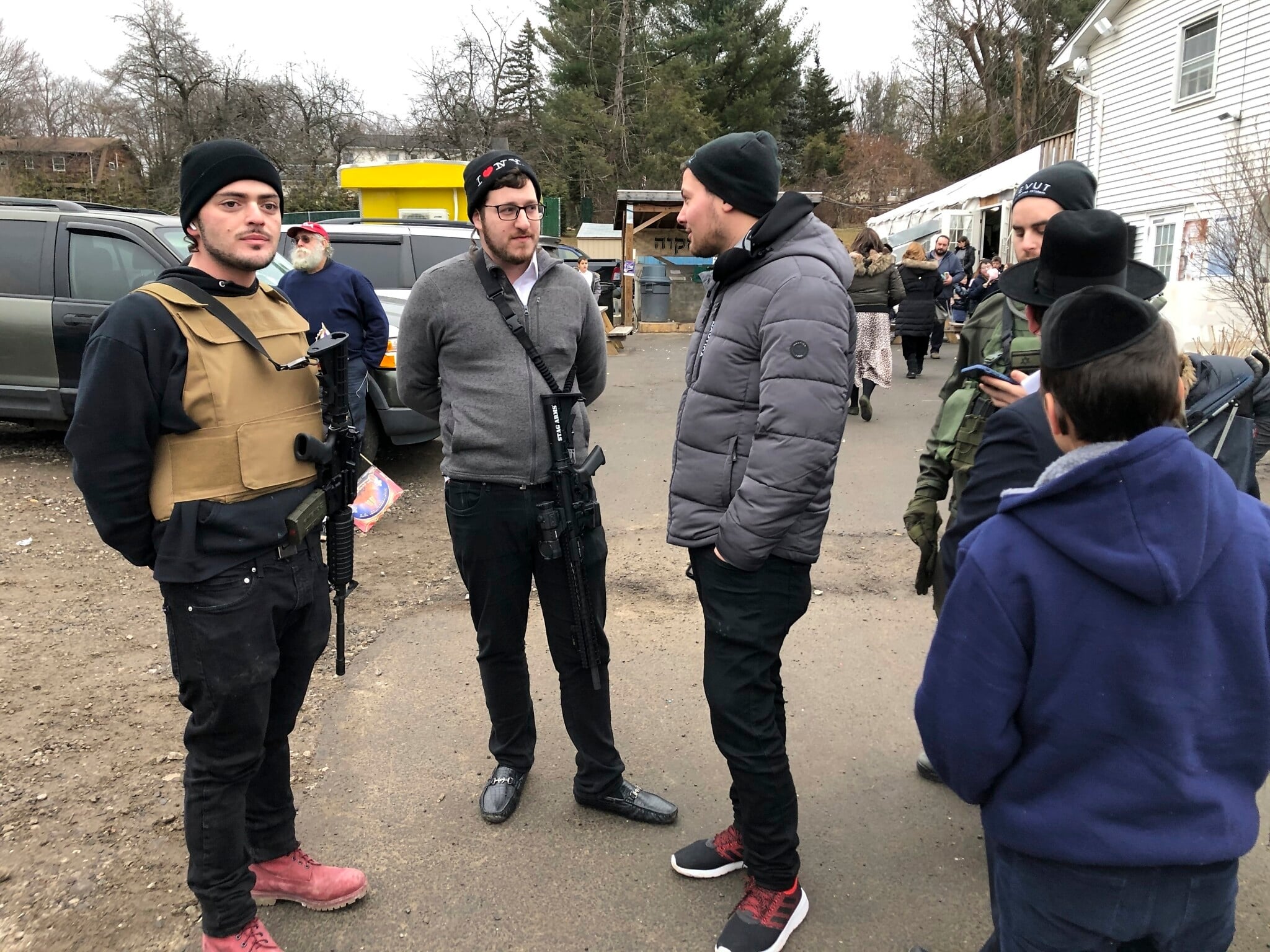
“You need to be ready to fight if you have to – people should fear us in the right way, so that we’re prepared if they come after us,” says Mark Abady, the owner of WeShoot, a gun range in Lakewood, New Jersey. In late October 2023, Abady reported a significant spike in sales and registration for self-defense classes, which had quadrupled since October 7 a few weeks prior.
Reflecting on the past two years, Abady notes: “A lot of people who were extremely anti-gun are buying guns now – gun ownership has become more natural, more regular. Before October 7, people were concerned about their houses and cars. We don’t hear that anymore – now, people are asking questions about potential terror attacks and security in synagogues.”
Although there are no official data tracking Jewish American gun ownership, all signs point to substantial increases over the past few years. New York Police Department data show a rise in the number of applications for permits to carry concealed firearms following October 7. Posts on the subreddit “jewishguns,” an online forum hosted by Reddit, have increased over the past two years, with members declaring “No matter what side of the political spectrum an antisemite is on, I’ll be ready” and “an armed Jew is a smart Jew.”
The Jewish Federations of North America (JFNA) and Anti-Defamation League (ADL) released survey data in October, 2025 showing that 9% of American Jews reported purchasing a gun in the previous year in response to their concerns about antisemitism. Media reports have described rising membership in Jewish gun clubs like Bullets & Bagels in Southern California, Bagels & Bullets in South Carolina (hard to believe, but unrelated to one another), and The New York State Jewish Gun Club. One community member in Englewood, New Jersey estimated that at this point, “every fifth house has a gun.”
Themes of self-protection, self-empowerment, and resistance against threats to the Jewish community via gun ownership are materializing in popular culture as well. “Guns and Moses,” a 2025 American crime film that premiered at the Los Angeles Jewish Film Festival, tells the story of a rabbi forced into firearm ownership and gunfight after gunfight following a violent attack on his community. The movie’s tagline, wedged uncomfortably into the dialogue – “May God and Your Glock Protect you” – speaks to the film’s glorification of vigilantism in the face of authorities unwilling to protect a community. Although filming began prior to October 7, 2023, the movie was inspired by the tragic 2019 shooting at Chabad of Poway Synagogue in San Diego County, and was rereleased in September 2025.
Similarly, The Armed Jew: The Case for Jewish Gun Ownership, a 2025 book by Adam Fuller, sets out to convince American Jews that the only way to stop an antisemite with a gun is a Jew with a gun. The book includes an analysis of recent attacks on Jews, halachic musings, critiques of Israeli firearm restrictions, and stories of Jewish cowboys, gangsters, and vigilantes.
Given historically low rates of firearm ownership among Jews in the US, this recent increase is unusual. It tracks closely, however, with increases in firearm acquisition among demographic subgroups with lower rates of firearm ownership prior to 2020. Studies and media reports make the case that Asian Americans, Black Americans, Hispanic Americans, and women have been buying guns at a higher clip since the start of the COVID pandemic.
While research on this topic is nascent, new firearm owners in these groups cite concerns about discrimination, political tensions, perceptions of rising crime, and fears of governmental overreach as reasons for transitioning to firearm ownership. These reasons are easy to understand – owning firearms is one way to assert agency in a world that feels unsafe and unpredictable.
My husband and I took a class at WeShoot in Lakewood, which ended with some practice on the range alongside other clearly observant Jews. Unlike my previous experience at a range in Philadelphia, WeShoot was intentional about providing instruction on de-escalation strategies, keeping firearms away from children, and secure storage – Abady says that he makes it a priority to sell a lockbox with each firearm purchase. They have also created a welcoming and communal space that is inviting to women (including a ‘Women of WeShoot’ club), no small feat for a male-owned range. Instead of the typical skepticism I encounter, they were delighted to hear that I research firearms and suicide prevention.
And yet, the reality of the downsides of firearm ownership peeked through. Reflecting a well-replicated finding that having a firearm in the home increases the risk of suicide among household members, our charismatic and personable instructor shared several stories of firearm suicides in his community. Although there is a sense of unavoidability in these tales, firearm suicide is anything but inevitable – studies show that many suicide attempts are impulsive, that easy access to lethal means like firearms is the most important determinant of outcomes, and that around 90% of people who attempt suicide and survive do not go on to die by suicide.
The possibility of firearm suicide and injury among youth is especially concerning. Although parents think that their children do not know how to access their firearms, research shows that they often do. While exposing children to firearms does not protect them, despite those who believe this to be true, secure storage (keeping firearms locked, unloaded, and separate from ammunition) is protective. Secure storage is incredibly important, but likely not enough to prevent suicide among adults who know how to access their weapons. In these cases, out of home storage or removing access to firearms in the home during periods of higher suicide risk is critical.
In casual conversations with members of my community in Riverdale, New York and elsewhere, those who do not own firearms are unaware that their neighbors, members of their synagogues, and the parents of their children’s friends may be armed.
What will happen when there is a real or perceived threat at a synagogue and parishioners carrying firearms, with varying levels of training, jump into action? When a depressed teen finds a gun? When someone asking for charity is mistakenly taken to be an intruder and met with lethal force?
In the stories we tell ourselves, the parishioners will shoot the threat but not each other, the teen will remember their parents’ warnings and turn away from the gun, and common sense will prevent the last scenario. Reality will almost certainly be messier.