Jewish Author Spotlight! Alyssa Rosenheck: ‘White. Blonde. Jew.’
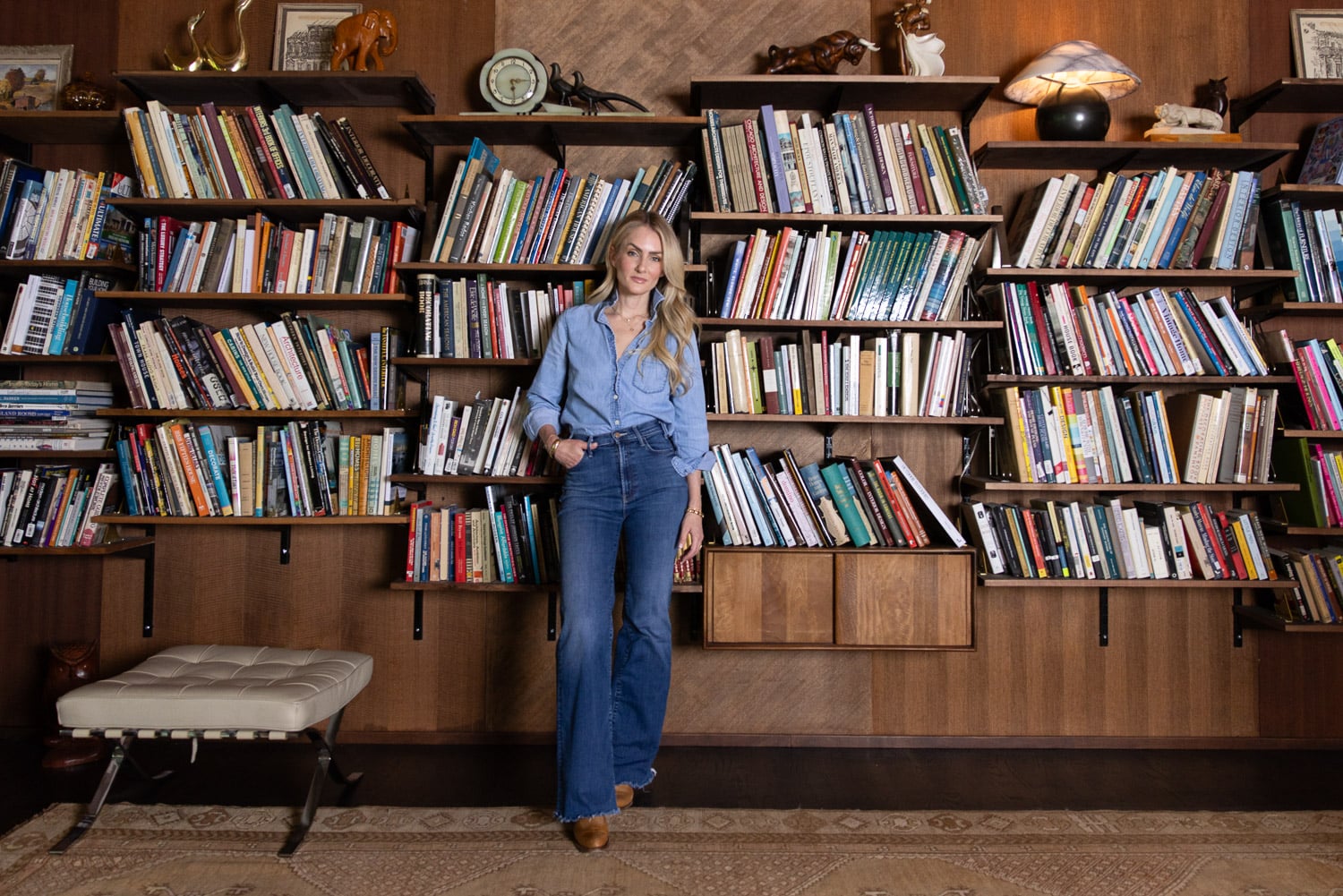
Much more than a memoir, White. Blonde. Jew. doesn’t fit neatly into a category—because neither does its author Alyssa Rosenheck.
The Nashville-based bestselling author of The New Southern Style and one of Architectural Digest’s Top 50 Interior and Architectural Photographers in the United States, Alyssa Rosenheck has become a critical voice in the fight against antisemitism. Embracing the weight of responsibility required by this moment, Alyssa has traveled to Israel multiple times as a postwar delegate, meeting with foreign ambassadors and October 7th survivors. Honored as a 2025 Hero Against Hate by the ADL, Alyssa uses her platform to advocate for Jewish life and combat anti-American ideologies—and she does so with the beauty and grace one might expect when viewing the world through the lens of a celebrated photographer.
Alyssa’s advocacy for Israel and Western values cost her a book deal with a major publishing house when her identity became associated with the radioactive buzzwords of the moment: White. Zionist. Colonizer. Genocidal. Jew. Her response? She doubled down in truth and wrote a different book that can’t be ignored: White. Blonde. Jew.: A Call to End Extremism, Speak Up, and Reclaim Center. Refusing to be silenced, Alyssa stands tall in her commitment to challenge stereotypes and battle misinformation—but she’s paid the price. “My defiance, my insistence on owning my own story, has made me an outsider,” Alyssa says. “A voice that won’t fold neatly into their narratives. And that is the cost of standing firm in a culture that values curated image over inconvenient truth, spectacle over substance, and silence over complexity.”
Weaving deeply personal stories with historical context and a toolkit for the present day, Alyssa shines a light on the realities of antisemitism, DEI, the BDS movement, the “obsession with oppression,” and so much more. Sharing her lens from the leading edge of Israel advocacy, sounding the alarm on anti-American ideologies threatening our country, and detailing major discriminatory snubs in her professional life, White. Blonde. Jew. is a compelling and essential read for Jews and non-Jews alike. “This is not a passive memoir,” Alyssa says. “It is a deeply personal excavation of identity, media manipulation, extremism, antisemitism, and the weaponization of language itself—written by someone who has been on the front lines, literally.”
Not intended to sit idle on a shelf, Alyssa designed White. Blonde. Jew. as a guidebook to inspire action—empowering readers with the tools to have real discussions and carry the torch in their own communities. She closes each chapter with a section titled P.A.C.E. (Pause. Analyze. Contemplate. Engage.), a detailed guide for book clubs that’s been crafted to facilitate honest self-reflection and open dialogue. Alyssa explains, “Every chapter ends with questions because the goal was never to shut down conversation—it was to begin one.” She even offers additional resources, reading lists, and suggested actions for advocating in local government, school districts, and on social media.
Published August 18, White. Blonde. Jew. has been nominated for the Sophie Brody Medal by the American Library Association, an award that recognizes outstanding achievement in Jewish literature. Fleur Hassan-Nahoum (Israel Foreign Ministry Special Envoy for Trade and Innovation) calls White. Blonde. Jew., “A bold and unflinching book that takes on antisemitism, misinformation, and the weaponization of race. Rosenheck’s call to ‘reclaim center’ is as timely as it is necessary—and her personal stories make it impossible to look away.”
Leah Grossman: This book is so important, and yet I’m sure it wasn’t easy bringing White. Blonde. Jew. to fruition. With Nashville’s Bell Bird Books recently cancelling your launch event, it seems the challenges may continue even post-pub date. How have you overcome the obstacles in your way, and what does it mean to you that White. Blonde. Jew. is now in the hands of readers everywhere?
Alyssa Rosenheck: In a recent Torah portion, I came across a teaching about how we relate to the challenges in front of us. We have a choice: to see ourselves as smaller than the challenge, to stand as equals with it, or to approach it with agency – to rise above it and take control of how we respond. The teaching asks you to look back at a time when you overcame something difficult and remember who you were in that moment, so you can carry that strength forward when life challenges you again. That perspective has helped keep me centered and focused on what matters.
Bell Bird Books lost an incredible opportunity to host a meaningful dialogue. I would have brought business into their store, and so many of my peers in the Artists Against Antisemitism community saw a mainstream independent bookstore hosting this conversation as a meaningful win.
Bell Bird Books canceled my launch not because I believe they are antisemitic, but because the owner folded under a coordinated online and offline pressure campaign targeting me for my Zionism – a core part of my Jewish identity. That was a real choice. They could have held the line with principle and character and become part of the solution. Instead, they chose cowardice. This problem with organized pressure campaigns and institutional kowtowing is emblematic of a larger pattern the ADL is actively working to expose, educate about, and combat.
The obstacles surrounding White. Blonde. Jew. have only reinforced why this book needed to exist. Bringing it into the world was far more difficult than any author should have to endure, but seeing it now in the hands of readers everywhere is profoundly meaningful.
I received an email this week that perfectly illustrates my why:
“Hello Alyssa, I am reading the Foreword to the book and I am already hooked. I am 71, the son of a highly traumatized mother who survived the horrors of Auschwitz and Mauthausen.
Much of my immediate and extended family was murdered in the Holocaust. One of the reasons I volunteered and served as a combat soldier in the IDF. Thank you for writing this book and standing up to fight.”
To see these conversations already taking place – and to know that readers are finding themselves, their histories, and perhaps even the courage to speak up within these pages – makes every challenge worth it.
LG: In the book, you cover the alarming trend of antisemitism in the publishing industry, which you experienced firsthand when you lost a major book deal in 2023. Tell us about the team who supported White. Blonde. Jew. from the start, and why it was important for you to carve out international rights for an Israeli publisher.
AR: It takes an extraordinary team to bring a book into the world, and I intentionally built a very different team for White. Blonde. Jew. than I had for my first book – or perhaps, through G-d’s divine guidance, they found me.
After losing a major book opportunity soon after October 7th, as literary boycotts and pressure campaigns against Jewish authors and Israeli voices grew exponentially around the world, I knew this book needed to be aligned and built to endure. I was deeply discerning about the people I brought into the process, seeking those who understood the responsibility of what we were creating while bringing perspectives and life experiences different from my own.
The universal theme of Chapter 5 is what happens when we are underestimated – something I think almost everyone can relate to. My literary agent, whom I write about in that chapter, has been my “mama bear” throughout this process. She fiercely believed in me and the vision for this book before anyone else could see what it could become.
I also hired an independent editor whose worldview and experiences differed from my own. A Syrian Christian who survived the Arab Spring and was living in Canada when we worked together, she understood the urgency behind these pages. I am forever grateful for the honesty, perspective, and care she brought to this book.
Then there was my American publisher BenBella Books / Simon and Schuster, who took a chance on a book others had been unwilling to touch after double-digit rejections.
And carving out international rights for an Israeli publisher was my intention before we even had a deal. When Jewish authors, Israeli voices, and our books are boycotted, we have to do the very thing those efforts seek to prevent: write more books, speak louder, and support the very businesses they are trying to silence. I am incredibly proud that White. Blonde. Jew. will soon be in print in Israel with Gefen Publishing House.
Every person who helped bring this book to life understood that it was about more than publishing a book. These pages are about agency and action – and my hope is that they remind readers that they, too, have the power to make a difference in their own communities.
LG: White. Blonde. Jew. is raw and honest—you share some deeply personal experiences that help illustrate your overall message. You call out those in your life who chose a performative façade over friendship and truth, talk about your battle with cancer as a catalyst for creativity, and detail significant career discrimination on more than one occasion. Was this book cathartic to write? What was it like recording the audio book, speaking every single word out loud?
AR: Yes – but cathartic almost doesn’t feel like the right word. It felt necessary. In many ways, White. Blonde. Jew. became a best friend to me while I was writing it. I needed these pages to serve as historical insurance – to document what is happening, connect the dots, and preserve a record that cannot easily be rewritten.
I needed to make the connections in Chapter 11, where I discuss my friend Rabbi Shore’s documentary Tragic Awakening, so readers could clearly see the enduring ideological connection between Nazism and Islamism, including the promise that what Hitler failed to finish would be completed by the Grand Mufti of Jerusalem, Haj Amin al-Husseini. I needed to tell readers plainly that Jews have never been considered white throughout history – and that we are living through a particularly dangerous moment when Jews can simultaneously be perceived as not white enough and, by others, as the most white. That contradiction is not just absurd as our people pre-date the concept of race; it has real consequences for how Jews are treated and how antisemitism is understood.
I needed to show our resilience and our light because Jews are targeted not because we were a physical threat, but because tyrannical regimes viewed us as a moral and spiritual threat. That distinction matters.
I also wanted to give readers the vocabulary to identify what they are seeing around them: performative allyship, movement narcissism, political DARVO, the indoctrination of children through Qatari-funded schools, and the ways people choose a façade over friendship and truth. Naming these behaviors matters because you cannot fight what you cannot define.
Every chapter begins with something deeply intimate from my own life, but I never wanted the book to stop at my story. I wanted to anchor those experiences in truth, history, and resources – to take the personal and make it useful. I wanted readers to walk away not simply informed, but with tools.
And recording the audiobook was an entirely different kind of vulnerability. I had to speak every word out loud – words that came from some of the most painful, personal, and difficult chapters of my life. There is nowhere to hide when you are sitting alone with a microphone, saying your own story aloud. But ultimately, this is a project meant to be read in community and in book clubs. Those conversations will give these pages a voice far beyond what I could ever do alone.
LG: A lot has happened since the release of your first book, The New Southern Style, in 2020. Do you feel like you’re a different person with this book release, or is it more that the world has changed around you?
AR: Of course I believe our experiences shape and expand our understanding of the world. But at my core, I am the same person. Those closest to me know I prefer to be the quiet one in the room – an observer, discerning, stubborn, but deeply kind and gentle. They also know I am never the person to start a fight, but I will never back down from one. I refuse to be bullied, and when I see something I believe is wrong, I push back.
What has changed is my understanding of where that pushback can be most effective. Over the past few years, I have learned how to create more constructive paths forward offline, through civic engagement and the legislative process. I have seen firsthand that everyday citizens can have a meaningful role in shaping policy and safeguarding their communities.
I helped withdraw two BDS resolutions at the city level in Nashville and worked to ensure the IHRA definition of antisemitism, including its contemporary forms, is represented in future legislation. Those experiences taught me that you don’t always have to be the loudest person in the room to make an impact. Sometimes you simply have to be willing to walk into the room, understand the process, do the work, and refuse to give up when you encounter voices advancing ideas that erode our democratic values. I have learned to recognize those voices – and you can, too, through CAIRaction.org.
So yes, the world has changed dramatically, and I have learned a great deal from living through that change. But even though I am walking into new rooms and learning new ways to fight, I am still the same human at my core: I refuse to back down.
LG: Throughout your life, people have made assumptions about you based on your appearance. In the book you even describe an early interaction with your literary agent where she says, “I thought you were just a sweet blonde. But then you spoke.” Do you consider it a negative that people underestimate you, or does part of you enjoy wielding the element of surprise?
AR: Trust me, it can be frustrating. But I’ve learned not to lead with that frustration or give other people’s assumptions more power than they deserve. I don’t spend my time trying to convince people of who I am. I focus on being of service, praying to G-d to use me as a conduit for a greater message, experiencing joy, and trying to remain a kind human regardless of what I am met with. There is tremendous freedom in knowing exactly who you are, even when someone else has decided who they think you are.
I write about this in depth in the book and anchor that personal belief in the historical story of the resistance – particularly the women known as the Kashariyot during World War II, many of whom looked much like me. They were underestimated, and they were extraordinarily brave. They understood that their lives could serve something greater than themselves, and they acted with courage when it mattered most. I can only hope that we can all become messengers of something greater than ourselves, much like they were.
LG: You thoughtfully designed White. Blonde. Jew. as a toolkit for readers to continue this critical dialogue in their own communities. Tell us about the inspiration behind the P.A.C.E. framework, and how you hope this section will be utilized.
AR: It was important for me to develop a simple framework to help us P.A.C.E. ourselves through the overwhelming amount of information we receive every single day. The acronym stands for: Pause. Analyze. Contemplate. Engage.
Under the P.A.C.E. Book Club Prompts at the end of each chapter, I guide readers and groups through questions designed to provoke critical thinking. We have become incentivized to react immediately, share instantly, and form outrage and opinions before taking the time to truly understand what we are being told. P.A.C.E. is an invitation to slow down and question the information we are being fed: Who is behind it? Who benefits from it?
I want readers to become more critical consumers of information. Because in many ways, we are the product – not the news. In Chapter 6, I break down the critical distinction between misinformation and disinformation, the pipeline through which disinformation spreads, the role of bot farms, and why research has shown that “prebunking” – preemptively preparing people to recognize manipulative tactics – can be one of the most effective ways to counter these deceptive pathways. My goal is to have this book inspire action and that starts with something becoming more increasingly rare: thinking for ourselves.
LG: Identifying antisemitism as a red flag for society, you say, “When our alarm bells go from yellow to red, people need to sit down and listen. History shows that intolerance often begins with the Jews—but it rarely ends there. Ignoring the warning signs is a concern for us all.” Can you give us some action items to help encourage the non-Jews in our lives to start paying attention? How can we approach this conversation?
AR: Think of this book as Legally Blonde meets War on the West. It is approachable, but it is also a wake-up call. I wrote this book for Jews and non-Jews – all of us. And the first action item is to stop assuming antisemitism is only a Jewish problem. It isn’t. The very forces that want to erase us ultimately threaten the ideas this country was built upon: freedom, liberty, individual rights, religious freedom, equality under the law, and the democratic institutions that protect them.
To the Jews in our community: there have always been those among us who equivocate, minimize, and at times participate in supporting those who fuel antisemitism. We need to stop. Stop hiding your Judaism. Stop shrinking when you know in your gut that you need to speak. Start holding the personal line so the line stops retracting. We are a peoplehood, and when you divorce Israel from Judaism, you contribute to the very erasure and distortion we are fighting against. My action item for every Jew is to read Chapter 10 in White. Blonde. Jew., “BDS in Your Backyard.” It is a wake-up call about what is happening much closer to home than many people realize.
To our non-Jewish allies: thank you. Thank you for continuing to show up, support us, and push back. And to one of our greatest allies, CUFI, thank you for the work you continue to do. I have seen firsthand where hard-earned volunteer dollars go through organizations like Save a Child’s Heart, Brothers for Life, and United Hatzalah. That support matters.
And for all of us: get involved where you actually have influence. Get involved in your children’s schools. Ask to see curricula and reading lists. Do your due diligence on your Metro Council members and understand who they are aligned with and who is being funded by CAIR. And then vote. Sleepy local elections are one of our greatest vulnerabilities right now.
Go into your independent bookstores. Ask whether they are carrying White. Blonde. Jew. and books by Jewish authors like Dara Horn, Rachel Goldberg Polin, and Eli Sharabi, or voices like Elise Stefanik. If they aren’t, ask them to stock them. There is no reason Jewish voices should be absent from the shelves of bookstores that claim to value inclusion.
Get involved in your community. Know who is making decisions on your behalf. Ask questions. Use your voice. You do not have to start a movement. You just have to start somewhere.
LG: What’s your greatest hope for what readers will take away from White. Blonde. Jew.?
AR: To be the voice in rooms filled with silence.
My greatest hope is that readers walk away with a greater sense of agency and an understanding that the real work happens offline and in community. I want them to realize they are not powerless observers of what is happening around them.
I also hope readers understand that courage is contagious. One person speaking up gives another person permission to speak. One person asking a difficult question can change the direction of a conversation. One person refusing to accept something as inevitable can move an entire community.
If these pages give people the language, historical context, and tools to do that, then I have accomplished what I set out to do.
LG: What’s on the horizon for you?
AR: Right now, my focus is getting White. Blonde. Jew. into as many hands, communities, and conversations as possible. I want to see the book club discussions take on a life of their own and continue expanding far beyond me.
I’m also continuing the work I was doing before this book – I’m still deeply active in my photography business, speaking to communities, traveling with my partner, and remaining deeply engaged in advocacy and civic work. The book may be new, but the work behind it is not.
And, of course, I’m writing. There is always another story, another question, and another conversation worth having. For now, I’m incredibly grateful to see White. Blonde. Jew. out in the world and to watch readers begin to make these pages their own. I am truly so grateful.
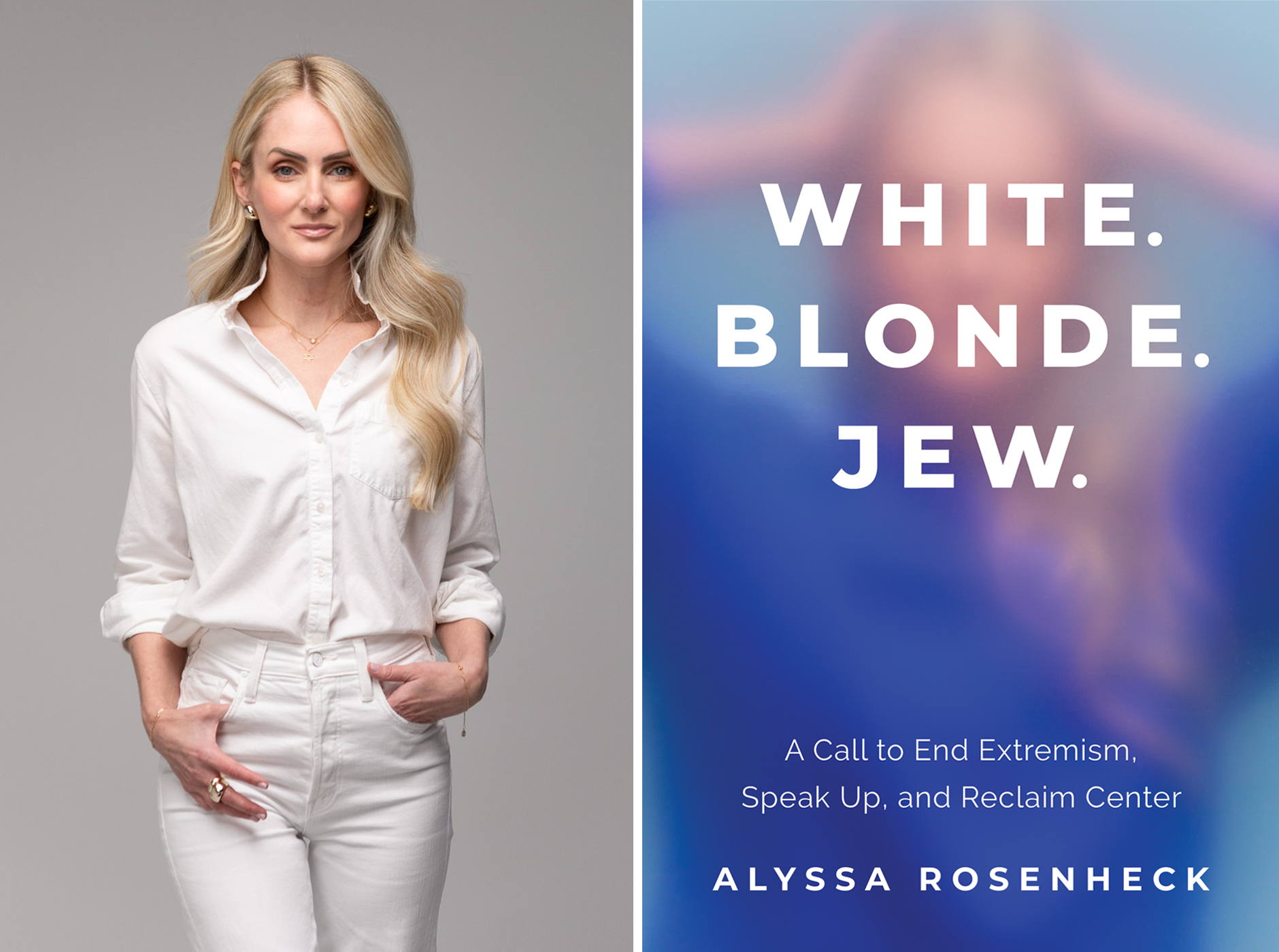
White. Blonde. Jew.: A Call to End Extremism, Speak Up, and Reclaim Center is available now.
Keep up with Alyssa on her website and Instagram.
Support Jewish authors!