Shliach, Chaplain, Educator: Embracing Diversity, Inspiring Inclusiveness
Jewish & Black: Acting Against Racism
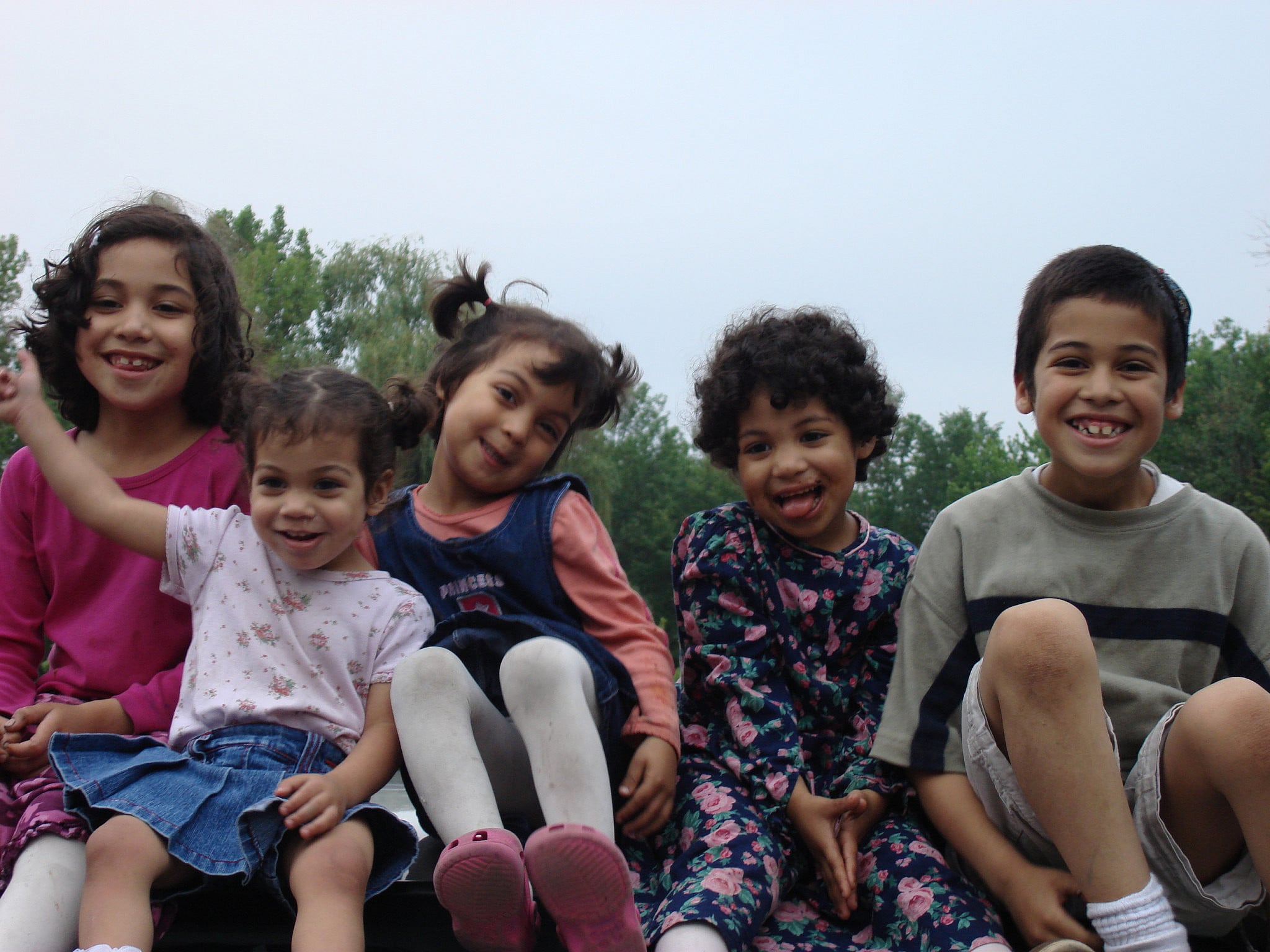
Standing Up for My Children and Making a Difference
Why Speaking Out Still Matters
It has been many months since I last sat down to write for my Jewish & Black series.
Not because the subject became less important. If anything, the opposite is true.
Sometimes life hits with full force, leaving little headspace for anything else. For months, I have been advocating for religious accommodations for Jewish chaplains in the Department of Corrections. Despite having no legal background, I spent countless hours researching, writing, checking sources, and drafting lengthy briefs. It took far longer than it would have taken a lawyer, and the waiting, uncertainty, and endless back and forth have been exhausting.
The irony is not lost on me. One would think that working within a Religious Unit, religious accommodations would be a given. Not so.
At the same time, life at our Chabad House does not pause. Students still need support. Programs still need to be planned. Fundraising still needs to happen. Shabbos meals still need to be prepared. The work of the Rebbe continues, with or without my emotional energy. Thank goodness for my wife, Dalia. She has truly stepped up, taking charge of much of our student programming and working closely with our student board.
Ah, speaking of family.
When our children are hurting, we are hurting. Supporting my children over these past months has left little energy for writing my own personal reflections.
But no one will ever accuse me of being a quitter.
I made a commitment to write and share my reflections — hopefully, to help others.
And so, the writing continues.
Standing Up for Our Children
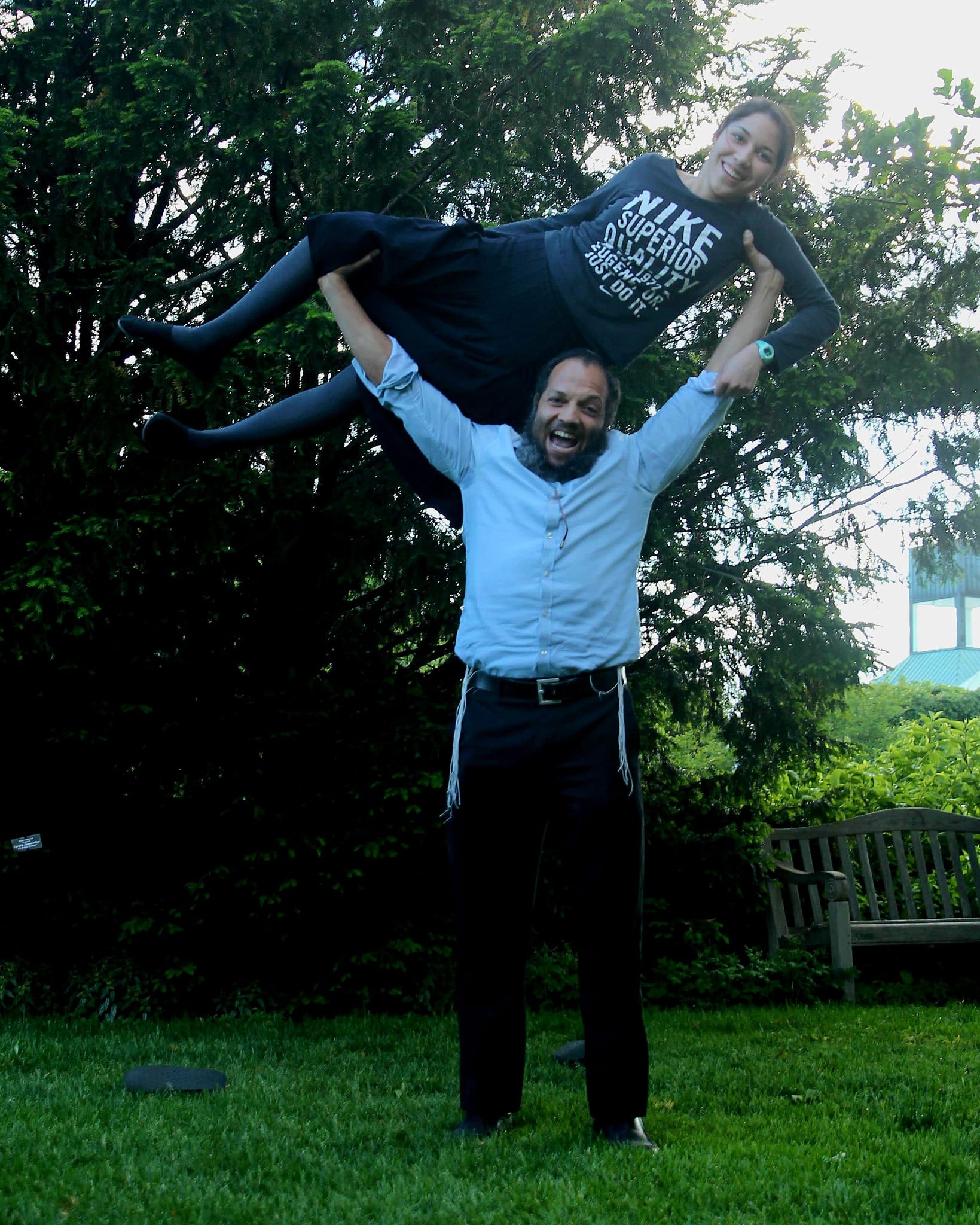
We have tried to teach our children to be strong.
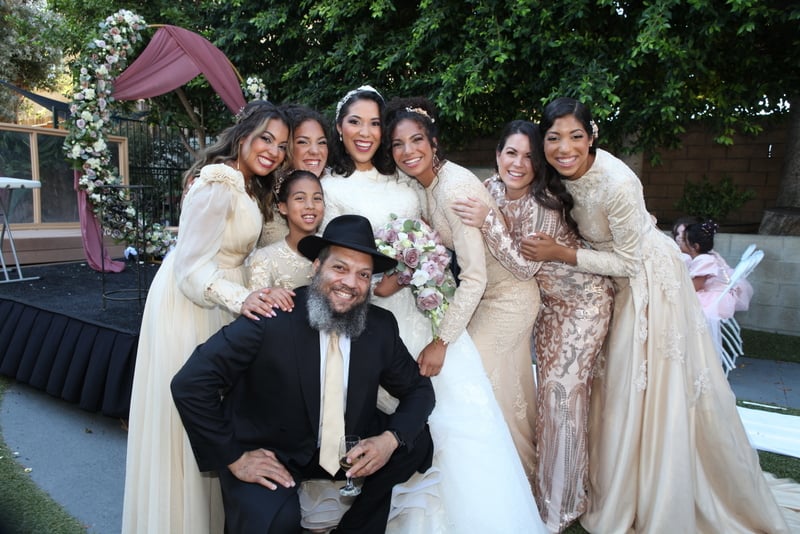
My wife and I have tried to raise them with pride in who they are — proud Jews, proud Chassidim, proud and beautiful children of a wonderfully diverse family. We have tried to give them the tools I did not have as a child: the ability to speak openly about race, to recognize hurtful words for what they are, and to know that there is nothing shameful about the way G-d created them.
But teaching resilience is not enough.
As parents, there are moments when we cannot simply tell our children to be strong. There are moments when a child needs to know that their parents will stand up for them. While I often struggled to stick up for myself, our children know — to the point that they sometimes hesitate to share things with us — that we will defend them fiercely.
In this post, I want to share some of those experiences, moments when my wife and I felt we had to act. Not perfectly. Not always calmly. But as parents who knew our children needed to feel protected, respected, and loved.
The Pain of Protecting My Children
The trauma of my own encounters with racism never fully disappeared. It lives somewhere inside me. Sometimes quietly. Sometimes not so quietly. When I hear that one of my children has been hurt because of skin color, something inside me burns.
I find myself asking the painful question I have carried for years: why are people so often judged, mocked, feared, or made to feel as if they belong at the bottom because of their skin color?
I do not want my children to feel the hurt I have experienced. My children are beautiful and amazing. What have they done to deserve being put down and mocked?
My darkest-skinned daughter, Mushka, has endured the worst of it. She was bullied both for her skin color and for needing learning accommodations. Sometimes those two forms of bullying blurred together, making it hard for her to know whether she was being targeted because of her learning struggles, her skin tone, or both.
But one incident left no room for doubt. When Mushka was in third grade and asked a boy if she had paint on her face, he answered, “Yeah, black.”
When I heard what had happened, I could not stay silent. I was no longer only remembering my own childhood. I was watching my daughter experience something I had desperately hoped my children would be spared.
I could not stand by.
I made it clear to the school administration that I would not tolerate my daughter being mistreated. If necessary, I was prepared to confront the parents directly. I do not say that proudly or dramatically. I say it as a father who knew that his daughter needed to know that she was not the problem.
Confronting Racism at Camp
School was not the only place where these challenges appeared.
Overnight camp has always been a place of joy, independence, friendship, singing, and growth for our children. Our children counted down the days until camp each year. They loved going. They rarely complained.
But when we learned that Mushka was being bullied in camp, it felt like déjà vu. My own memories of overnight camp are complicated. I have beautiful memories of friendship, sports, laughter, and independence. But camp is also where I first endured overt racial slurs.
My wife, Dalia, acted immediately.
On visiting day, she gathered the bunk and spoke directly to the girls about bullying and the pain their words and actions could cause. The main instigator — a girl with a history of being unkind — walked out during Dalia’s talk. Dalia confronted her one-on-one. The girl’s mother became furious that Dalia had the nerve to confront her daughter, but Dalia held firm.
Dalia made it clear that this kind of behavior does not come from nowhere. Children learn how to speak about others. They learn what is acceptable. They learn what adults around them excuse.
Later, the camp director — someone hired to oversee the day-to-day running of camp for a couple of summers — called me with concerns about Dalia’s approach. I made sure she understood how strongly we felt about the lack of support our daughter had received. By the end of our conversation, the director was in tears.
And no, I did not apologize.
We wanted everyone to know that we would not stand by while our daughter was mistreated.
These incidents do not erase our love for the camp or the blessings it provided our daughters. Our relationship with the camp’s founder was one of deep respect and gratitude. He was my teacher and family friend from childhood, and he showed my family tremendous love and support. He made sure my daughters could attend camp regardless of our financial situation and even made room for my younger children to join their siblings, although they were technically still too young to attend overnight camp.
The camp he built from the ground up became a second home for our family. It helped instill in our children a love for Chassidus, the Lubavitcher Rebbe, and the joy of Yiddishkeit.
That is part of what makes this so difficult.
Even in loving environments, hurt can happen. Even in places filled with joy and lit with Torah and Chassidus, a few careless or cruel words can tarnish the experience for a child. Gratitude does not mean pretending everything is fine. Love for a place does not mean ignoring what needs to be corrected.
We remain grateful. And we remain vigilant.
Supporting Our Son in Crown Heights
When my son Yehuda entered middle school in Crown Heights, he encountered racism for the first time.
Most of the boys welcomed him warmly. They included him in sports and activities. His entire class came to his Bar Mitzvah in Connecticut and brought thoughtful gifts that meant a great deal to him. Those memories matter to me. They are real.
But all it took was one boy using racial slurs to cause pain.
We addressed it through the school, and eventually the boys became friendly. But the scars remained.
Years later, in a moment of vulnerability, Yehuda lashed out at this former friend, releasing years of unresolved hurt. I do not condone his physical reaction. But I understand the pain that built up inside him.
As a child, I held back my own frustration because I was afraid of confirming stereotypes about Black violence. I swallowed hurt. I kept quiet. I internalized racism until I began to wonder if there was something wrong with me. Yehuda’s reaction came from a place of pain that had not fully healed.
That does not make it right. But it does make it human.
And as a father, it broke my heart.
Addressing Racism in High School
With no Chabad high schools nearby that reflect our values, we have had to send our children away for high school. This is one of the most difficult things we do as parents. We let go of our children and entrust them to others, hoping and praying that these institutions will protect what is most precious to us.
At one school, a secretary noticed that I was darker-skinned while the rest of my family was not. She remarked to one of my daughters, “Your father must have been the one mistake.”
Understandably, I was upset. I called the dean, who apologized profusely and was deeply embarrassed that an employee of the school had spoken so thoughtlessly. The secretary did not last long at the school.
But for us, the most important thing was that our daughter knew we would protect her. We would not shrug it off. We would not tell her she was being too sensitive. We would not allow her to think that such comments were normal or acceptable.
I wish it were only children who needed to learn racial sensitivity.
At another high school, my daughter Mini faced a painful moment while her class was reading To Kill a Mockingbird. The teacher and classmates used the N-word from the text without caution or understanding. Mini protested. When she was ignored, she left the classroom in tears.
A few classmates apologized privately, and I appreciate that. But no one stood by her publicly.
That silence hurt too.
My wife and I addressed the incident with the principal. The principal responded by explaining to the teacher that Mini was especially sensitive because “Mini’s father is half-Black,” as if that was the whole issue.
But that was not the whole issue.
The issue was not only my daughter’s sensitivity. The issue was that a word with a long, painful, degrading history was being spoken casually in a classroom, and when the one student most directly affected objected, she was left standing alone.
That response deepened our sense of alienation. It showed how ignorance can compound the harm of prejudice.
As for Mushka, the racism did not stop with childhood. Even in high school, she continued to face hurtful comments about her skin color and about Black people. In one case, the comments came from a peer also raised in a Chabad House environment. That was especially painful.
Someone raised with the Rebbe’s teachings, raised in a home meant to welcome every Jew with love, should know better.
And yet, the Rebbe also taught that every person has free will. Parents can guide. Teachers can inspire. Communities can model goodness. But each individual must still choose how to treat another human being.
We Cannot Do This Alone
I often feel helpless.
I cannot confront every child who hurts my children. I cannot force every parent to take responsibility. I cannot make every teacher, principal, counselor, or classmate understand what racial comments do to a child’s heart.
But I can tell our story.
And perhaps if enough of us are willing to listen, speak up, and teach our children differently, we can make our homes, schools, camps, and communities safer for every child.
The Lubavitcher Rebbe often spoke about the power of one person’s actions. One mitzvah. One act of kindness. One word of encouragement. One moment of courage. At the same time, the Rebbe also taught that when many people join together, the power is far greater.
When many Jews join together, their combined merits and strengths have the power to bring about salvation and blessings for the entire world.
— Likutei Sichot, Vol. 13, p. 290
This teaching gives me hope.
Because this cannot only be the work of those who are hurt by racism. It cannot only be the responsibility of my children to explain why something is wrong. It cannot only be my wife and me standing up after the damage has already been done.
One story still stays with me. A few summers ago, Mini was a counselor in Florida. During a car ride with other counselors, some girls were listening to rap music and singing along, including the N-word. Mini felt deeply uncomfortable, but in that moment, she did not feel it was her place to speak up.
Then another girl in the car, someone from racially diverse Crown Heights, did speak up. She told the others that the language made her uncomfortable and asked them to stop.
I was so impressed by that young woman. She was not my daughter. She did not have to carry the burden. But she understood that she could not remain silent. That is where real change begins — when friends are willing to speak up for one another.
If it only comes from my children, they become the “sensitive ones,” the ones making an issue. But when others speak up, it becomes a shared responsibility.
We need parents to speak to their children before the cruel comment is made.
We need teachers to understand that silence is also painful.
We need friends to speak up when someone else is being mocked.
We need communities to recognize that ahavas Yisroel — love for your fellow Jew — does not mean pretending differences do not exist. It means loving another Jew fully, with dignity, with sensitivity, with care, and as equals despite our differences.
Conclusion
Today, Mushka stands tall. She embraces her ethnic diversity with pride and confidence. She is quick to call out racism, but she also leads with empathy. Her journey from being bullied to becoming an advocate reflects the strength we have tried to nurture in all our children.
All my daughters have confronted peers over racial stereotyping. They have sparked important conversations in classrooms, camps, seminaries, and friendships. I am proud of their strength. I am proud that each of them has found her voice.
In many ways, they found their voices before I fully found mine.
Speaking up for myself has not always come easily. A while back, while serving as a prison chaplain, a Jewish inmate told me that his rabbi had spoken about “shvartzes.” I took a deep breath and explained that I am Black and that I found the term offensive.
It was a small moment. But for me, it mattered.
For much of my life, I absorbed comments like that silently. I still do. I excuse people’s ignorance. I tell myself it is easier not to make waves. Easier not to explain. Easier not to be the difficult one. But silence has a price. And I do not want my children to pay that price.
Our journey has taught me that speaking out matters. Not because every conversation changes everything immediately. Not because every person understands right away. But because our children are listening. Our students are listening. Our communities are watching what we tolerate and what we challenge.
I do not share these stories to complain. I share them because I believe we can do better.
I believe in the Rebbe’s vision of a world filled with goodness and kindness. I believe that every person is created by G-d with a mission and with dignity. I believe that our schools, camps, homes, and communities can be places where every child knows they are precious.
But this will not happen by accident.
It will happen when we teach our children to be careful with their words. It will happen when parents model respect and sensitivity. It will happen when educators take these concerns seriously. It will happen when friends have the courage to speak up for one another.
One conversation at a time.
One child at a time.
One act of courage at a time.
Together, we can build a world where respect and inclusion are not exceptions, but expectations.
Related Topics
Related Posts