
Working to protect people and our shared planet.
Jewish Earth Alliance’s Virtual Lobby Day Shows the Power of Climate Advocacy
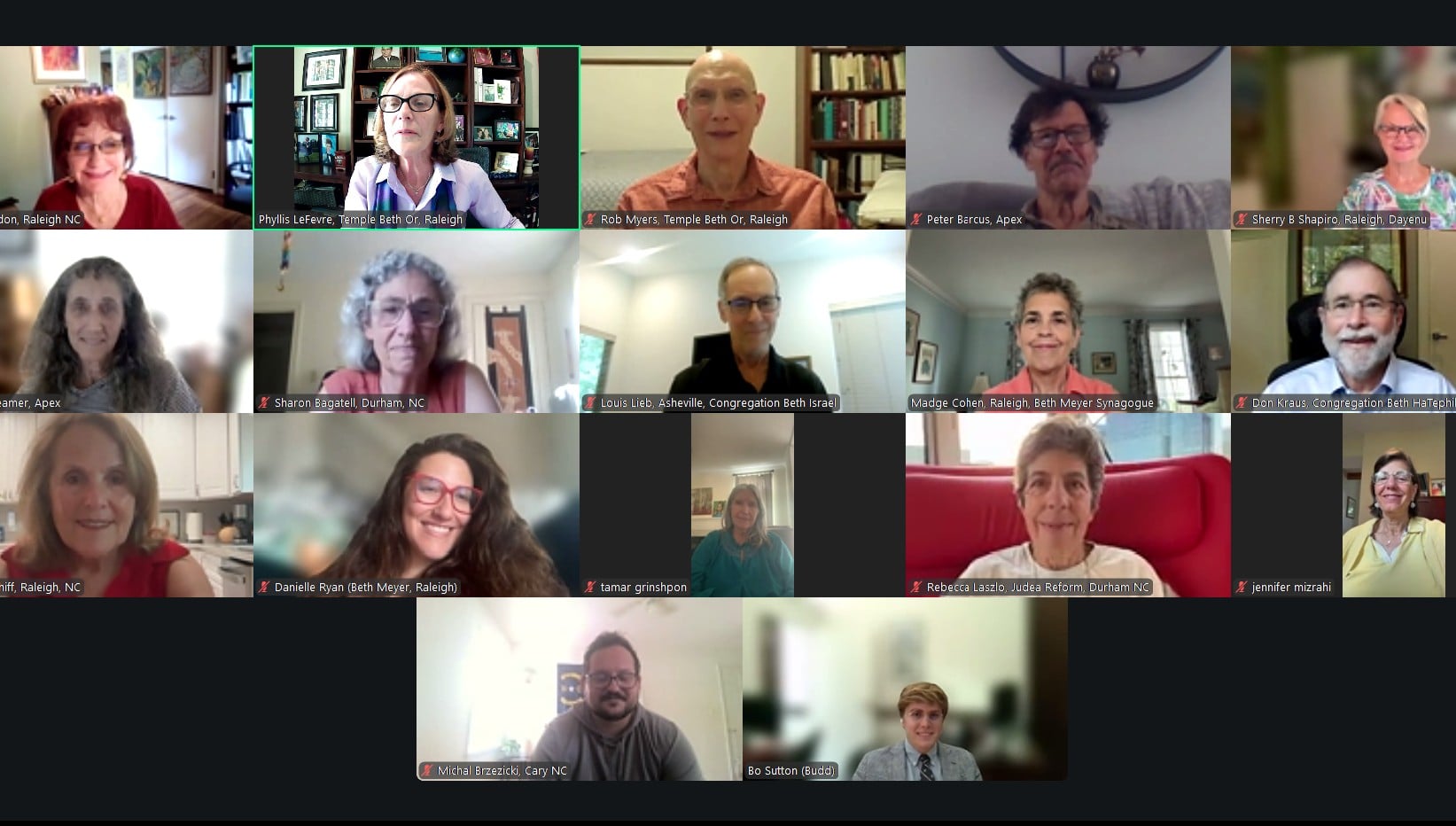
Volunteers from Jewish Earth Alliance speak with Senate staff about key legislation that can help protect the people and places we all love. Photo courtesy of JEA.
I was delighted to join the Jewish Earth Alliance’s annual Pre-Tisha B’Av Virtual Lobby Day once again this year. Having participated in several of their lobby days over the years, I continue to be impressed by the organization’s ability to turn Jewish values into meaningful civic action.
Twice a year – on Tu BiShvat (the Jewish Earth Day) and in the days leading up to Tisha B’Av, the Jewish Earth Alliance organizes this nationwide advocacy effort. The timing of each day is intentional. This past week, as Jews reflected on the consequences of destruction and our responsibility to help repair the world, participants channeled those values into constructive action on behalf of people and the planet.
This year’s Tish B’Av Lobby Day brought together 341 participants from 29 states, resulting in an impressive 53 meetings with U.S. senators and Senate staff, depending on schedules and availability—all in a single day. Those numbers represent months of careful planning, volunteer leadership, training, and coordination. Organizing an effort of this scale is no small accomplishment, and the Jewish Earth Alliance deserves tremendous credit for making it happen.
What I especially appreciated is that every meeting took place over Zoom.
For years, effective lobbying often meant traveling to Washington, DC. While there will always be times when in-person advocacy has value, today’s technology makes it possible for constituents to meet directly with senators and their staff without the cost, time, or carbon emissions associated with air travel. We proved that we can make our voices heard while reducing our own environmental footprint. That’s an approach that is both practical and consistent with the values behind climate advocacy.
The agenda reflected thoughtful concerns about protecting people and the planet.
We urged senators to support the Roadless Area Conservation Act of 2025 (S. 2042), which would provide lasting protection for America’s remaining roadless national forest lands. These forests help preserve biodiversity, protect watersheds, and store carbon for future generations.
We also advocated for full funding for weather research, forecasting, and the federal agencies that help communities prepare for increasingly severe weather, including the bipartisan Weather Research and Forecasting Innovation Reauthorization Act of 2026 (S. 3923). Investing in better forecasting saves lives, protects property, and helps communities become more resilient in the face of climate disruption.
Finally, we opposed S. 4350, deeply harmful legislation that would provide immunity to big fossil fuel companies from accountability for climate-related harms. Whatever one’s politics, accountability remains an essential principle of good governance. We need to make polluters pay and not put the burden on the victims of their greed.
Just as important as the specific legislation was the opportunity to build relationships with senators’ offices. Whether participants met directly with a senator or with members of their staff, those conversations matter. Congressional offices need to hear consistently from constituents who care about climate, conservation, and public safety. Those discussions don’t end when a Zoom meeting is over—they create relationships that can inform future policy decisions.
Jewish tradition teaches the principle of bal tashchit—that we should not engage in needless destruction. In our time, that value can inspire us not only to protect forests and prepare communities for extreme weather, but also to conduct our advocacy in ways that minimize our own environmental impact.
Now that this year’s Tisha B’Av has passed, I’m grateful to have once again taken part in this annual tradition of advocacy. The Jewish Earth Alliance has developed a model that is both effective and environmentally responsible. By making participation virtual, it removes barriers for people who cannot afford to travel or take days away from work or family. It also demonstrates that climate advocacy itself can be conducted in ways that reduce unnecessary emissions.
In a single day, 341 Jews from across America reminded senators and their staffs that protecting forests, strengthening weather preparedness, and ensuring accountability are not simply environmental issues. They are expressions of our values. I look forward to joining the Jewish Earth Alliance again and again as it continues this meaningful pre–Tisha B’Av and Tu BiShvat tradition.
Related Topics
Related Posts