
Stand for Jewish life. Fight antisemitism.
Jewish life and antisemitism in Athens
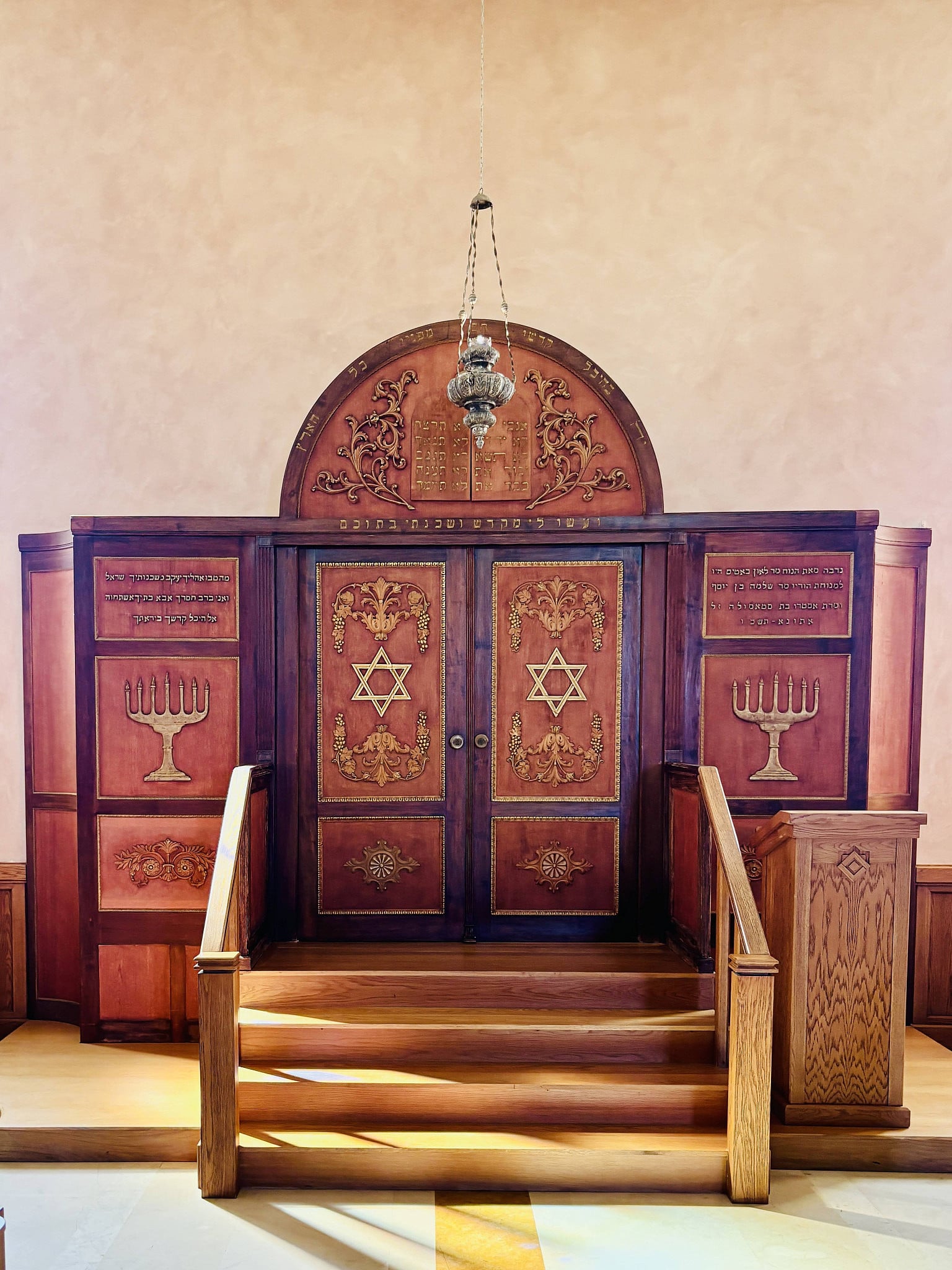
Aron Kodesh at Etz Chaim Synagogue (Photo: By the author John Meister)
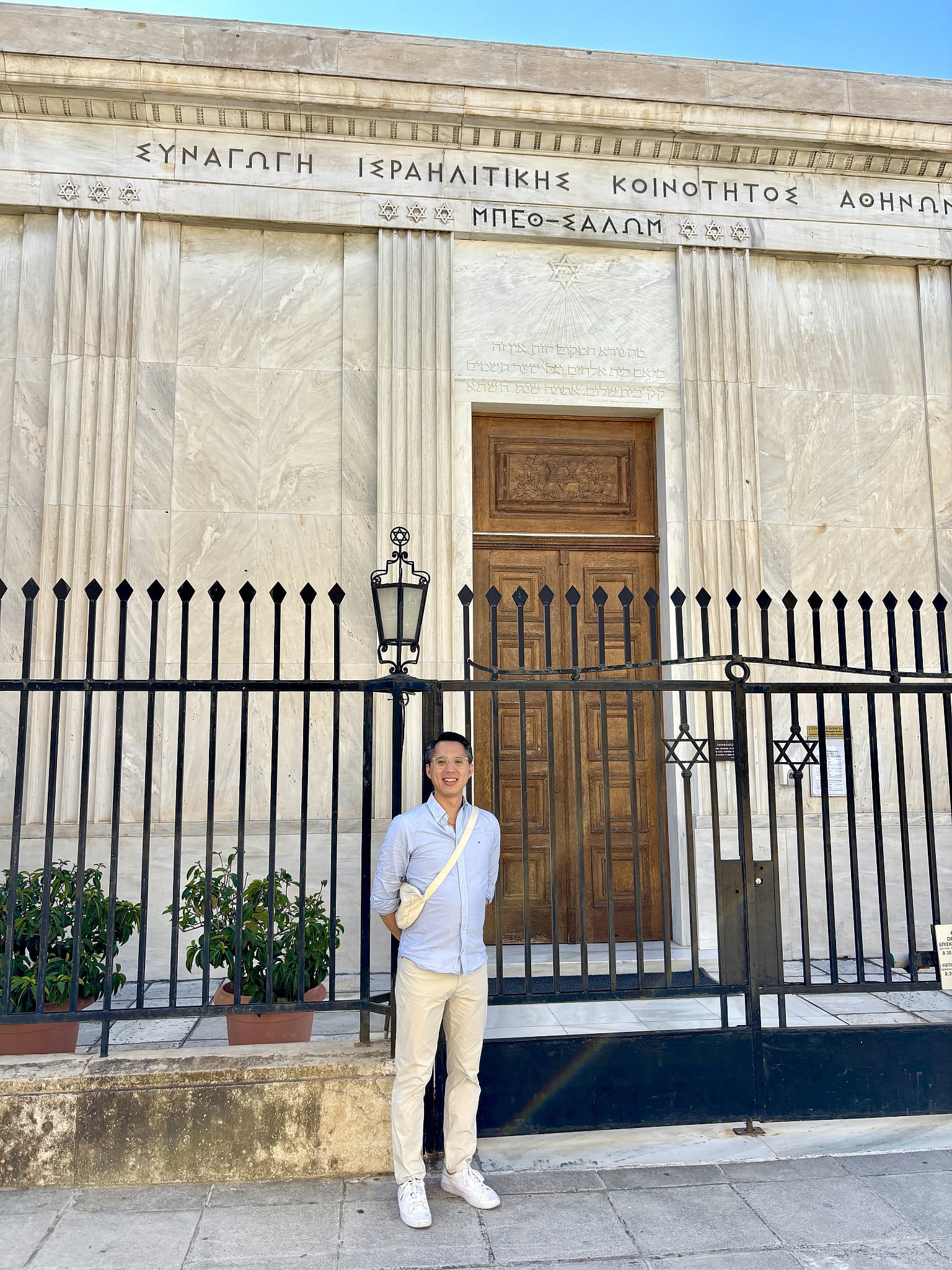
On a quiet corner in the Thiseio district of Athens, two historic buildings stand directly across from each other. Together, they tell the extraordinary story of Greek Jewry. On one side is Beth Shalom, the neoclassical, marble-clad Sephardic synagogue. On the other is Etz Chaim, home to the ancient Romaniote tradition. I had the opportunity to visit the vibrant Jewish Community of Athens and experience both synagogues.
Two traditions, one community
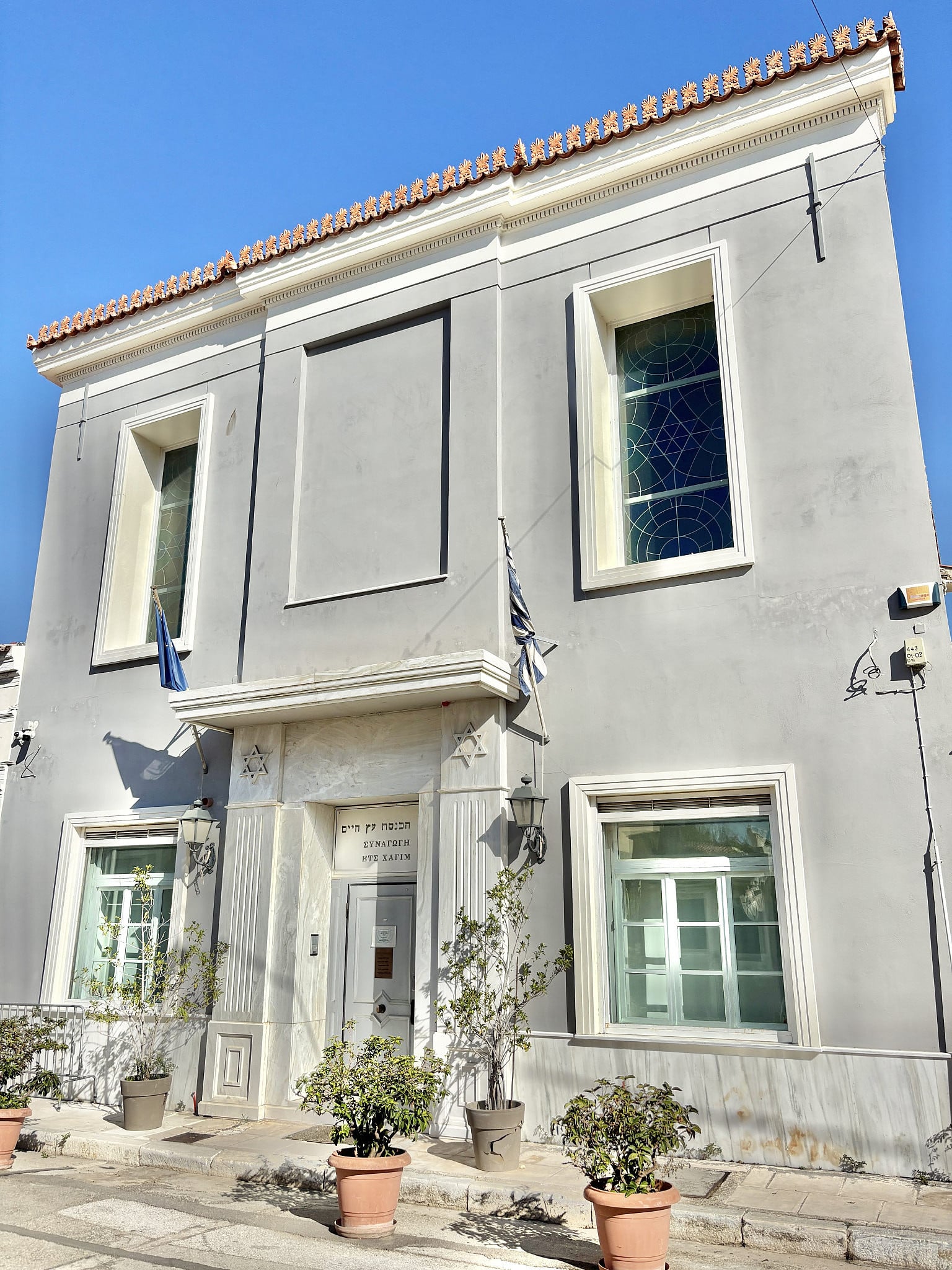
The Romaniotes are among the oldest Jewish communities in Europe, with a Jewish presence in Greece dating back more than two thousand years, to the Hellenistic era. They developed their own Judeo-Greek dialect, known as Yevanic, as well as a distinct Romaniote liturgical tradition, creating an identity intricately woven into the fabric of Greek history. Etz Chaim, built in 1904, remains the spiritual home of this ancient heritage in Athens. While the Romaniote community today is small, its legacy is preserved with extraordinary care, with the synagogue opening for occasions such as the High Holidays, Bnei Mitzvah, and special milestone celebrations.
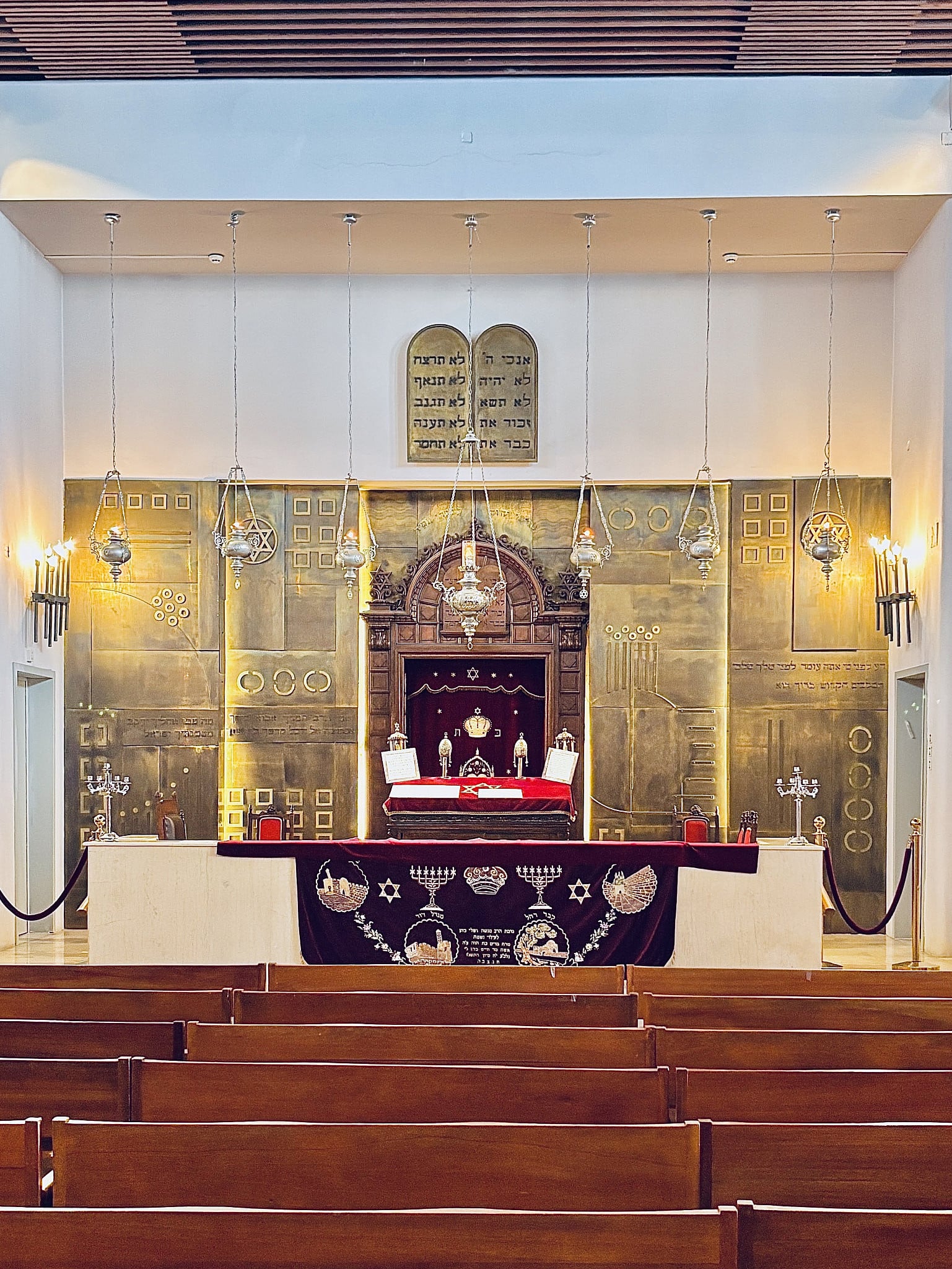
Directly on the other side stands Beth Shalom, which represents the Sephardic tradition. Following the expulsion of Jews from the Iberian Peninsula in 1492, the Ottoman Empire became a major refuge for Sephardic exiles, who built Jewish centers in northern Greece, most famously in Thessaloniki. During the late 19th and early 20th centuries, and particularly after the Balkan Wars and the great fire of Thessaloniki in 1917, Jews from Thessaloniki, other parts of Greece, and Asia Minor increasingly settled in Athens, bringing with them their customs, their liturgy, and their communal institutions. Beth Shalom, built in 1935 and renovated in the 1970s, became the primary anchor for Jewish life in the Greek capital.
Today, the Jewish Community of Athens operates as a single, unified community. It brings together around 3,000 members under one communal structure. In a country with an estimated total Jewish population of around 5,000, Athens is the center of contemporary Jewish life in Greece. The community runs a primary school, the Lauder Athens Jewish Community School, a community center, a mikveh, and social welfare programs.
The Holocaust
Before World War II, more than 70,000 Jews lived in Greece. By the time liberation came in 1945, nearly 85 percent of the country’s Jewish population had been murdered by the Nazis, one of the highest rates of destruction of any Jewish population in occupied Europe.
In Thessaloniki, the historic heart of Sephardic culture, around 94 percent of the Jewish population was deported and exterminated.
In Athens, however, the story took a different turn. Until September 1943, the city was under Italian military administration, which did not implement the German policy of mass deportation. Following Italy’s surrender and the subsequent German takeover, the persecution of Athens’ Jews entered a new and far more dangerous phase. Chief Rabbi Elias Barzilai responded by destroying the community’s official registries, refusing to cooperate with the SS, and urging Jews to flee or go into hiding. The survival of many Athenian Jews was also made possible by courageous non-Jewish allies. Archbishop Damaskinos of Athens publicly opposed the persecution, while Police Chief Angelos Evert oversaw the covert issuance of thousands of forged identification cards, allowing Jewish citizens to assume false Christian identities. Yet despite these efforts, the Nazis eventually began rounding up Athens’ Jews. On March 24, 1944, the Gestapo surrounded Beth Shalom, where Jews had been summoned under the pretext of receiving matzah for Passover. Hundreds were arrested and subsequently deported via the Haidari concentration camp to Auschwitz-Birkenau.
Antisemitism today
Antisemitic incidents and hostility toward Jews and Israelis have become increasingly visible in public spaces, particularly since October 7, 2023.
Jewish organizations have repeatedly reported antisemitic attacks, threats, vandalism, and inflammatory rhetoric. In 2025, for example, a kosher restaurant in central Athens was vandalized with threatening anti-Israel graffiti. Other incidents have included antisemitic slogans and the targeting of Jewish and Israeli individuals and institutions. From traditional antisemitic conspiracy theories and expressions of Jew-hatred to rhetoric glorifying terrorism, hostility toward Jews has become disturbingly visible in public spaces. Shortly before my trip to Greece, Athens again witnessed demonstrations with highly hostile rhetoric toward Israel and explicitly antisemitic language.
What is particularly concerning is the way such hostility becomes normalized when it repeatedly enters public life. Official condemnations by Greek authorities and political leaders are important, but they do not by themselves erase the sense of vulnerability created by repeated incidents. Maintaining a visible and active Jewish life therefore means navigating a public environment in which antisemitism and anti-Israel hostility are highly visible.
An unbroken spirit
Despite these challenges, the Jewish Community of Athens continues to maintain an active and vibrant communal life. Jewish life here is not defined by antisemitism, but by the people who sustain it: through prayer, education, community, solidarity, and a deep commitment to Jewish heritage.
The existence of these two synagogues, standing side by side and representing two distinct Jewish traditions, is itself a remarkable testament to the continuity of Jewish life in Greece. The Romaniote and Sephardic traditions have survived war, persecution, displacement, and the Holocaust, and they remain part of the living fabric of Jewish Athens today.
My heartfelt gratitude goes to the Jewish Community of Athens for the personal tour, their exceptional hospitality, and their tireless commitment to preserving and strengthening Jewish life in the heart of Greece.
Related Topics
Related Posts