Seeking honest leadership, and new narratives.
Jewish safety is a Democratic value, too!

Credit: Shutterstock
As November approaches, Democrats must confront antisemitism within their ranks as part of their commitment to equality.
A party that asks Americans to defend democracy should be able to say, without hesitation, that Jewish safety is part of what it intends to defend.
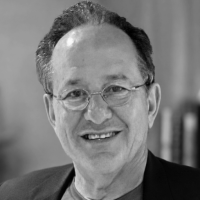
I write this as an American Democrat living in Israel. My commitment to equal rights, social responsibility and democratic government remains firm. Those convictions are precisely why Michigan Attorney General Dana Nessel’s recent remarks trouble me.
At a gathering of Michigan Jewish Democrats on August 30, Nessel said: “We have a moral imperative to place the needs of the world above even our own self-interest and, yes, even our own survival.” Jewish Insider reported her remarks amid the controversy surrounding Democratic Senate nominee Abdul El-Sayed and concerns about antisemitism. (jewishinsider.com)
Nessel deserves a fair hearing. She has spoken openly about antisemitism within her party and explained why she felt unsafe attending its convention. In an August 26 interview with David Frum, she described the alienation she and other Jewish Democrats were experiencing. She plainly recognizes the problem. (theatlantic.com)
That makes her appeal more painful. I understand her to be arguing that the consequences of Republican victory could be so grave that Jewish voters have a moral duty to put their own security concerns second.
I cannot accept that hierarchy.
Climate change matters. Reproductive freedom matters. The protection of democratic institutions matters. Jewish safety belongs within the same commitment to human dignity that makes those issues urgent. It should never have to compete for admission.
The freedom to attend a synagogue, send a child to a Jewish school or participate openly in political life is part of equal citizenship. A person asking for those freedoms is asking a democracy to keep its promise.
There is a difference between the compromises inherent in voting and accepting the proposition that a community’s survival is a lesser moral concern. A voter can weigh an imperfect candidate against the alternatives while continuing to demand accountability. Political leaders should welcome that demand. It gives them a responsibility to meet, rather than a fear they can expect voters to swallow.
Nessel’s invocation of Queen Esther deserves particular scrutiny. She drew on Esther’s example to support her appeal for sacrifice. Yet Esther risked her life to prevent the destruction of her people. Her plea to King Achashverosh explicitly joined her own survival to theirs. (jewishinsider.com, sefaria.org, sefaria.org)
The lesson I draw is that access to power brings an obligation to confront persecution. Esther’s courage should challenge political leaders to act when protecting a vulnerable community becomes inconvenient to those around them.
That argument also requires precision about Israel. Criticism of an Israeli government, opposition to a military operation or disagreement over American aid does not automatically constitute antisemitism. Democratic debate needs room for all three. So does the debate over the prospect of true and lasting peace in the Middle East and the constructive steps all concerned parties, and not just Israel, must take to achieve this goal.
Holding Jews collectively responsible for a government’s actions, spreading conspiracy theories about Jewish power or excusing violence against Jewish institutions crosses a different line. No disagreement about the Middle East justifies threatening a Jewish neighbor or harassing a Jewish participant at a political meeting.
A credible response to antisemitism must distinguish between these things. Exaggerated accusations damage that credibility. So does treating clear hostility toward Jews as an embarrassment to be managed until election day.
As a Democrat, I have a particular responsibility to insist on consistent standards within my own political home. Condemning prejudice becomes a meaningful test of principle when the person responsible is someone whose endorsement, audience or votes our side wants. A Republican’s antisemitism deserves the same condemnation as a Democrat’s.
Candidates should confront antisemitic conduct among their supporters. Party officials should act when harassment makes participation unsafe. Apologies should be judged by the behavior that follows them. A commitment to inclusion must remain enforceable when enforcing it carries a political cost.
November will require difficult judgments. Every voter must weigh candidates, policies and consequences. People of good faith will reach different conclusions. No politician has the authority to determine whether someone’s ballot makes them a good Jew.
The difficulty of those choices makes the obligations of leadership more pressing. Candidates must repair trust and address the conduct that damaged it. Telling a concerned constituency to bear the burden leaves too little responsibility with the people seeking its support.
I expect more from the Democratic Party because I still believe in its promise. I want it to defend reproductive freedom, confront climate change, protect vulnerable people and challenge antisemitism with the same seriousness. Equality requires that consistency.
If Democrats ask Americans to help preserve democracy this November, they must make clear that Jewish safety is included in what they are fighting for.
The world we are being asked to help save includes us.
Related Topics
Related Posts