
Khamenei and the Crisis of Shiite Authority
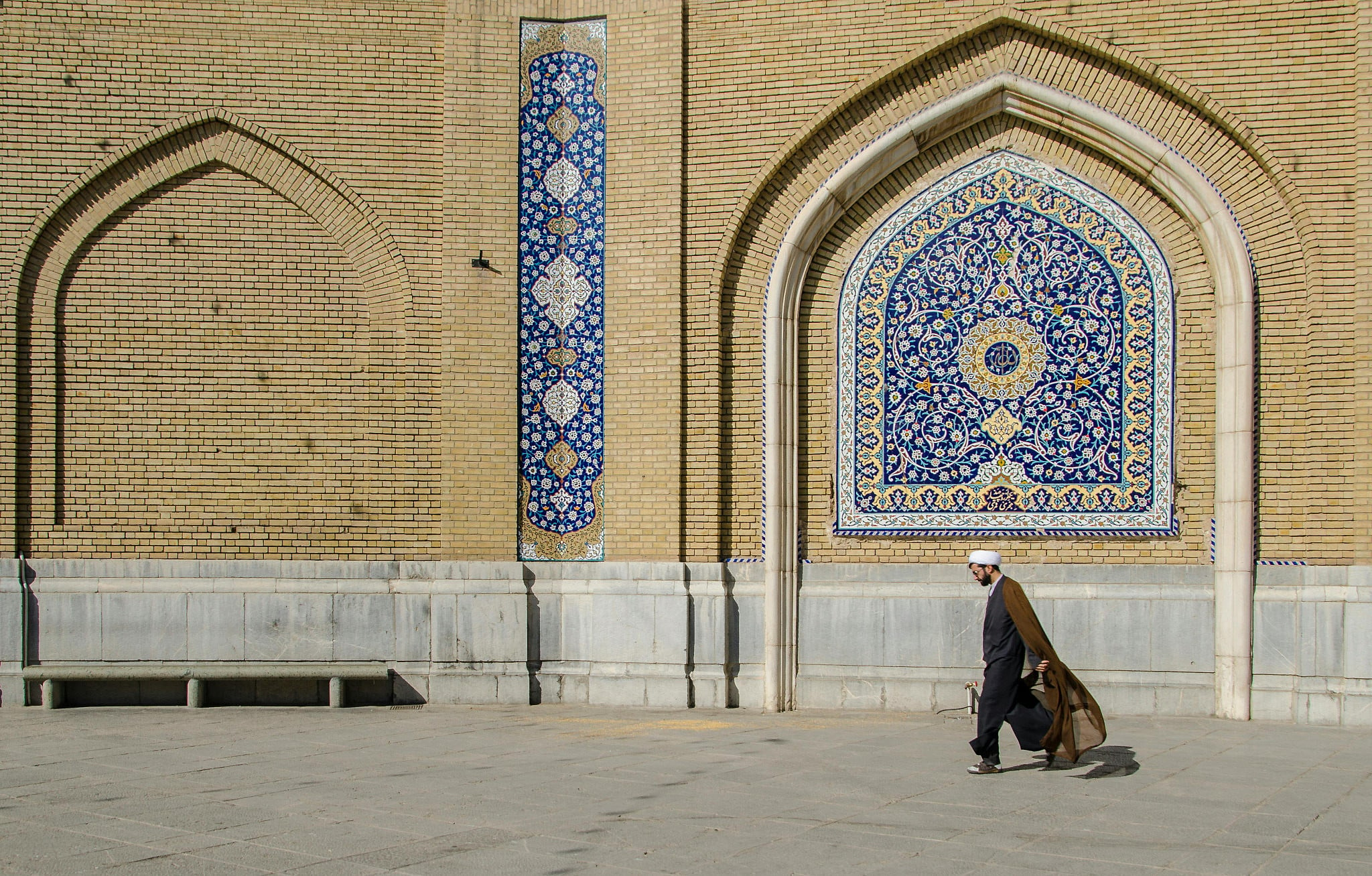
The appointment of Mojtaba Khamenei as Iran’s new Supreme Leader marks a dramatic change in the application of the revolutionary Velayat-e-faqih system. After years of constant shifts, the role of the Supreme Leader is increasingly detached from religious authority or clerical legitimacy and more embedded in the post-ideological power structures of contemporary Iran, where institutional control and loyalty outweigh theological credentials — a process significantly accelerated by the current war. Yet even in this modernized configuration, the IRGC still relies on a veneer of religious legitimacy to stabilize its preferred succession.
At the same time, reports circulated via news agencies claiming that Grand Ayatollah Ali al‑Sistani of Najaf, Iraq, had issued a fatwa calling for a collective jihad in defense of the Islamic Revolution. These claims are widely attributed to IRGC information channels, though no official text appears on their formal websites, and Sistani’s office has not taken responsibility. In reality, Sistani condemned the conflict and called for restraint, emphasizing that the military aggression against Iran sets a dangerous precedent and urging the international community to seek peace.
The timing of the claim highlights a broader dynamic: the evolution of Iran’s post-ideological power structures is unfolding within a Shiite world already facing institutional and intellectual uncertainty. Regardless of whether Mojtaba remains in power for years or only weeks, the processes set in motion in Iran intersect with developments in two competing approaches within Shiite thought, each embodied by a distinct center — Najaf in Iraq, with its historically quietist and transnational marjaʿiyya, and Qom in Iran, with its revolutionary, state-aligned model.
Traditional Shiite Authority and the Najaf-Qom Divide
Traditionally, Shiite religious authority was deliberately separated from political power. For centuries, the clergy exercised moral and legal guidance but did not govern the state directly, reflecting the long-standing belief that the twelfth Imam, the Mahdi, would one day return, and until that moment, worldly rule should remain distinct from religious leadership.
At the heart of this system was Najaf, in present-day Iraq, home to one of the most important Shiite seminaries (hawza), whose scholars produced generations of marjaʿs—the highest-ranking legal authorities in Twelver Shiism. A marjaʿ serves as a source of emulation for believers, issuing religious rulings (fatwas) that guide everyday life. A decision made in Najaf was not only relevant to Iraq but also followed by Shiites in Iran, Pakistan, India, and wherever Shiite communities existed. The influence of Najaf can be seen in events such as the Tobacco Protest of 1891, when Grand Ayatollah Mirza Shirazi’s fatwa against a British tobacco concession in Iran galvanized public resistance and forced the Qajar Shah to retract the concession. It was a moment that illustrated the extraordinary moral and practical weight of Najaf’s guidance, even on a sovereign state.
In mid-20th century Iran, this quietist approach persisted. The main Iranian center of Shiite scholarship was the city of Qom, whose seminary had emerged in the early twentieth century as a major counterpart to Najaf. Ayatollah Hossein Borujerdi, the leading marjaʿ in Qom, was cautious about clerical intervention in politics and maintained close ties with the Najaf tradition of restraint. Ruhollah Khomeini, then a rising theologian teaching in Qom, carefully observed this principle. While studying and working under Borujerdi’s authority, he refrained from overt political activism, respecting his teacher’s leadership and maintaining the traditional boundary between religious guidance and governance. Only after Borujerdi’s death in 1961 did Khomeini begin to openly advance the revolutionary doctrine of Velayat-e-Faqih—the governance of the jurist—which fundamentally reimagined Shiism’s role in state power. Khomeini’s innovation represented a major ideological departure within the broader Shiite world, challenging the Najaf school’s model of moral but politically restrained authority.
Grand Ayatollah Ali al-Sistani in Najaf embodies the continuation of the quietist tradition, maintaining moral and legal authority without seeking to exercise direct political power. Even after the fall of Saddam Hussein in 2003, Sistani refrained from direct political administration, choosing instead to provide moral and legal guidance for the Shiite community. A notable example came in 2014, when he issued a call for volunteers to defend Iraq against the advance of the Islamic State (ISIS), a fatwa that helped mobilize the forces later known as the Popular Mobilization Units. Even in that moment, however, Sistani framed the call as a defensive duty for society rather than an attempt by the clergy to govern the state.
The Najaf-Qom divide is not merely a geographic or institutional rivalry—it reflects two competing visions of Shiism itself: one rooted in moral authority and transnational legitimacy, the other in revolutionary politics and the direct exercise of state power. It is against this backdrop that any claims of support from Najaf for Iran’s political developments, whether real or fabricated, take on extraordinary significance.
Institutional Evolution and Succession in Iran
Iran’s constitution originally required that the Supreme Leader be a recognized marjaʿ, possessing the qualifications of ijtihad (the ability to interpret Islamic law independently) and the authority to guide the Shiite community. When Ali Khamenei succeeded Khomeini, the Assembly of Experts amended internal procedures to allow his appointment despite not meeting this criterion, bypassing both the formal religious requirement and public input. The choice was influenced by the absence of other politically suitable candidates: many potential successors had either lost ideological alignment or were sidelined, including Hussein-Ali Montazeri, who had been a leading contender but opposed aspects of Khomeini’s revolutionary model. This set a precedent that would frame Mojtaba Khamenei’s rise, further eroding constitutional and clerical norms.
Mojtaba spent many years working in his father’s office, managing access and participating in key state processes, while also teaching in Qom, developing networks within the seminaries and maintaining connections to influential figures aligned with the IRGC and hardline Mahdist circles—an eschatological current emphasizing radical mobilization. He also has personal and ideological contacts with the Paydari Front, an ultra-conservative political group within Iran. For the IRGC, he offered an ideal combination: loyalty to the revolutionary institutions, familiarity with key ideological networks, and a controllable profile in a crisis context. In certain clerical circles, other names—including Hassan Khomeini, the founder’s grandson, previously kept away from politics but enjoying broader social legitimacy and ties to traditional marjaʿs—were discussed as alternatives. Yet in the extraordinary circumstances of targeted strikes against senior leadership and emergency-controlled elections, IRGC’s preferences prevailed.
The choice of Mojtaba illustrates a structural evolution rather than a sudden rupture: the revolutionary institutions now operate as a post-ideological, security‑driven apparatus, where operational control, loyalty, and the safeguarding of financial and economic interests dominate. Unlike Khomeini, who fused theological authority with governance to advance a revolutionary vision of political Islam, Mojtaba’s rise signals the institutionalization of a system in which the Supreme Leader can be occupied by a figure lacking both widespread clerical legitimacy and independent moral authority. This is not a crisis of Mojtaba himself, but the predictable outcome of decades of concentration of power within the IRGC and affiliated networks, accelerated under the pressures of war, where maintaining regime survival and coordinating hardline factions take precedence over revolutionary ideals.
Najaf and the Challenge of Shiite Authority
Following the institutional and ideological shifts within Iran, the situation in Najaf highlights a parallel, yet distinct, set of challenges for the broader Shiite world. Grand Ayatollah Ali al‑Sistani remains the last globally recognized marjaʿ, and his position continues to anchor Shiite moral and legal authority. Yet even his office faces structural limitations: there are no younger clerics with comparable transnational legitimacy ready to assume a role of similar magnitude. Unlike the post‑ideological environment of Iran, where operational control and security networks define authority, Najaf’s marjaʿiyya relies on slow, organic processes of recognition, which are now hindered by demographic shifts, declining religiosity among Shiites, and the cautious behavior of emerging scholars unwilling to seek prominence in a contested global arena.
If Sistani passes without a widely acknowledged successor, the marjaʿiyya could enter a period of temporal fragmentation. Different communities may align with different scholars, creating decentralized authority and weakening Najaf’s ability to issue cohesive guidance across national borders. Localized figures could gain influence, but without the reach of a universally recognized marjaʿ, their authority would be limited, and the capacity of Najaf as a unifying religious center would diminish. External actors, including Tehran, may attempt to exert influence, but the intrinsic independence of the marjaʿiyya resists direct political control. Such interventions, paradoxically, could deepen institutional fragility, highlighting that succession in Najaf is now both a spiritual and geopolitical question.
The Global Shiite Recalibration
Mojtaba Khamenei’s rise as Iran’s Supreme Leader is more than an internal matter; it signals a broader recalibration within the global Shiite world. The post‑ideological, security‑driven model of Iran no longer offers a coherent intellectual framework connecting religion and state. Political Shiism in power has degenerated into an apparatus focused on survival, resource control, and proxy mobilization—effective for strategic influence but devoid of a unifying revolutionary vision. Religion now functions largely as a legitimizing veneer rather than as a source of ideological authority.
In this context, Najaf remains the primary center capable of anchoring Shiite moral and legal authority, yet it faces structural challenges: succession is uncertain, younger global figures have not emerged, and local and regional pressures complicate cohesive leadership. The Shiite world is entering a period of potential fragmentation, where decentralized authority and competing interpretations may replace a single, transnational moral center.
The significance of this moment extends beyond Iran and Najaf. It illustrates a crisis within contemporary Shiite thought, where neither revolutionary structures nor traditional clerical hierarchies can offer comprehensive guidance. Moreover, it reflects a broader trend in political Islam: both Shiite and Sunni communities are confronting the limits of ideological authority when state power, social secularization, and generational shifts intersect. The future of Shiism will depend on how these competing forces navigate legitimacy, influence, and institutional continuity in a rapidly evolving geopolitical landscape.