
Kindertransport chaperones: Over half of them found refuge and survived
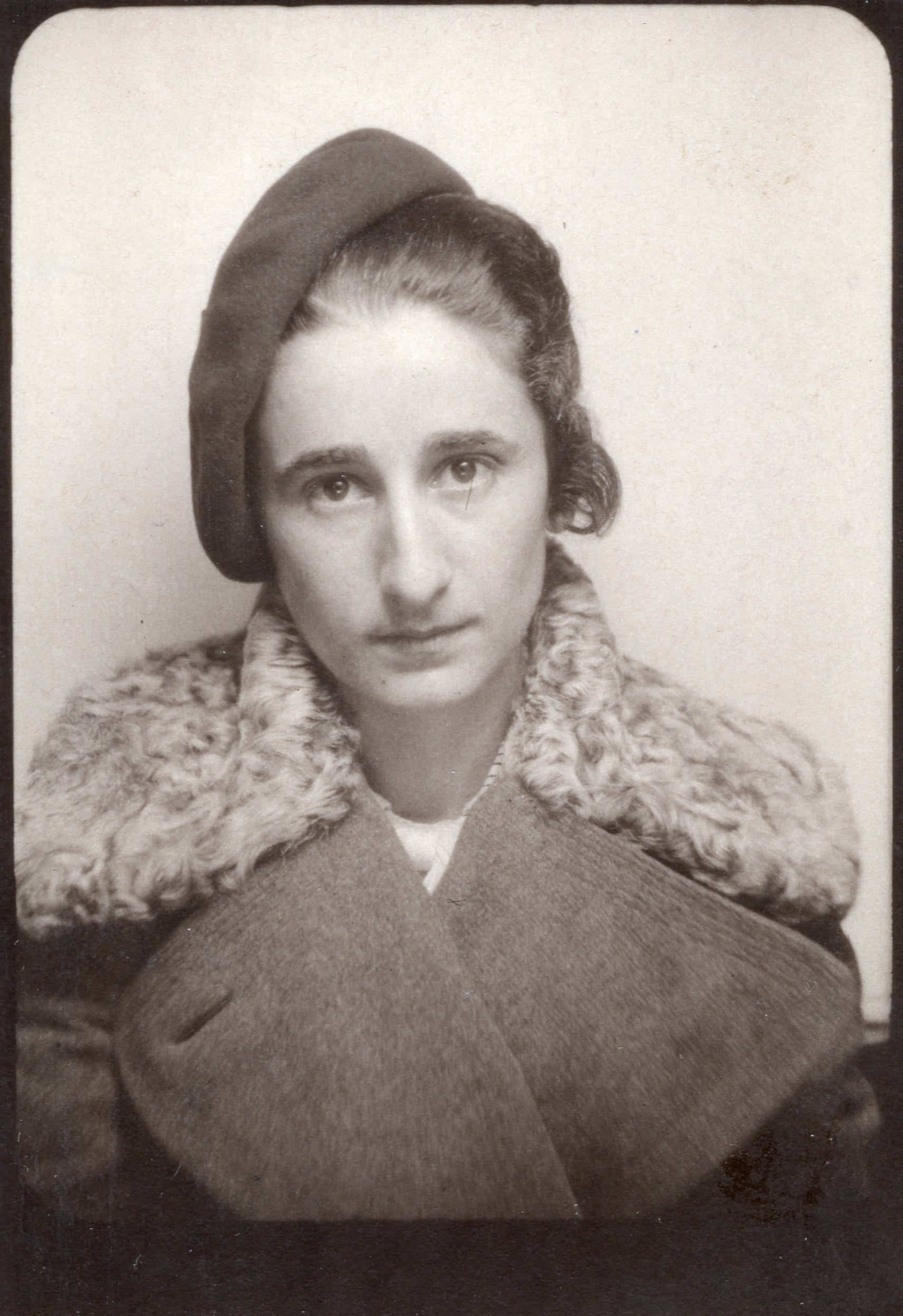
Out of the 107 chaperones I’ve researched so far, some 71 survived. That means that over 66% of the adults, often Jewish adults, who accompanied the Kindertransport children to safety in the UK were saved as a result of this rescue scheme or further emigration or by surviving the concentration camps and death camps. History and popular culture though have often overlooked and even forgotten their stories. However, this all changed when I found the Kindertransport lists at Yad Vashem in 2024 because along with the lists of Jewish children escaping were the lists of the adults who aided them. Since then, I’ve had the honor to speak with the families of the chaperones. Many of those who survived passed away between the 1960s and 1990s, so they did not see the files I uncovered, and in many cases their actions were not publicly recognized.
The chaperones I’ve researched came from Germany, Austria, Czechoslovakia, the Free City of Danzig, and what is now Ukraine. I’m sure that there were chaperones with Polish origins too. We also know that there were some British chaperones. Many of the Kindertransport chaperone lists actually state the addresses where they were living at the time. Going forward, we could potentially map where they lived, their journeys on the Kindertransports, and their later fates. Some chaperones had familiar ties to one another as they were husband and wife or sisters and brothers. Therefore, this was to a degree a family affair in that several members of one family were involved in the Kindertransports. Some of them even journeyed together on the transports. In fact, it was even a family rescue as one chaperone was able to obtain a place for her son to journey on the Kindertransport. She was not only helping other children find refuge as she also became her son’s rescuer.
Up until now I’ve researched 40 chaperones from Berlin, 6 from Danzig, 6 from Prague, 6 from Cologne, 12 from Frankfurt, 1 from Stuttgart, 1 from Karlsruhe, 8 from Hamburg, and over 50 from Vienna. All these chaperones travelled to the UK. Some of them also aided children to reach America during the war. I also have lists of chaperones who helped children to travel to other countries, but I’ve focused on those who came to the UK at the moment as they make up the largest group. Overall, both men and women were chaperoning the children, but it seems that we have the name of slightly more women than men.
Before the Kindertransports, the chaperones were social workers, teachers, nurses, academics, and members of the Jewish community who were involved in various aid organizations and synagogue committees. Some of the male chaperones were incarcerated in concentration camps such as Sachsenhausen after Kristallnacht and later went on to help children flee. One chaperone was 7 months pregnant when she was chaperoning the children – she gave birth in November 1939 when the Kindertransports to the UK via train and ferry had come to an end. Her husband survived Auschwitz but tragically she and their baby boy perished there. One chaperone died in 1940 while at least 18 Berlin chaperones were murdered during the Holocaust. Some chaperones were deported and murdered in Auschwitz, Bergen-Belsen, Terezin, Lodz, Minsk, Sobibor, Ravensbrück, and Reval. We’ve also started to trace what happened to their families. In some cases, they were deported and murdered with them.
Of the chaperones who survived, they were able to emigrate to the UK, America, Sweden, Cuba, and Uruguay. Some even survived the concentration camps and death camps and moved to America after the war. Those who came to the UK were then registered along with all UK citizens for the 1939 register at the end of September 1939. The chaperones are often listed as refugees, but they are sometimes listed as the “conductors of children”. They were then later categorized as enemy aliens and interned or had to register with the police. In fact, some of them were then deported by the British government as internees to Australia and Canada – even on the infamous Dunera, which also transported the former child refugees (now teenagers) whom the chaperones had helped to escape on the Kindertransport. I’m now looking into the chaperones’ wartime service in the armed forces and on the home front. A number of female chaperones became domestic servants and gardeners, while others continued their work as teachers in schools attended by some of the child refugees.
There were 18 chaperones listed for the first transport from Austria on 10th December 1938. We know that 12 of them survived but it could be as many as 16. Most of them actually found refuge in the UK. While there were chaperones who made multiple journeys with the children others only made one journey.
Chaperones travelled not only via the train and ferry, as Kindertransports leaving from Hamburg for Southampton went all the way by boat. There are 8 chaperones listed for the first Kindertransport from Germany on 1st December 1938. We know that 2 of them survived – one by finding refuge in the UK while the other survived Bergen-Belsen. I was rather moved to find this out as he was liberated by British troops, none of whom, I would assume, knew of his incredible efforts to save Jewish refugee children before the war. Irma Zanker is one of these chaperones. We have her visa number when she accompanied another Kindertransport in January 1939 – it was 767. We have the details of the transport she accompanied from at least December 1938 to July 1939. Her son arrived on a Kindertransport via boat in April 1939. His Kindertransport number was 4413. He became naturalised in 1947 and later emigrated to America. On 25th June1943, Irma was deported from Hamburg to Terezin. Then, on 28th October 1944, she was transported to Auschwitz where she perished.
One chaperone family I recently had the pleasure of meeting was Erna Maas’ – she made several journeys to the UK with refugee children. Erna was in her late 20s at the time. She had studied to become a lawyer, but when she was denied from practicing her profession, she became a social worker. Miraculously, her immediate family all survived by escaping to America. But before that they were connected to family refugee networks and sheltered at least one family who were preparing to leave Germany. The daughters of this family were helped by Erna and they never forgot her. They sent her a boomerang from Australia in later years. I was recently able to find their Kindertransport list and show it to Erna’s family. In fact, I’ve been able to tell Erna’s family about the over 100 children who Erna helped to chaperone. In turn her family showed me a list which Erna kept of her journeys. It appears that before the Kindertransports began she was helping Youth Aliyah children, and when the transports to the UK came to a halt, she remained in Germany to continue to help. In 1941, she left for America with a small group of refugee children. It was after our Zoom that the family sent me an email with photographs of Erna attached. I was so moved as for the first time I saw one of the chaperone’s faces. She was right in front of me. She was real. She had performed such a duty of care and carried on with her life.
But the past never left her. During her stay in Britain in May 1939 after she’d accompanied a Kindertransport she wrote a letter to her family – I even found the hotel in London where she wrote it from as it is still standing today. She described how difficult it was for Jewish people to escape and the financial theft she had encountered at the hands of the Gestapo. She also wrote that she imagined life in the UK would be tough, and that she did not want to remain in the country. Her letter names one person after another who has been released from the camps and who is seeking shelter elsewhere. Her family told me that when she got to America, she was in a park for a picnic with her family, and a park ranger stopped by to see if they needed anything. When Erna saw him approaching with his brown shirt and belt she ran away. The rest of the family understood without question why she reacted this way. I wondered if this was linked back to her Kindertransport experiences where the Nazis would check the paperwork. Erna’s family archive is now being cataloged at the Leo Baeck Institute, New York.
Through speaking with Erna’s family and other chaperone families I came away with something which I had not stopped to think about before. The chaperones were clearly trying to escape themselves and get their families out. But what they also saw time and time again were the heartbreaking scenes of Kindertransport families saying goodbye to their children. I wondered if they thought about when their time would come or if it was too late for them.
The chaperones had an important role to play as they were not only looking after the children, but they also had to ensure that the paperwork was in order. They had a 2-hour training session before they left, they had the Kindertransport list with them to ensure that at the Dutch border the children’s names were ticked off, and in some cases their passports were confiscated in the Netherlands to ensure that those who did not have visas would return. There are even letters about chaperones taking different routes back to Germany which the authorities wanted to know about to ensure that they had returned. But it is a myth that all the chaperones had to return otherwise the transports would come to a stop. The refuge and survival of over half of them dispels that myth. Most of them survived by remaining in the UK. Thus, the Kindertransport also saved the lives of some adults.
May their memories be a blessing.