Kiriyat Shmoneh, Israel’s Northern Orphan
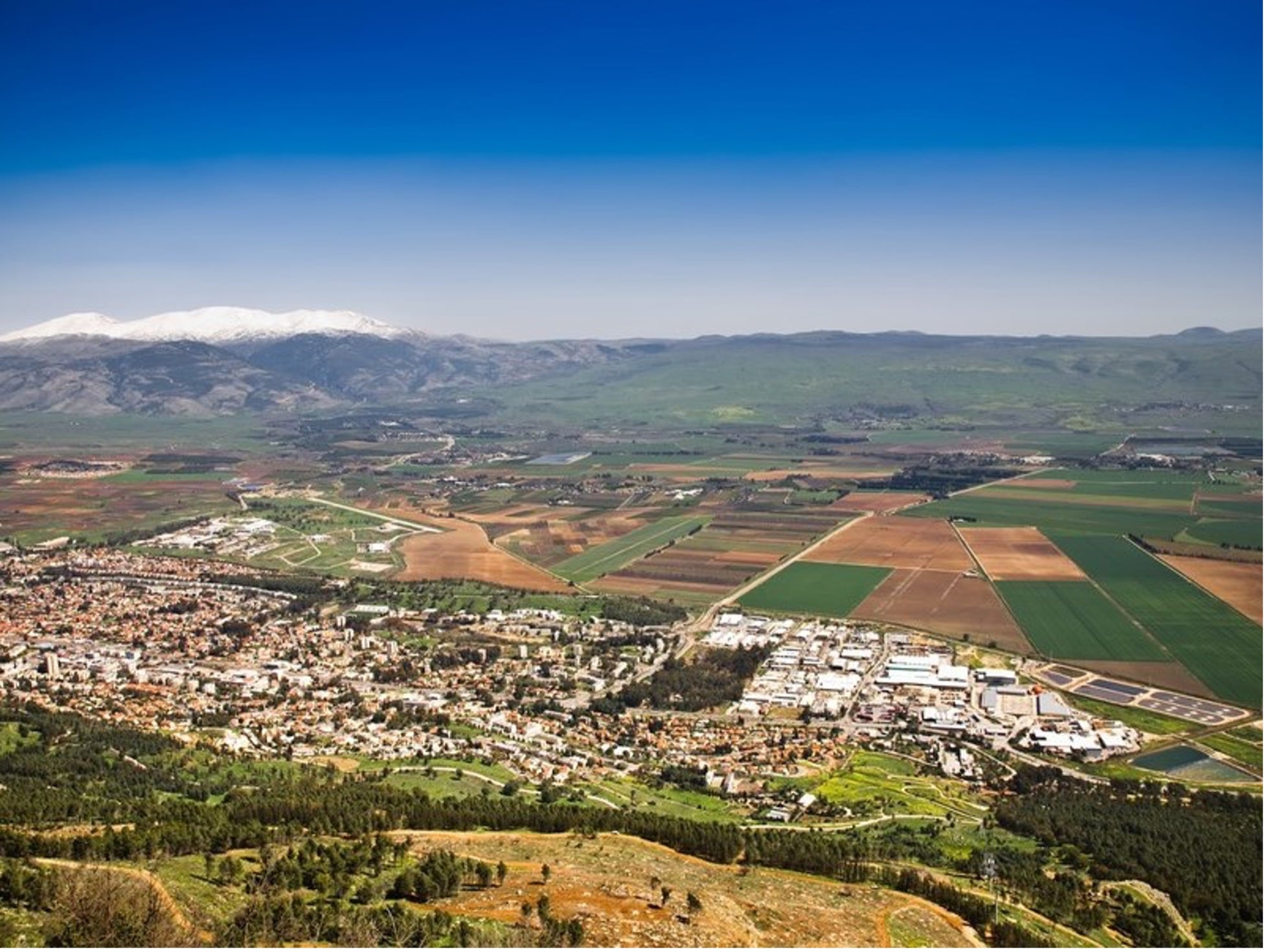
The very name “Kiryat Shmoneh” refuses to let history be forgotten. “The City of Eight” memorializes the eight Jewish defenders who fell at nearby Tel Hai in 1920, a formative episode in the Zionist story of border settlement and rebirth. The city itself was founded three decades later, first as a transit camp in 1949 — and later a development town, built on the lush slopes of the Naftali range at the edge of the northern Galilee. The city was initially inhabited by new immigrants who came to Israel with little more than hope and a government promise that the periphery mattered.
For decades, Kiryat Shmoneh evolved the way many development towns did: notwithstanding consistently disappointing support from the central government, the grit, improvisation and stamina of its residents allowed the town to evolve. The local population persevered because of an unspoken national deal: Kiryat Shmoneh would stand guard — often quite literally — on the country’s violent northern frontier. In return, the state would provide a robust social safety net: jobs, infrastructure, education — along with the proverbial upward ladder to ensure social and economic mobility.
The town’s population fluctuated over the years, but never went much beyond 20,000. Certainly, it never came near the 70,000 residents now living today in Kiriyat Gat, that also started as struggling development town, but with a much more central location. Nonetheless, slowly and steadily, Kiryat Shmoneh emerged as a commercial and cultural hub for the remote Upper Galilee.
The town became a vibrant place and home to restaurants, a plush performance hall, an expansive tennis center and even a professional basketball team that briefly competed in Israel’s top league with the likes of Maccabi Tel Aviv. Kiryat Shmoneh’s riverside park along the Ein Zahav stream is an ornithological wonder and astonishing model for urban nature protection, providing one of city’s greatest assets.
Kiryat Shmoneh’s emergence as a Galilee’s focal point makes sense geographically: Israel’s northernmost city, sits at a junction that brings together people from kibbutzim, moshavim, Druze villages and visitors to nearby nature sites who seek its services, shopping, clinics, banks, government offices, and transport arteries. Over the years, tensions and rivalry with the surrounding kibbutzim and other rural villages gave way to a modus vivendi along with numerous synergistic partnerships.
If the city’s centrality to life in the northern Galilee was inevitable, so too were its historic challenges. Kiryat Shmoneh has long lived under the long shadow of insecurity. When I first came to Israel after high school in the late 1970s and lived just outside the town, night after night we too experienced the relentless rocket fire and the grinding psychological price paid by families that raise children in a war zone.
It also suffered the less newsworthy, but no less onerous burdens of the periphery: low wages, few high-quality jobs, limited public transportation options, inadequate access to health care and underinvestment that tends to go unnoticed. Politicians only seemed to remember Kiryat Shmoneh before elections – and soon forgot its problems after enjoying the photo-op and paying lip service to the importance of strengthening northern border communities.
This was the chronic neglect that characterized the city’s first 75 years.
Which brings us to the present crisis after two years of war and the town’s abandonment by Israel’s government: a day after October 7, 2023, Hezbollah began firing rockets, missiles and drones into the northern Galilee. Local citizens were advised to withdraw. By October 20, 2023, the army formally ordered the evacuation of Kiryat Shmoneh itself. Almost all of the city’s 24,000 residents left, and the city became something Israelis rarely see outside disaster films: a living place turned into a managed absence.
How many times was Kiryat Shmoneh bombed during the year-long war of attrition with Hezbollah? It is difficult to be precise when combat is characterized by salvos, interceptions, shrapnel, and near-misses. But the numbers conveyed by those tasked with protecting the city are staggering. In May 2024, Avichai Stern, the towns dedicated young mayor cited “something like 370–380 impacts”. In fact when you account for interceptions, the total number of rockets and missiles launched at the city exceeded 4,000. Regardless of the precise figure, the outcome was grave: the city was battered. The human toll over the years is no less devastating: hundreds of physical strikes, thousands of incoming threats and the normalization of terror, which became background noise.
Evacuation did not mean total emptiness. Cities cannot be shut down like a factory. Water systems have to operate. Basic sanitation must function. Soldiers need a place to buy felafel. Emergency services and a skeletal municipal staff remained. By late 2024, a small remnant, perhaps a couple thousand people, continued living and working to keep basic systems from collapsing, while the military and essential workers replaced the rhythms of civilian life. This was not a policy of “resilience.” It was triage.
From the outset of the war, the Galilee also did not enjoy the clarity, however painful, that much of the country felt about the southern front: a sense that the state was fighting for communities that had been attacked, and that rebuilding would be national priority. For northern Israelis in general and Kiryat Shmoneh residents in particular, the war created an unnerving grey area: seemingly intact but too dangerous to return and bring children into harm’s way; and too volatile a border to fully resolve. Because it was so “remote” and far from the center of the country, the ongoing disaster rarely made it onto the national consciousness and policy agenda.
When the ceasefire with Lebanon finally arrived in late November 2024, Israel’s government began to urge people to return. But calling for “return” is an empty a slogan if it is not accompanied by a holistic strategy, a meaningful budget and concrete measures to expedite the transition.
By the end of 2025, only about 60% of Kiryat Shmoneh’s residents had come home, and only around half of local businesses had reopened. Those aren’t just statistics. They are classrooms that remain half empty, clinics with inadequate medical staff, stores that close early because foot traffic never arrives and streets where the sound of a siren still triggers traumatic associations. As time goes by, official declarations of national solidarity increasingly sound like brazen hypocrisy. The town that serves as the nerve center for the northern Galilee has been abandoned. Kiryat Shmoneh has become an orphan.
Perfunctory progress has surely been reported: committees have met; modest budgets promised. After months of delay, in December 2025, a major rehabilitation and economic recovery package for the north was finally approved. But as Mayor Stern explains: the salary for the project director for rebuilding the Galilee, is being paid by the meager Kiryat Shmoneh municipal budget. And if you walk through the city, if you talk to parents trying to decide whether to re-enroll children in schools that may close for lack of students you hear the same refrain: “the country has turned its back on us.”
The state’s approach has been heavy on rhetoric and light on the practical architecture of renewal. Rebuilding is not only repairing a broken window; it is restoring trust. That means rapid compensation and clear timelines for home repairs. It means reopening government offices and ensuring health and social services are fully staffed not “as needed”. It means significant tax relief and targeted grants that keep small businesses alive long enough for customers to return. It means mental-health support that is scaled to a community that lived under constant threat and displacement. It means prioritizing reconstruction efforts for the many damaged buildings. And it means an honest security policy that does not pretend a border city can thrive if its residents believe the next round is inevitable.
Rather than stay mired in the pathology of victimhood, Kiryat Shmoneh has begun to embrace its opportunities. Chief among them is higher education. The adjacent Tel Hai Academic College has finally received the status as a full-fledged university. In a magnanimous gesture, recently, the surrounding regional council ceded the land where the campus is located to the city so the school would be officially located in Kiryat Shmoneh. A 53-kilometer railway line to Carmiel is in the planning stages.
A “University of the Galilee” ecosystem could do for Kiryat Shmoneh what Ben-Gurion University and the train did for Beersheba: create a college town that attracts young people to the greenest corner of the country, incubates start-ups, supports culture, and anchors the region’s economy with a steady flow of students and faculty. This week the university was formally declared. But like a tree that falls in a forest that no one hears, there was a deafening silence in the Israeli media. Israel has many problems. Quite honestly, people don’t really seem to care.
Kiryat Shmoneh’s residents have always done what Israel has always asked the periphery to do: endure. They endured rockets. They endured evacuation. They endured the indignity of watching their city turned into a military zone and then being told, effectively, to “make do” when they were allowed to come home. What they should not have to endure is governmental indifference dressed up as patriotism.
A “return package” needs to be put together which is generous enough to compete with the gravitational pull of the Israel’s central region; security arrangements with Lebanon must give families a reason to believe the future will not be a rerun of the past.
The harsh truth is that lip service is not policy. Photo-ops are not reconstruction; promises are not classrooms; and slogans do not reopen businesses. Mayor Stern describes Kiryat Shmoneh as a diamond in the rough: “Imagine the potential that just bit of polishing and modest state investment could yield.” Indeed, if Israel chooses to rebuild it properly, Kiryat Shmoneh can become something more than a border outpost: it can be a thriving college town; an innovation hub for agriculture and climate adaptation; a global for religious and ecotourism; and a vibrant regional service center.
Kiryat Shmoneh could also come to symbolize how a Jewish state does not abandon its citizens – citizens who for years have taken the hit for the good of the nation. Ultimately, a country is not measured by how it treats its strongest cities, but by whether it stands behind its most vulnerable ones. Kiryat Shmoneh is waiting for Israel to prove that “the north” is not just a direction, but a commitment.