Know Thyself: Ancient Wisdom Has Never Been More Critical
“Man, know thyself.” Inscribed on the temple of Apollo at Delphi, this maxim has echoed across millennia, urging humanity to look inward for truth. Jewish tradition carries a similar refrain: “Let us search and examine our ways” (Lamentations 3:40). However phrased, the call is the same – clarity comes not from conquering the external world, but from confronting ourselves.
In a previous post, I discussed the World Transformation Movement (WTM), which presents Australian biologist Jeremy Griffith’s explanation of the human condition. Griffith argues that this ancient call to “know ourselves” is not just poetic advice, but a scientifically answerable challenge. His work sits within a much larger tradition of thinkers – religious, philosophical, and scientific – who have wrestled with the same enduring paradox: why do we feel so divided against ourselves?
A Universal Struggle
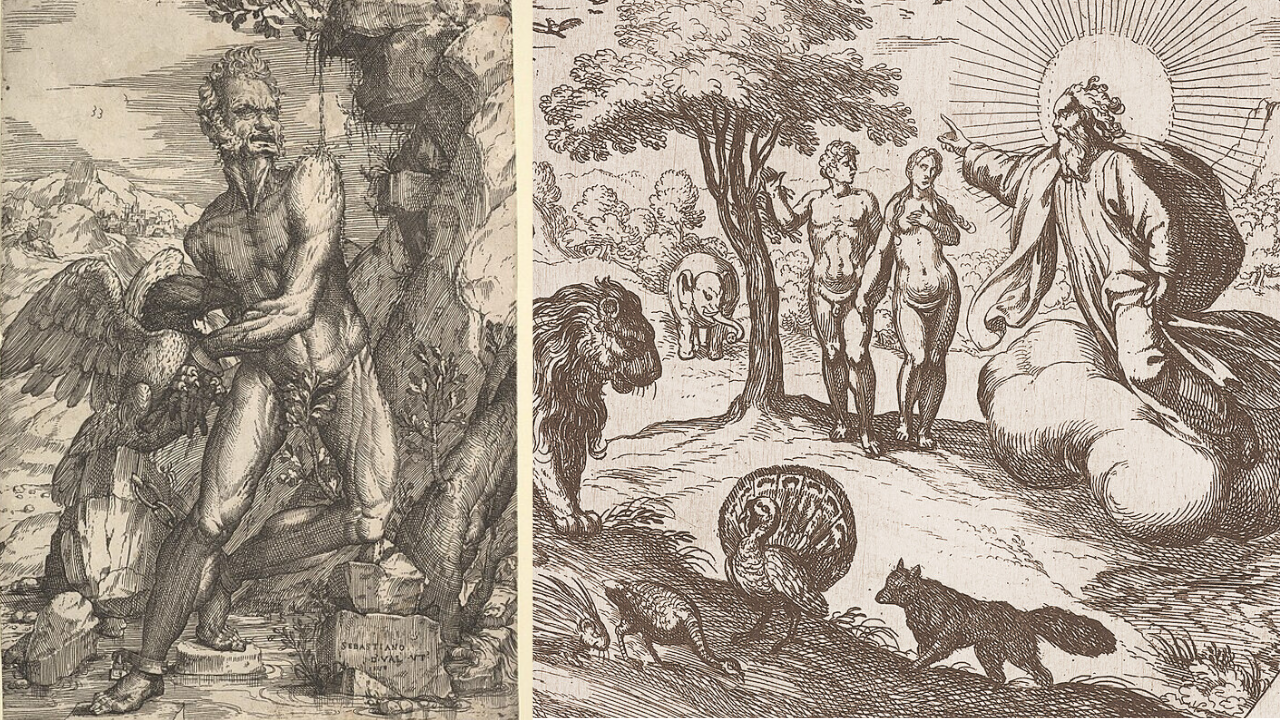
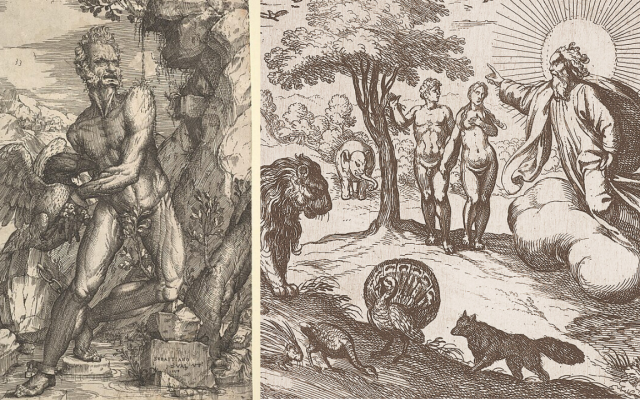
Jewish thought captures this tension in the idea of the yetzer hatov (good inclination) and yetzer hara (evil inclination). The Greeks told of Prometheus punished for bringing fire to humanity. Early Christian texts spoke of original sin. Each tradition points to the same intuition: human beings are somehow at odds with themselves – capable of extraordinary goodness, yet driven toward destructive behavior.
This paradox has never gone away. Modern culture, though often secular, is saturated with echoes of the same longing. From mindfulness apps to self-help bestsellers to the language of “authenticity,” we keep circling back to the question of who we really are, and why we fall short of our ideals.

Science Enters the Conversation
For centuries, religion and philosophy offered metaphor and ritual as responses. In our own time, science has tried to take up the challenge. Evolutionary psychology describes us as survival machines, while neuroscience maps the circuitry of thought and feeling. Yet the deeper contradiction remains: why do we act against our better judgement?
This is where attempts like Griffith’s, or E.O. Wilson’s call for a “consilience” between biology and the humanities, try to bridge the gap. Griffith frames the dilemma as a clash between instinct and intellect: our inherited orientations pulling one way, our conscious reasoning another; Wilson as a clash between selfless group instincts and selfish individual instincts. Whether or not one accepts these accounts, they represent the same ongoing search that wisdom traditions have carried for millennia.
Why It Still Resonates
Ancient texts and myths describe something perennial about the human condition. The Jewish practice of teshuvah (repentance or return) is not simply ritual; it acknowledges our tendency to self-betrayal and our need for realignment. The language has changed, but the insight remains: the greatest battle is internal, not external.
Israeli historian Yuval Noah Harari argues that humans are “storytelling animals” who survive by weaving narratives of meaning: myths that bind societies yet can conceal uncomfortable truths. His warning is that our tools are racing ahead of our wisdom, leaving us vulnerable to confusion and manipulation. Ancient maxims like “know thyself” endure precisely because they demand a clarity deeper than stories alone can provide.
Our technological era makes this clearer still. Artificial intelligence (which I have written about previously) promises to expand our power but often magnifies confusion. Social media fuels outrage, leaving us isolated and divided. Climate crises and wars remind us how little mastery we have over ourselves. In such a world, old maxims do not fade; they ring louder.
Final Thoughts
Ancient wisdom has never been more critical. From the Bible and the Greek philosophers to modern psychology, the same insight surfaces: until we understand ourselves, we will not find clarity. The World Transformation Movement offers a biological account of the human condition, Jewish tradition frames the task as teshuvah (repentance and return), and psychology and philosophy add their own language. What matters is admitting that the problem is real, and still unresolved.
If you want the fuller outline of Jeremy Griffith’s framework, see my earlier post on the WTM and the human condition. In the meantime, know thyself remains the right instruction for a noisy and divided age.