Kohelet After Yom Kippur – Intentions Collide with Reality
Ne’ilah in a Kohelet Light
Yom Kippur ends with Ne’ilah—throats raw from confession, hearts set on change. Within days, many communities read Kohelet (Ecclesiastes), a book that cools our fever with unflinching realism: breath, vapor, cycles, limits. The pairing can feel jarring—pledges to transform followed by a text that seems to puncture grand designs.
Yom Kippur supplies moral seriousness; Kohelet supplies a truthful scale. Together they call for a radical shift: narrow the lens from the wide-angle sweep of golden pasts and imagined afterlives to a human frame—our remaining lifetime, and within it the immediate present: this minute to this month. Meaning must be carried there, or it is not carried at all.
Kohelet’s Refusal of the Future
Kohelet distrusts the future as a warehouse for meaning. Death is certain; its timing is not. That double fact dissolves the habit of deferral. The book offers no verified afterlife to balance our ledgers and no guarantee that history will complete our sentences for us. From where we stand under the sun, “later” is speculation; now is the only time that can host truth, responsibility, and joy. This is not cynicism; it is discipline. It forbids us to mortgage the present to promissory notes written on a tomorrow we may never inhabit—and even if we do, we never actually live in “tomorrow.” We only ever live in “today.”
The Evaporation of Legacy
If not the future, perhaps memory will save us? Kohelet is unsentimental. Names fade; contexts shift; whatever remains is re-edited by those who come after—often “fools” by our lights—who will conscript our words to their purposes and miscredit our intentions. The dream of being a “world changer” is revealed as a metaphysical hunger masquerading as ethics. Kohelet does not scorn doing good; it scorns measuring the good by its fame or endurance. What counts must count now, in the texture of living—not in monuments, hashtags, or the verdicts of distant ages.
Against the Golden Past
The past, too, refuses to hold us. “The former days were better”—Kohelet calls this unwise. Nostalgia is curated memory; its glow is a trick of selection. Living backward drains the present of oxygen and converts responsibility into commentary. Kohelet’s skepticism is moral hygiene: stop outsourcing meaning to eras you cannot reenter. The lens narrows by necessity: this minute to this month is wide enough for meaning, narrow enough for life.
Human Uniqueness, Without Denial
Humans share the animal fate: we die. Kohelet levels us there. Yet he also notices a distinctively human restlessness—an ache for pattern and timelessness set “in the heart.” The point is not that we therefore outrun mortality; it is that we know we will not, and must live lucidly with that knowledge. Our difference is not exemption but answerability: we can choose how to live knowing the scale and brevity of our span.
Ethics Without the Crutch of Posterity
What justifies moral and communal life if not legacy or ladders to eternity? Kohelet’s answer is stark and liberating: this world and this lifetime. The good must be good in the present tense—coherent with truth, mercy, and fairness—without guarantees of harvest, applause, or accurate remembrance. Accountability remains (Kohelet never abolishes judgment), but its weight is carried in the choices of a bounded span, not in fantasies of permanence. Narrowing the frame intensifies ethics: if the field is this month, then this month’s justice matters; this day’s honesty counts; this hour’s compassion is the whole arena where goodness can become real.
Joy, Reclaimed from Grand Narratives
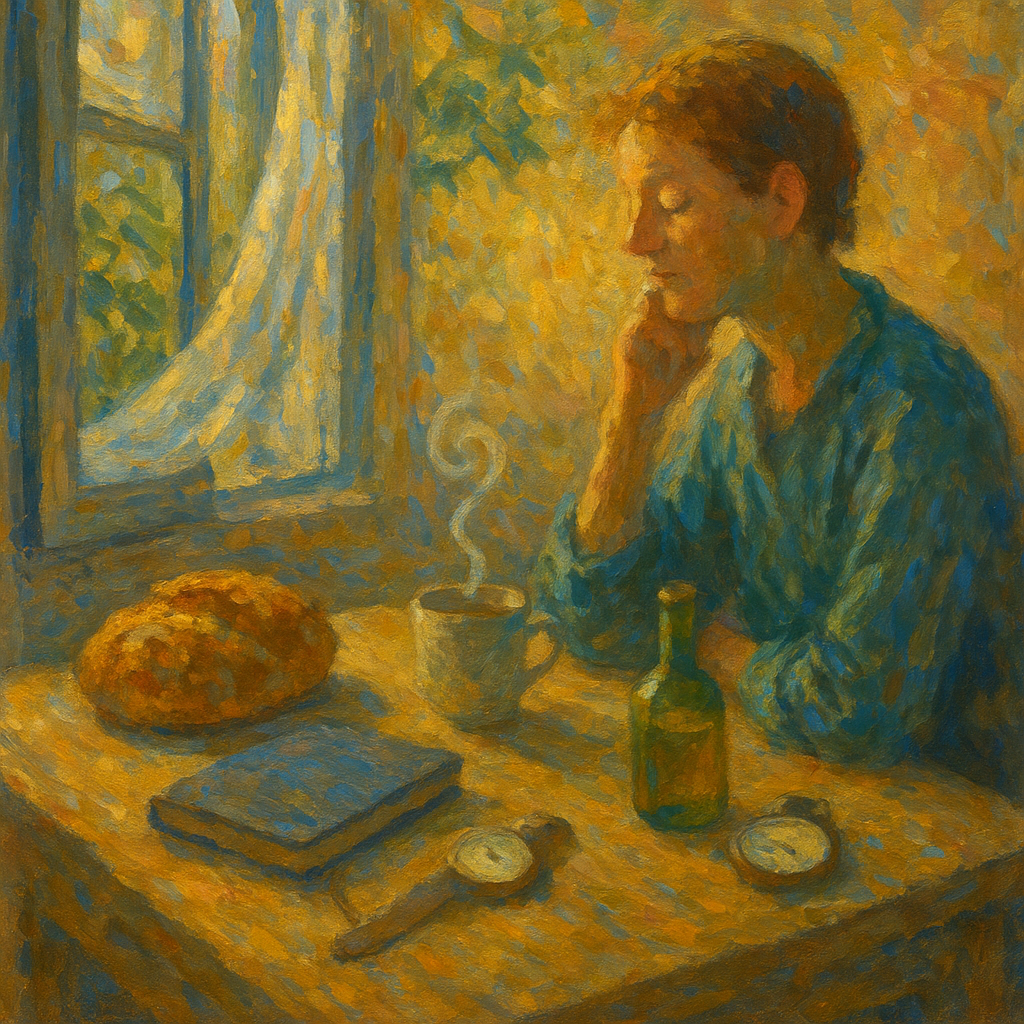
Kohelet’s invitations to eat, drink, love, and work are not loopholes for pleasure; they are a polemic against arrogance. Joy is not a prize handed out by history; it is the refreshment that comes from honoring limits. A shared loaf, faithful labor, loyal companionship—these are not consolation prizes for failed greatness. They are the proper goods of mortal beings. And the pleasures we actually experience are the ones the body can register and the soul can answer for in this moment. Truthful scale does not shrink joy; it makes it available.
Yom Kippur, Retuned
Read after Yom Kippur, Kohelet does not mock our vows; it purifies them. The Day of Atonement insists that lives can turn. Kohelet insists that the turn must occur without bargaining—not with a promise of future fame, not with a curated past, not with vows of mastery over tomorrow. The radical change is to abandon the myth of later and will the good now, inside limits, under judgment. Ne’ilah gives the courage to seek a different life; Kohelet gives the scale on which a different life is actually lived.
The Mindful Narrowing
The call, finally, is to mindfulness with a narrowed lens: from the wide-angle sweep of past and afterlife to the human frame of our remaining lifetime—and, within it, this minute to this month. When we live chiefly for horizons beyond that frame, we sacrifice today to a tomorrow we never truly inhabit. Tomorrow is always theoretical; today is the only day ever felt. Narrowing the lens does not flatten meaning; it concentrates it. Ethics thickens. Joy becomes tactile. Responsibility becomes specific. What is ours is the span we still possess and the clarity to fill it with goods that fit creatures who breathe and pass.
Enough, Under the Sun — with a Working Edge
We seek uniqueness in a world of cycles and minimal, vanishing impact. Kohelet answers: uniqueness is not exemption from the cycles but lucid fidelity within them. We will not be world changers. We will not be rightly remembered by those who quote us. But we can live truly in the scale that is real: this minute to this month; this neighbor; this word we can keep; this work we can do honestly; this joy we can taste without pretending it guarantees anything beyond itself. Under the sun, that is not less—it is enough.
And one last clarity: eloquence can illuminate reality, but illumination doesn’t move it an inch. Knowledge is a map; change happens on the road. The work is to convert vision into verbs. If that feels daunting, here are ten actionable principles—spare, durable, and human-scaled:
- Narrow the horizon: Aim choices at this minute to this month.
- Calibrate, don’t control: Choose the next fitting act, not the perfect plan.
- Practice over trophies: Measure life by inputs you can do, not outcomes you can’t own.
- Speech with receipts: Make claims you can verify today; let deeds outrun words.
- Joy as duty: Treat modest, present joys as fuel, not as guilty extras.
- Anti-nostalgia: Use the past as a library, not a destination.
- Envy → craft: Convert comparison into attention to your work’s next honest step.
- Diversify small bets: When uncertain, advance two or three small moves rather than waiting for certainty.
- Answerability: Choose as if you will have to explain this choice to someone you respect.
- Repair over display: When harm occurs, prioritize mending one square meter over performing virtue to the crowd.
Vision into verbs—that is the turn. Seen through Kohelet’s lens, it is also the freedom: a life lived truly, briefly, answerably, now.