

Kurds Seek Observer Status at the UN
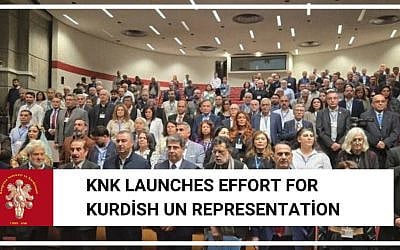 As discussions continue over the future of the PKK in Türkiye and the role of the PYD in Syria’s emerging political order, a new initiative seeking international and representative recognition for the Kurds has emerged in Brussels.
The Kurdistan National Congress (KNK) has launched a campaign aimed at securing recognition of the Kurds as a nation within the United Nations system and establishing a Kurdish representative body at the UN.
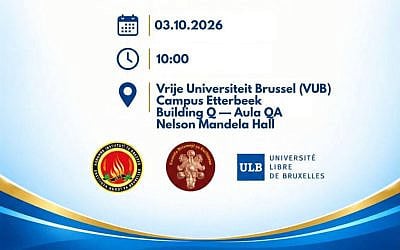
The initiative was announced at the “Conference on the Representation of the Kurdish Nation at the United Nations,” held in Brussels. A final report issued after the conference outlined plans to establish an independent committee and launch a long-term political and diplomatic campaign to promote Kurdish representation at the UN.
Seeking a Direct Voice at the UN
The conference declaration stated that the Kurds currently lack a separate national representation within the United Nations system.
The initiative calls for intensified efforts to bring the issue before the UN and secure an official role for Kurdish representatives within the international organization.
One of the central demands is for the Kurds to be represented under their own national and political identity, including through appropriate mechanisms within UN-affiliated institutions.
Participants emphasized the need to consolidate Kurdish diplomacy and establish a sustained international platform for Kurdish political representation.
Independent Committee to Be Established
One of the key decisions taken at the conference was the establishment of a special body to lead the campaign for Kurdish representation at the United Nations.
The proposed “Committee for Securing the Representation of the Kurdish Nation at the United Nations” is expected to operate independently of any political party.
According to the declaration, the committee would bring together representatives of different Kurdish political parties and organizations, as well as independent figures. Its activities would be coordinated with political and civil society organizations across Kurdistan.
The conference organizers stressed that the initiative should not be regarded solely as a KNK project, but rather as an international campaign involving a broad range of political and social actors.
Campaign Targets Millions of Signatures
The conference also approved plans for an international petition campaign aimed at collecting millions of signatures.
Signatures are expected to be collected across the four parts of Kurdistan and among Kurdish communities abroad before being submitted to the United Nations.
Organizers said the campaign aims to demonstrate broad public support and increase international awareness of the demand for Kurdish representation at the UN.
The declaration stressed that the campaign would not be a short-term initiative, but part of a broader, long-term political and diplomatic strategy.
“The Kurdish Issue Is Not a Challenge to Regional Territorial Integrity”
The declaration specifically addressed Türkiye, Iran, Iraq and Syria, emphasizing that the campaign for Kurdish representation at the UN should not be interpreted as a challenge to the territorial integrity or national interests of these states.
It argued that addressing the Kurdish question and providing international representation for the Kurds could contribute to regional stability and shared interests.
The governments of Türkiye, Iran, Iraq and Syria were urged not to oppose or obstruct the initiative.
Appeal to the Five Permanent Members of the Security Council
The conference also appealed to the five permanent members of the UN Security Council — the United States, Russia, China, France and the United Kingdom — to support Kurdish representation and facilitate the establishment of an appropriate mechanism within the UN system.
Other UN member states were similarly urged to support the initiative and back Kurdish representation in any potential vote.
Initiative Follows KNK General Assembly Decision
The initiative follows a decision adopted at the 24th General Assembly of the KNK, held on 6–7 June 2026.
Following discussions at the meeting, the organization decided to launch an initiative aimed at strengthening Kurdish representation at the international level and securing a form of representation within the UN system.
According to the statement, the KNK subsequently consulted international law experts and, following preparatory work, sent a letter concerning the initiative to UN Secretary-General António Guterres.
The Brussels conference was organized to expand the initiative and bring together a broader range of political and social actors.
International Law at the Center of the Debate
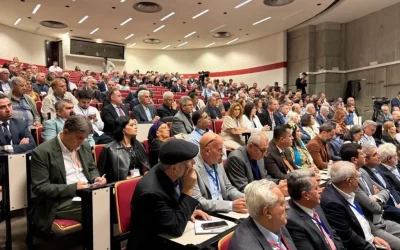
The conference brought together representatives of Kurdish political parties and administrations from different parts of Kurdistan and the diaspora, as well as academics and international law experts.
Participants at the event, held at Vrije Universiteit Brussel (VUB), included American legal expert Barry Fisher, former UN official and academic Miloon Kothari, former Icelandic Foreign Minister Ögmundur Jónasson, and international law expert Coni Ledesma.
The conference opened with the Kurdish national anthem, “Ey Reqîb,” followed by a minute of silence in memory of those who had lost their lives.
Fehmi Vergili, Nilüfer Koç and Wirya Qaradaxi were elected to chair the sessions.
A Long-Term Diplomatic Campaign
Speakers at the conference stressed that securing Kurdish representation at the United Nations would require more than a formal legal application.
The KNK called for diplomatic initiatives, international lobbying, public-awareness campaigns, signature drives and dialogue with governments to be pursued simultaneously.
It also called on Kurdish political parties, institutions, civil society organizations and independent figures to establish a joint platform to coordinate the campaign.
Call for a Broader Kurdish National Conference
The initiative for UN representation was also linked to calls for greater political coordination among Kurdish parties and organizations.
The final declaration called for political and social actors from different parts of Kurdistan and the diaspora to come together and proposed convening a broader National Conference to develop a common political position.
According to the declaration, greater political unity will be essential for advancing the campaign for international representation.
What Comes Next?
The initiative is expected to focus on three main areas in the coming period: expanding diplomatic engagement with the United Nations, establishing the independent committee, and launching an international petition campaign targeting millions of signatures.
However, the precise status that Kurdish representatives could obtain within the UN system, and how such an application would be assessed, remains a complex issue involving international law and the political positions of UN member states.
The Brussels declaration makes clear that the KNK views the initiative as a long-term diplomatic and political campaign rather than a short-term effort.
Its main demands include recognition of the Kurds as a nation, representation with observer status in UN-affiliated institutions, and the creation of a mechanism through which Kurdish representatives can participate in international affairs under their own political and national identity.
The next stage will largely depend on the ability of Kurdish political actors to develop a common position, as well as the response of UN member states and other international actors.
KNK KONFERANSI: KÜRTLER BM’DE TEMSİL VE STATÜ İSTİYOR
????Kürdistan Ulusal Kongresi (KNK) çağrısıyla Kürtlerim BM’de temsili ve uluslararsı statü kazanması amacıyla konferas gerçekleştirdi.
????Belçika’nın başkenti Brüksel’de yapılan konferansa Kürdistanlılar, akademisyenler,… pic.twitter.com/HJ1zBf8Mqs
— KCDK-E (@_Civak_saz1) October 3, 2026
About the Kurdistan National Congress (KNK)
The Kurdistan National Congress (Kongreya Netewî ya Kurdistanê – KNK) was established in Amsterdam on 24 May 1999, with the participation of nearly 700 Kurdish and international delegates and guests.
According to its founding objectives, the organization seeks to promote Kurdish national unity and political cooperation across the four states in which Kurdistan is divided; help overcome divisions and conflicts among Kurdish political parties; develop and promote common strategies and policies for a democratic solution to the Kurdish question; and secure international support for the Kurdish people’s right to self-determination.