
Looking forward
Lamentations Will Not Save Us
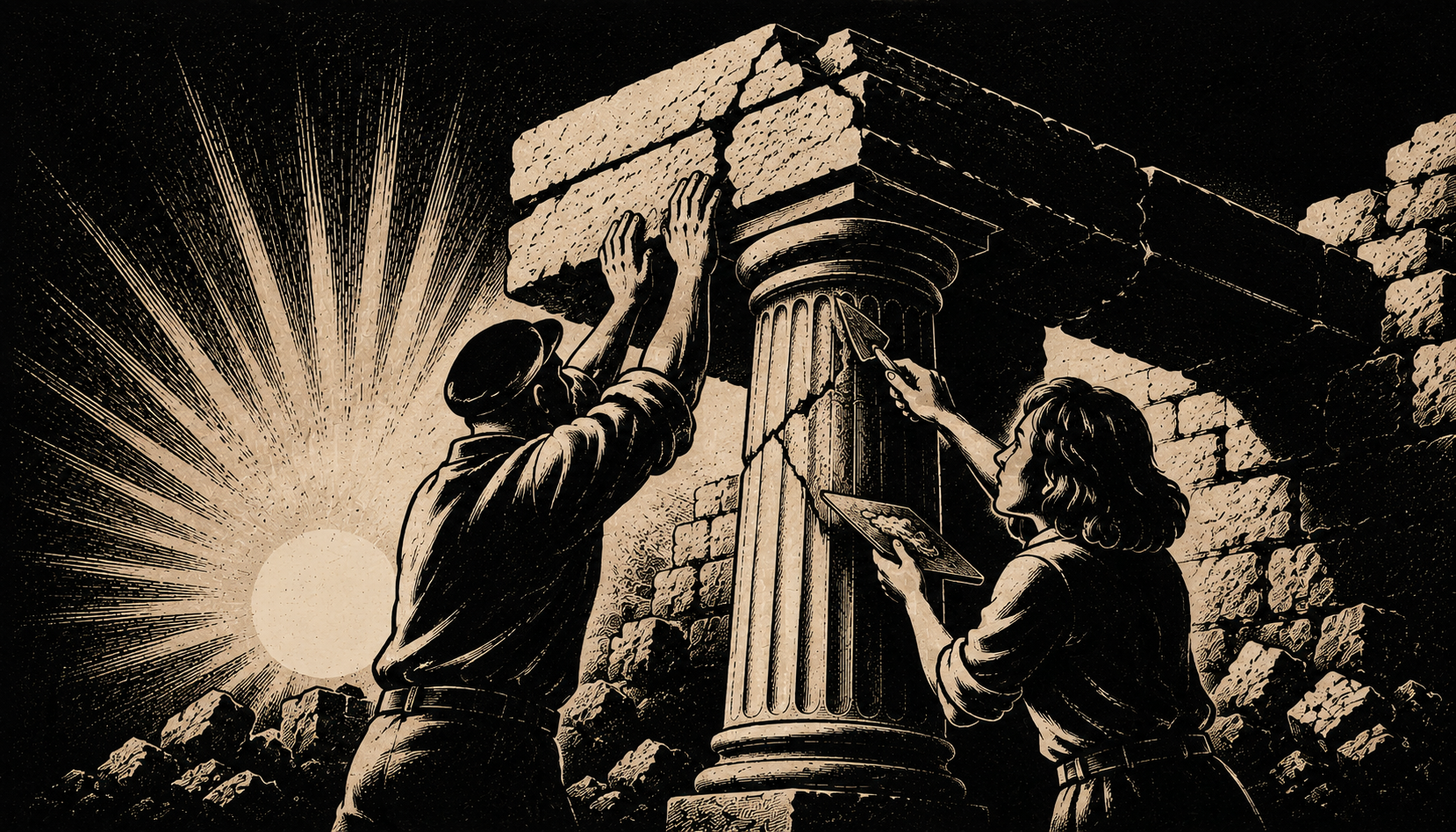
Illustative image of taking responsibility for the destruction we failed to prevent, made in conversation with ChatGPT
On what we can learn about our responsibility for building a better future from the first Tisha b’Av, as told in Parashat Devarim
Imagine Moshe, standing in front of his people, about to give his last speech, as described in this week’s Torah portion, Devarim.
Now imagine yourself as one of those in his audience. You have lived nomadically for a generation, due to your parents’ failure to take up arms to conquer the Promised Land 40 years earlier. They were cursed for having listened to the reports of the spies and deciding that the odds were not in their favor. Your generation paid the price.
Now Moshe announces that the time has come to correct these past mistakes. To forge ahead. To cease your wanderings.
What a range of emotions those listeners must have felt! Anger, at having been punished for the faults of others; hope, that this time things will be different; anxiety, that something will go wrong again; fear they will never have a home of their own.
And we add to this the emotions many of of us may feel while reading this portion through today’s eyes: empathy for Moshe who knows he will not enter the land; moral revulsion, given the commandment to conquer the land and rid it of its inhabitants; foreboding, knowing that the effort to settle down after centuries of slavery and decades of wandering does not end in a happily ever after.
In this way, this portion is a microcosm of the Torah and the Jewish tradition as a whole: anything but simple, honest about the complexity of the world, direct about reality’s fundamental lack of fairness, about the capriciousness and callousness of history. Reading it reminds us that Judaism does not flinch from reality. Does not shy away from detailing the conflicting interests guiding decision making. Does not claim to offer a single answer to all the world’s problems. Does not assert that the world flows according to God’s will alone. Does not paint the Jews as morally pure or righteous. Sees Humans for what we are.
Devarim reminds us that before we can treat the stranger as we would treat ourselves, before we can fix the world, before we can pursue justice with one law for citizen and resident alike, we must have the power to shape our reality. We must remember that independence isn’t given, that the power to determine one’s own destiny must be earned. That we must first carve out a place for ourselves among the nations, as did those before us, as others will do after us.
By recounting the sin of the spies, Devarim reminds us that Judaism at its core is about our people taking responsibility for our destiny. For the results of our decisions. For our mistakes. It teaches us to internalize our locus of control. To accept that God will not save us from ourselves, just as God will no longer save us from others.
Rabbi Yohanan and the Sages taught that the sin of the spies for which the people of Israel suffered forty years of exile happened on the ninth day of the Hebrew month of Av, a day the Prophets instituted as a singular day of responsibility-taking known as Tisha b’Av. It was on that day, the Klil Yakar teaches, that Sinat Hinam (what we generally translate as baseless hatred) was born, when the people assumed the worst of God and therefore of each other. It is through reflecting on the events of that day by the Jordan River that Sforno teaches that all of Israel must take responsibility for the actions of their representatives.
This coming Tisha b’Av, which begins on the evening of July 22 and continues through sunset on July 23, is an especially fraught one. Israel is once again suffering for the sins of its leaders. Internally, the social divisions the current government has gleefully torn have caused many Israelis to warn that the State is in existential crisis. Externally, the brutal wars directed by this government have failed to achieve their objectives, have harmed far too many innocents, and have catalyzed an antagonism against the Jewish State never before experienced since its founding. We have entered a dark time.
As many of us stand in shadow, I offer this small light, a reminder that our future is ours to determine. That what some see as overwhelming odds others can see as an opportunity to correct, an opening into a new world. Understanding how we may balance responsibility with hope is why I set out to write my book, Being Israeli After the Destruction of Gaza. Based on what I learned from the people I interviewed then and the conversations I’ve had with activists and civil society leaders since, I am convinced it is possible. I believe it is the call of the hour.
Which is why I believe there is no day more relevant to the current experience of being Jewish or being Israeli than Tisha b’Av. No tradition more attuned to the current moment than lamenting our current situation, taking responsibility for our role in it, recognizing the potential of our power, and charting a path towards a better future for the sake of our children and our children’s children.
Related Topics
Related Posts