
Leah and Ludmila: Kanaani Cats, the Lebanese Border, and a Flower Shop in Holon
The war in Israel began on October 7, 2023.
Northern communities came under constant fire from Hezbollah in Lebanon, and many residents were forced to leave their homes. The state evacuated people from the border areas to the center of the country, including the city of Holon. This is how two women, who would otherwise never have met, crossed paths.
Leah was an Israeli woman from the north, a refugee of the war. She was around sixty years old and had lived not far from the Lebanese border. Before the war, she was deeply involved with a rare native Israeli cat breed — the Kanaani.
Ludmila was a Jewish woman from Russia.
Leah was housed in a hotel. The Israeli government covered accommodation costs for evacuees, but hotels did not allow animals. Most likely, Leah temporarily placed her adult Kanaani cats with friends, relatives, or acquaintances.
But two of her cats gave birth to kittens — and that created a real problem. There was simply nowhere for them to stay.
Their friendship began in a simple, very Israeli way. Leah and Ludmila met in a flower shop in Holon and started running into each other there again and again. They talked about plants, about potted flowers, especially native Israeli species. These quiet conversations — about beauty, life, and the land — slowly brought them closer.
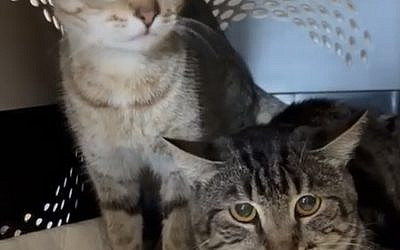
At some point, Leah gave Ludmila two kittens — a boy and a girl, born to different parent cats.
There was no sale, no contract. Just a gesture of trust and human warmth.
Later, Ludmila left Israel with the kittens and moved to Russia. Over time, she lost contact with Leah.
Two years passed.
Ludmila cared for the cats in Russia, raising them as living reminders of that unexpected friendship and of a different, more peaceful time.
Eventually, Ludmila returned to Israel. And then a quiet wish emerged — to find Leah. Not out of necessity, not for business, but simply to say: everything is all right. The cats are alive, loved, and their story continues.
But finding Leah proved difficult.
The contact was gone. No phone number. No address.
Even private investigators in Israel quoted around two thousand dollars just to locate Leah’s phone number — a price that felt strangely disproportionate to a story that had begun with flowers, cats, and trust.
So for now, Leah remains unfound.
And yet, the story itself is still alive.
A story of war and evacuation, of a rare Israeli cat breed, and of two women who once met by chance in a flower shop in Holon.
Sometimes people are not found through databases or investigations.
Sometimes they are found through memory, through a story, through a few lines that someone suddenly recognizes as their own.
Perhaps Leah is living an ordinary life now — in the center of the country, or maybe back in the north. Perhaps she no longer thinks of herself as a breeder and simply loves cats.
And perhaps someone reading this will pause and say:
“Wait… Leah with the Kanaani cats? I know her.”
And then the story that began during the war — near the Lebanese border, continued in a flower shop in Holon, and was carried across countries by two small kittens — will find its quiet continuation.