Sharp. Bold. Jewish.
Leaving Galut Is Not a Geography Problem
For too long, Jews have treated exile as a place rather than a mindset. Galut is not merely dispersion. It is a way of thinking; A posture of waiting, habit of asking permission and the reflex that assumes redemption arrives only when someone else acts first or when history turns a corner on its own. In short, when God “flips a switch,” then Mashiach will descend fully formed and resolve for us what we refused to confront.
But that is not how the Torah works.
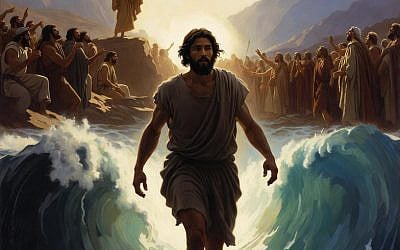
When the Jewish people stood at the sea, trapped between Pharaoh and the water, they prayed and cried out to Hashem. God’s response was simple and clear: “What are you calling out to Me for? Speak to the children of Israel and tell them to move forward.” Redemption did not begin with a miracle. It began with action.
Nachshon ben Aminadav stepped into the water before it split. Not because he knew the outcome, but because he knew that waiting any longer would become a form of disobedience. God had taken them out of Egypt, performed miracle after miracle and now it was time for the people to act. They could not sit idly by and let Hashem do all the work for them.
That is the Geulah mindset.
The Torah is clear about the fact that even miracles require both build-up and the actions of man; God could have taken the Israelites out of Egypt on the first day but he did not. From the moment Moshe first confronted Pharaoh to the night the Jews left Egypt, roughly a year passed. Even once they left Egypt their redemption would take more time. It took seven days to reach the sea, seven weeks to reach Sinai and another forty years of wandering in the desert to finally forge the Israelites into a people worthy of the promised land.
That is why the fantasy of waiting for the perfect moment, the perfect leader or the perfect certainty is itself a Galut reflex. It misunderstands how God works in history and obscures the fact that Geulah does not begin when everything is resolved, it begins when Jews decide to finally act as if the day of their final redemption has arrived.
And today, it has.
Jews have returned from exile to their land from across the world. Hebrew has been restored as a living language. Jewish sovereignty exists once more. Old men and old women again sit in the streets of Jerusalem as Zachariah said they would. The land itself, once desolate, now produces fruit for its people as well as for export. These are not abstractions. These are real events, written about thousands of years ago, which today have come true before our very eyes.
To be clear, none of this means redemption is complete. But it does mean that it is already well underway.
The mistake of Galut thinking is assuming that until Mashiach arrives in full clarity, Jewish action is premature. Torah teaches the opposite. Action creates the conditions in which redemption advances.
Remember, the aspect of the snake that rejects God’s plan has been with us from the very beginning of human history. The Torah never promises a world without resistance; it demands a choice about which voice we follow. Nachshon ben Aminadav carries that tension in his very name, one that means snake. He did not wait for fear, doubt, and paralysis to be removed. He stepped forward anyway. Redemption advanced not because the obstacle vanished, but because someone refused to let it dictate his actions.
There is a snake today as well, not as an external monster to be slain by someone else, but as the familiar internal voice that says: wait longer, be safer, let someone else go first. The Torah does not teach that this voice disappears before Geulah, but it does teach that it must be answered.
The task is not to wait for fear, doubt or even the yetzer ha ra to be destroyed, but to act despite it. To become the kind of snake that pushes history forward, rather than the one that convinces us to remain frozen in place.
The question, then, is not whether redemption will come. It is whether we are still standing on the shore or whether we have begun to walk.
Related Topics
Related Posts