Recovered Antisemite
Featured Post
Lebanon at the crossroads: Honest words are not enough
Peace with Israel hinges on Aoun acknowledging what brought Lebanon to its knees – not Israeli aggression, but the deliberate action of an Iranian-backed militia
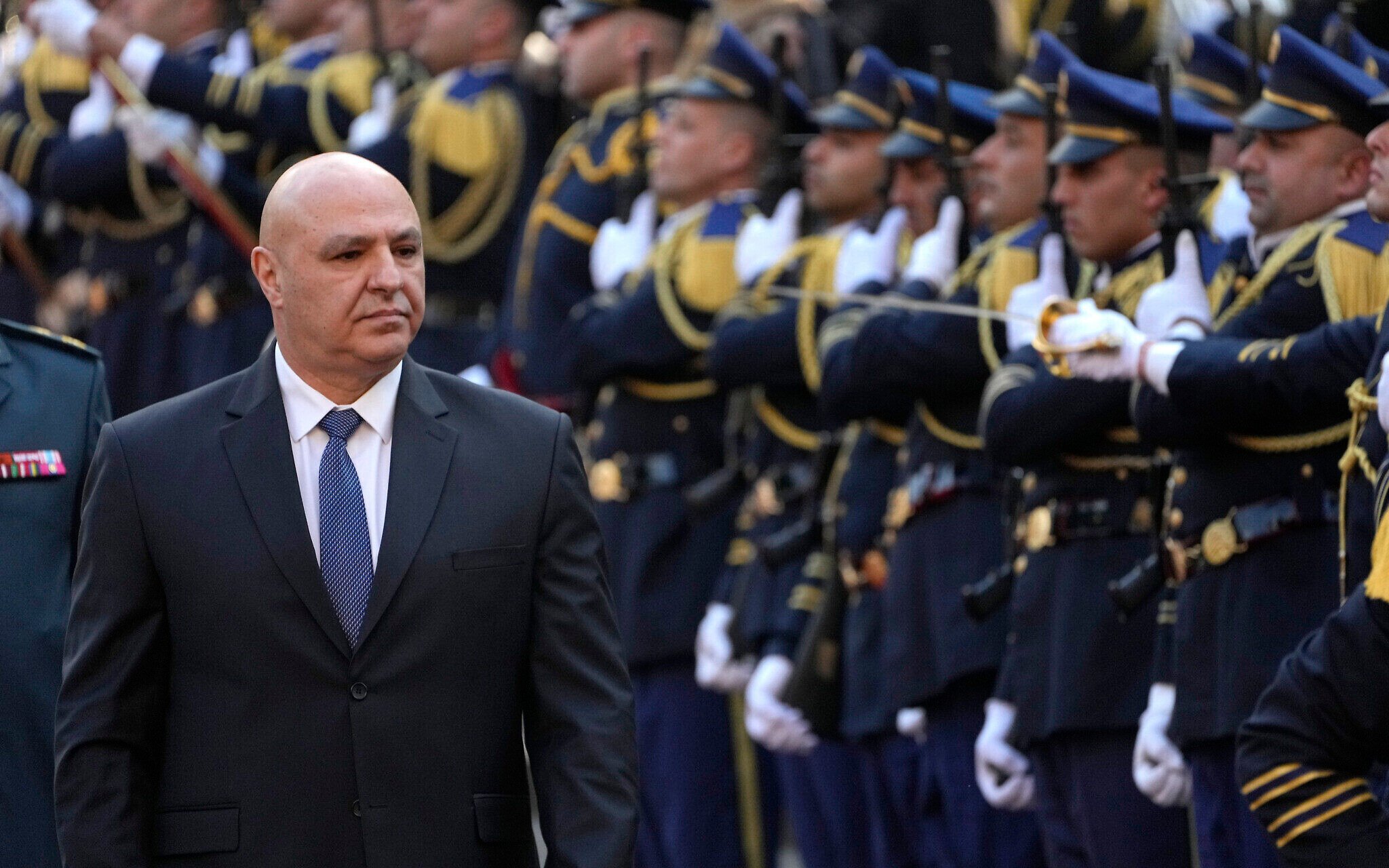
Then-newly-elected Lebanese President Joseph Aoun reviews the honor guard upon his arrival at the Lebanese Parliament to be sworn in as a new president, in Beirut, Lebanon, January 9, 2025. (AP Photo/ Hussein Malla)
Lebanese President Joseph Aoun gave a remarkable interview to CNN’s Christiane Amanpour on June 5th. He accused Iran of using Lebanon as a bargaining chip. He said the Lebanese people are fed up with Hezbollah. He extended his hand for direct peace talks with Israel. For a Lebanese president, that is not nothing. It is, in fact, historically significant.
But significance is not absolution. And honesty, selectively applied, is not honesty at all. Aoun’s sharp words about Iran and Hezbollah did not emerge from a vacuum of courage. They emerged from the wreckage of a country bled dry — by an eroding economy that has destroyed the living standards of ordinary Lebanese, by an Israeli military campaign that has killed thousands and displaced far more, and by relentless American pressure on a president who owes his election in January 2025 largely to Washington’s backing. His criticism is real. It is also, in no small part, the product of circumstance. Acknowledging that is not unfair to Aoun. It is necessary context for understanding what his words are actually worth.
Because in the same interview, Aoun held up a photograph of a 3-month-old baby killed in the war and asked: “Was this child an imminent threat?” It is a legitimate and painful question. But the framing was not neutral. It was a blood libel in everything but name — the ancient, lethal insinuation that Jews murder children deliberately, that their violence is not war but ritual. Amanpour, predictably, amplified it: “We see these kinds of pictures coming out of Gaza, coming out of the occupied West Bank.” And there it was— the radical left’s central narrative, the axis of resistance’s most effective Western export, delivered in a CNN studio with the Lebanese president’s implicit endorsement.
A man who genuinely extends his hand for peace with Israel does not reach for that particular image to make his point. He does not borrow the vocabulary of those who have spent decades trying to destroy the state he claims he wants to negotiate with. The contradiction is not incidental. It is revealing.
It also raises the harder question that Aoun has not yet answered: where was he?
He commanded the Lebanese Armed Forces from March 2017 until his election as president in January 2025 – eight years. During that time, Hezbollah systematically dismantled Lebanese sovereignty, held the state hostage, and dragged the country into a war it did not choose and cannot survive. The Beirut port explosion of August 4, 2020 — one of the largest non-nuclear explosions in recorded history — killed more than 220 people, devastated the capital, and left hundreds of thousands homeless.
Aoun was the army commander. His forces had been warned about the ammonium nitrate stored at the port. An army report signed by Aoun himself, submitted to the Defense Ministry five days after the explosion, omitted a prior naval inspection that had cleared the vessel carrying the material. When Human Rights Watch asked his office for answers, the response was silence dressed as procedure.
For eight years, the Lebanese army’s answer to Hezbollah was strategic patience. Don’t confront. Preserve the institution. Avoid the spark that might reignite civil war. It was a coherent position, and it is worth saying plainly: Aoun was navigating an almost impossible political environment. Hezbollah was not a militia operating in the shadows. It was a state within a state, armed beyond the capacity of the national army, with ministers in cabinet and members in parliament. Open confrontation carried genuine risk.
But that explanation, while real, does not dissolve responsibility. The bully of the Lebanese people was not Israel. It was Hezbollah. Israel is a superior military power, and it had both the right and the obligation to defend its citizens after October 7th. The Lebanese army had the same right and the same obligation toward the Lebanese people — and it did not exercise it. Strategic patience, in the end, produced neither strategy nor patience. It produced the catastrophe now unfolding.
Which brings us to Washington.
In his Meet the Press interview with NBC, aired June 8th, President Trump praised Ahmad al-Sharaa — Syria’s new president, formerly known as al-Julani — and said he is willing and capable of helping deal with Hezbollah. Trump framed it as a recommendation: Syria as a partner for more surgical action against the group that has embedded itself across Lebanon’s south and east.
This should alarm anyone who understands the region’s history.
Al-Sharaa came to power by toppling Assad with Turkish backing. He has scores to settle. Hezbollah sent fighters into Syria to help Assad’s forces slaughter Sunni civilians who dared to challenge the regime — the same regime that was the indispensable link in the weapons corridor running from Tehran through Baghdad to Beirut. The debt of Sunni blood owed to Hezbollah is not a political abstraction in Damascus. It is a generational wound. The prospect of Syrian forces entering Lebanese territory to settle that account, with Washington’s tacit blessing and Erdogan’s strategic support, is not a peace plan. It is the architecture of a new sectarian war on Lebanese soil.
Shiite and Sunni jihadists settling scores in Lebanon, with Iran and Turkey pulling strings on opposing sides, would make everything Lebanon has endured since October 7th look like a prelude.
This is the moment that demands more than carefully calibrated language from Beirut. Genuine peace with Israel requires more than an extended hand. It requires honesty about what brought Lebanon here: not Israeli aggression, but the deliberate decision of an Iranian-backed militia to subordinate Lebanese lives and Lebanese sovereignty to a regional project that was never about Palestinian liberation. It was about Iranian hegemony, dressed in the language of resistance, sustained by the silence or complicity of Lebanese institutions that should have known better and often did.
Genuine peace requires taking responsibility for that silence. It requires abandoning the reflexive reach for imagery and rhetoric that recycles the oldest hatred in the world and calls it solidarity with children. It requires recognizing that Israel’s right to defend itself is not a western imposition or a Zionist talking point — it is the same right Aoun now claims for Lebanon, and it applies equally.
And it requires action, not aspiration.
The Lebanese state must move — now, with urgency, with international support — to ban Hezbollah as a political and military organization, arrest its leadership, and assert the monopoly on arms and violence that is the minimum condition of any functioning state. Not hopefully. Not eventually. The window in which this is possible, with Hezbollah weakened and Iran under pressure, will not stay open indefinitely.
President Aoun’s words on June 5th were the most honest a Lebanese president has spoken in a generation. They deserve acknowledgment. They also deserve to be tested— against his record, against his contradictions, and against the urgency of what is coming if Lebanon’s leadership once again mistakes words for action.
The Lebanese and the Israeli people have paid too high a price for eventually.
Related Topics
Related Posts