International Speaker, Author, Educator, Tour-Guide, Artist, Zionist
Lebanon: The Never-Ending Story
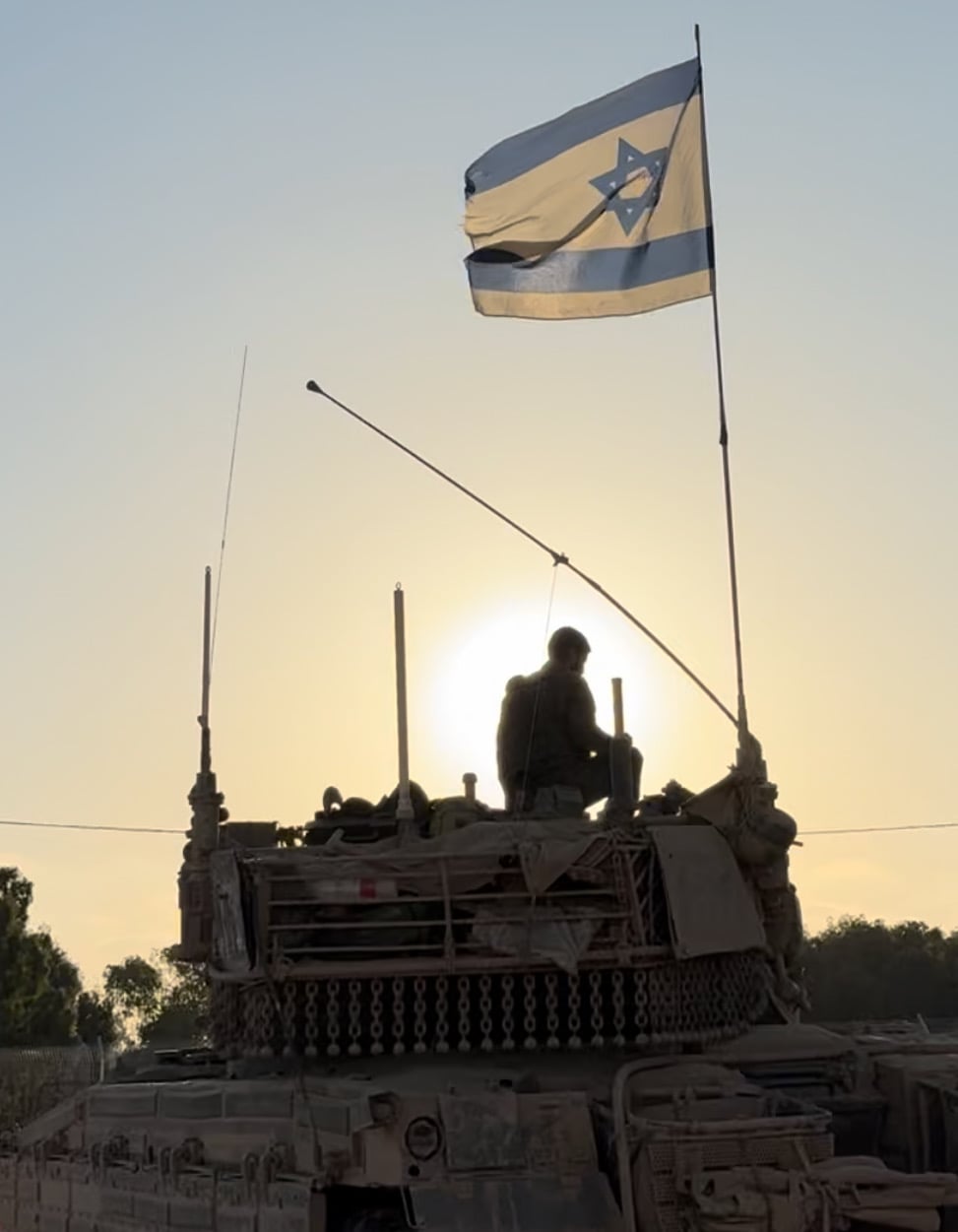
Freedom is not free. Photo ©️ Tuvia Book, 2026
Thirty-seven years ago, a slightly skinnier version of myself entered the Israeli Security Zone in South Lebanon with my Givati platoon. As the platoon’s combat medic, I carried my weapon, helmet, flak jacket, tactical vest, ammunition, grenades, medical equipment, anti-mine boots and a portable stretcher. Before every patrol or nightly ambush across the international border, our mission briefing always ended with the same mantra:
Our mission is to defend the northern settlements (from Hezbollah terrorists).
My twenty-year-old self would have been incredulous to learn that I am back in the same place, with the same mission statement, nearly four decades on. Despite the intervening years, nothing seems to have changed. It is a depressing situation. I see young men and women in my PALMAR medical extraction unit who are not much older than I was the first time I was in Lebanon. The thought that they may find themselves here in another four decades is a grim one.
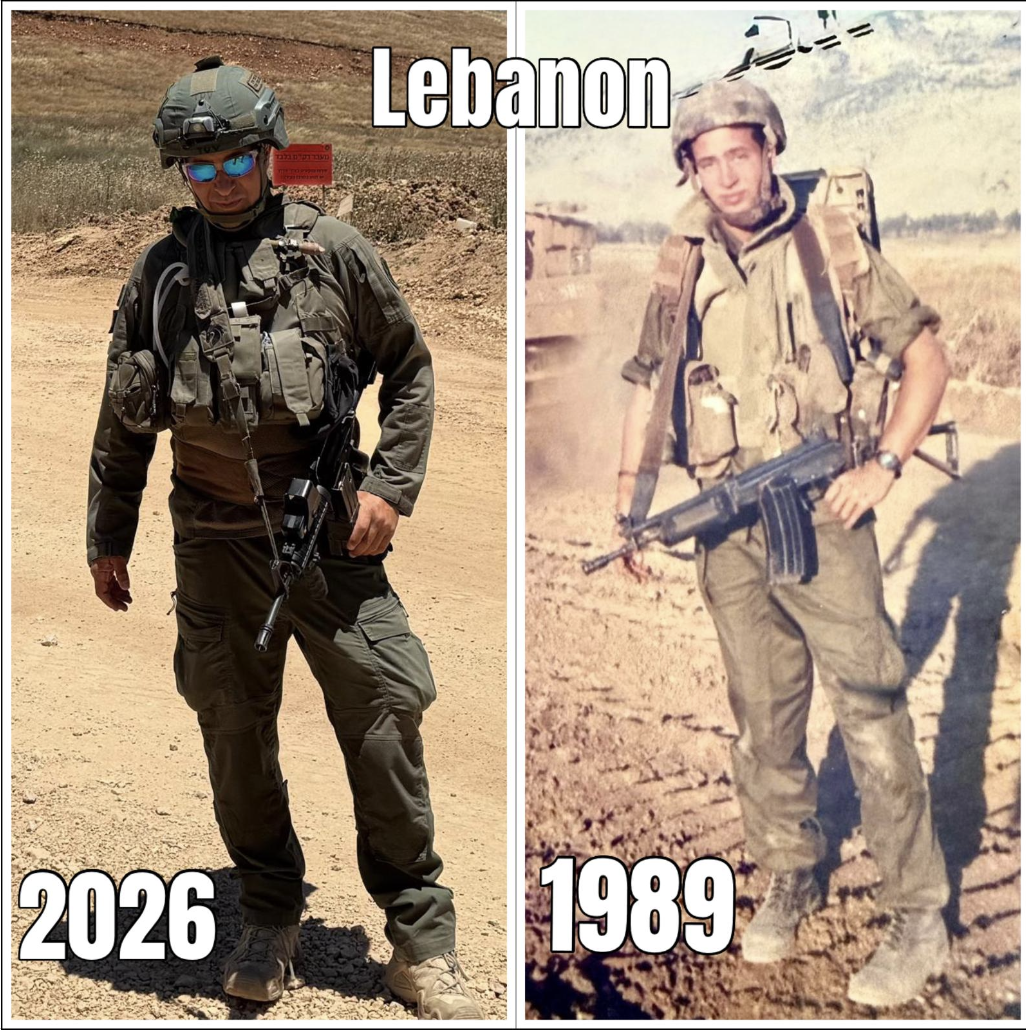
I also would not have imagined, when I pushed hard to re-enlist in the IDF after the October 7 massacre, thus becoming the oldest combat medic in the IDF, that I would still be serving on an emergency call-up order (Tzav Shmoneh) almost three years later, with Hamas still in power in what remains of Gaza, and Hezbollah, despite being significantly weakened, still dominant in Lebanon.
I distinctly remember the feeling of waiting on an ambush in Lebanon. It felt like a game of Russian roulette. As we lay for hours in enemy territory, many thoughts ran through our heads, chief among them: “Will it be our turn tonight? Will it be our turn to repel yet another attempted Hezbollah terrorist attack on our homeland, aimed at leaving a trail of murder and destruction?”
Today’s soldiers in Lebanon carry a similar weight, though the weapon they fear most is no longer the infiltrator crossing a fence under the cover of darkness. It is the FVP explosive drone, silent and unseen, that can appear from nowhere. The uncertainty is the same. Only the technology of death has changed.
I attended my first funeral during that first Lebanon deployment. I remember the sea of purple berets, and the bereaved siblings, parents and grandparents, as vividly as if it were yesterday. There was a silence over that cemetery that I have never forgotten, a silence heavier than any weight I have ever carried. Psychologists call this a “reverse-order death.” In a normal world, children bury their parents. Not the other way round. Nothing seems to have changed. Every week we are still losing the best of the next generation. As Billy Joel observed: “only the good die young.” And this is not even accounting for the many wounded soldiers whom my unit treats on an almost daily basis – men and women whose lives will never be the same again.
For what?
We never seem to be able to win a war. As the author and journalist Matti Friedman has written, a war needs a clear strategic goal to succeed. We are still fighting a Hezbollah that is more technologically advanced than ever, still entrenched in every element of Lebanese society, still funded and directed by Tehran. We do not know what victory looks like. We do not know what we are permitted to achieve. And that ambiguity is costing lives.
The north of Israel has been largely abandoned since October 7. Tens of thousands of residents are still unable, or unwilling, to return home. We face the grim reality that this war of attrition appears to be never-ending. Hezbollah has fired over 17,000 projectiles into Israel since October 7 alone and still they are not defeated. And while we desperately try to save the lives of our soldiers, our allies look away, or worse, intervene to prevent the decisive conclusion that would finally bring quiet to the north and an end to this never-ending war.
Israel is the only country in the world that is not permitted by its so-called allies to win a war. We are still fighting the same radical Islamist terrorist organisation that I first faced as a young soldier nearly four decades ago. They are still hell-bent on our destruction. And we are still being told, in one way or another, to stop short of finishing the job.
I have been asking myself the same question for nearly four decades, first as a young soldier in the Lebanese hills, and now as one of the oldest reservists in the IDF. The question has not changed. Neither, it seems, has the answer. Until Israel is permitted by its allies, by the international community, by its own political leadership to win this war decisively and unconditionally, we will be back here again.
What is it all for, if we are not allowed to win this war?
–
Dr. Tuvia Book is a combat medic serving in the IDF’s PALMAR medical extraction unit, an internationally acclaimed speaker, tour guide and the author of four books including his latest, “Heroes of PALMAR, How One IDF Unit Revolutionized Combat Medicine in Gaza.”
Related Topics
Related Posts