
Educator, Mother, Learner, Wife — Guided by Torah
Let Girls Be Girls

Girls can find meaning and happiness in being girls (Sabrina Albuquerque of Unsplash).
We are raising daughters in a world that treats womanhood as obsolete and girlhood as erasable.
The Strength and Silence of Girlhood
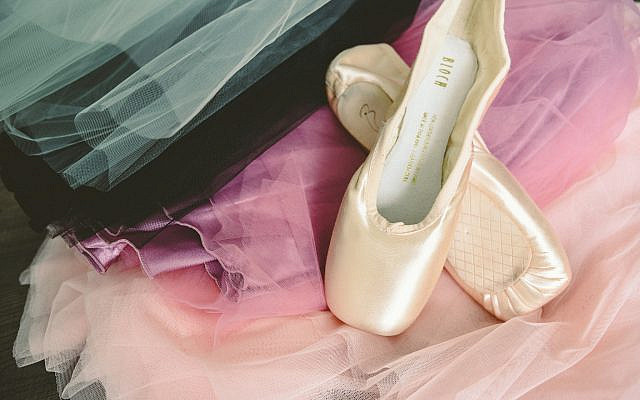
Amidst the hush of a chandeliered ballet studio, a girl in satin-tied shoes begins her routine, her arms curving like soft petals, each movement both fragile and resilient. Unfortunately, the word “girl” is now being deconstructed faster than girls can grow up. In schools, on social media, and even in medicine, to be visible is increasingly to step outside of girlhood — not into adulthood, but into something else entirely.
The discipline is fierce. Toes blister and bleed beneath those satin slippers, yet the ballerina rises again, smiling through pain. If toughness is measured by resilience, ballet is tougher than football. And yet, whose discipline does our culture revere? The roar of a football crowd, adrenaline pumping, crash and tackle, wings and beer. Stadiums overflow whilst theatres dim. The girl in ribbons is told she must borrow the volume of the arena just to be heard.
Once, other eras recognised that women could lead without mimicry. In Tanakh, Rivkah chooses wisely, Miriam sings with strength, Devorah judges a nation beneath her palm tree. Each leads as a woman, not as a man in disguise. Esther preserves her people not by shedding her femininity but by embodying it — courage and grace entwined.
Jewish wisdom reminds us: kol kevudah bas melech penimah — the dignity of a princess is inward (Tehillim 45:14). And Mishlei teaches: deracheha darchei noam, v’chol nesivoseha shalom — her ways are ways of pleasantness, all her paths peace (Mishlei 3:17). Strength and beauty, intertwined.
Numbers That Should Alarm Us
Before the statistics, we must reckon with the pressures. Too often, girls are handed just two acceptable templates. One is the girl who is a “tomboy,” who must out-muscle boys to be respected. Or, the hyper-sexualised “cool girl,” curated for likes and comments. Clothing lines declare pink passé while marketing “empowering” slogans on sportswear. Billboards shout “Girl Boss!” — but the message is not empowerment. It is assimilation: to matter, a girl must become like a boy. Meanwhile, music videos and social media filters encourage girls to perform adulthood before they are ready, curating their bodies for consumption.
Thus, the ordinary girl — the one who sketches, knits, sings, or plays hopscotch — is squeezed out. She is told she is quaint, or worse, irrelevant. And increasingly, even the words “girl” and “woman” are being set aside — replaced by language that claims to be inclusive but too often leaves us invisible.
The numbers bear this out. In the United Kingdom, the Office for National Statistics reports that over 10% of young adults aged 16–24 now identify as lesbian, gay, or bisexual — double the rate from a decade ago. Among young women in particular, nearly one in ten identify as bisexual, the single fastest-growing category.
The trend is echoed abroad. Switzerland reports that 6% of its population — and a significantly higher share of youth — now identify as transgender, non-binary, or gender-fluid. In the United States, the CDC’s 2021 Youth Risk Behavior Survey found that approximately 26% of high schoolers now identify as lesbian, gay, bisexual, or transsexual — which is a historic spike compared to previous years. Canada and Sweden show similar spikes.
Nevertheless, despite popular narratives and attempts, girlhood is not truly vanishing in any medical or scientific sense. The idea that huge swaths of girls are “not really girls” simply is not borne out by clinical data. Hard numbers from across the Western world show just how rare this phenomenon is scientifically.
A 2007 Belgian study found that approximately 1 in 12,900 individuals assigned male at birth, and 1 in 33,800 assigned female at birth, had undergone sex reassignment treatment — figures drawn from medical records, not identity surveys. The DSM-5 summarises earlier European studies estimating that just 0.005–0.014% of adult males and 0.002–0.003% of adult females were seen in clinical settings for gender dysphoria.
Biology has not rewritten itself overnight. Language has. Institutions have. Trends have seemingly abandoned clinical grounding in favour of broad self-identification, often without dysphoria-based screening. And it is girls — more than boys — who are being nudged, praised, and pressured to step outside their own sex category in order to be seen as current, progressive, or brave.
Questions of identity once touched only a small and specific minority. Genuine cases of homosexuality or transgender experience exist and are not in dispute. What has changed is that, in many schools and universities, girls now feel compelled to signal unease with being female in order to belong. That shift should alarm anyone who still believes girlhood deserves honour on its own terms.

Education and the Vanishing Voice
Research shows girls consistently excel in literacy and the arts. OECD data confirm that in every developed nation, girls outperform boys in reading and writing. Yet schools still prize STEM, sport, and competitiveness. The classroom mirrors this imbalance. Teachers reward the loudest hand, not the most thoughtful answer. Boys speak over girls; the quieter voices vanish. Even when girls achieve higher marks, they are too often branded as “reserved” rather than recognised as leaders.
Participation grades are another culprit. A girl who thinks carefully but hesitates to speak is marked down, whilst a boy who blurts answers is praised for “engagement.” As both a teacher and a mother, I have seen this too often. A blossoming little girl may be praised at home for carefully drawing a couple flowers, but then deflates when a guest marvels instead at her cousin’s football skills. The subtle lesson: volume matters more than insight, detail, or nuance.
Studies of single-sex education show that when boys are absent, girls speak more, experiment more, and thrive. Yet instead of creating such environments, we double down on co-ed chaos and call it “equal opportunity.”
Practical Shifts We Need
This is not a call to roll back equality. It is a call to build it rightly.
Fund the arts.
If we can build billion-pound stadiums, we can sustain theatres and ballet schools. Arts education fosters creativity, discipline, and confidence — particularly for girls — yet it is treated as a luxury. In 2023, arts subjects in British schools received less than a tenth of the funding devoted to sport. I have seen it myself: the opera house half-empty, while the pub next door overflowed with football fans. A culture that funds coliseums but lets conservatories decay is a culture telling girls: your art does not matter.
Restructure classrooms.
Train teachers to notice when boys dominate discussion. Build in protocols that give quieter girls space. Look abroad: Finland emphasises reflection before response; Japan requires students to listen before speaking. We can learn — and perhaps consider more single sex schools.
Celebrate ordinary girlhood.
Public campaigns should not only glorify the tomboy or the hyper-sexualised woman. They should celebrate the girl who reads, who knits, who sketches, who twirls. The girl who is simply, marvellously herself.
Expand the definition of success.
Affirming girlhood does not mean boxing girls into a single vision of femininity. A girl should feel just as at home in ballet slippers as in a law office, behind a sketchpad or behind a bank desk. The point is not to push her toward a pink-coded career, but to allow her to bring her full self — her creativity, her empathy, her quiet strength — wherever she goes. Not despite being female, but through it. At a women’s tisch in my shul, shortly after I moved to the United States, the rebbetzin shared studies showing that companies benefit most not when women simply echo men, but when they contribute perspectives that are distinctively their own. Hearing that in a Torah setting was a turning point for me: it showed me that frum womanhood is lived with dignity and authenticity, and it became one of the moments that drew me more deeply into frum womanhood, into traditional Yiddishkeit, and into a life of normative Orthodoxy.
Highlight role models.
Girls need to see women celebrated not only as CEOs or athletes but also as poets, carers, teachers, and mothers — roles that are deeply human, not diminished.
A Mother’s Critique
There is nothing enlightened about masculinising little girls. There is nothing progressive about sneering at ribbons, rolling eyes at tights, or mocking a girl who delights in being “basic.” Progress is not when a culture tells its daughters to roar instead of sing, stomp instead of dance, harden instead of twirl. That is not progress — it is contempt, dressed up as liberation.
So much of what passes for progress is simply fashion: new slogans, new hashtags, new rules about what a girl must be in order to count. But like all fashions, these ideologies grow dated even as they claim to be cutting-edge. They dress contempt in chic vocabulary, but the substance remains the same: women asked to become anything but themselves.
Real progress is not assimilation into the style of the moment. It is making room for females, for women, for girls, in the fullness of who they already are. As Koheles teaches, dor holech v’dor bo, v’ha’aretz l’olam omedes — a generation goes and a generation comes, but the earth endures forever (Koheles 1:4). The chiffon, the ribbons, the whispers of girlhood will outlast the fashions that mock them.
Reclaiming the Whisper
Our daughters deserve worlds that honour their unique strengths: compassion, creativity, connection — alongside courage, curiosity, and discipline. Equality does not demand imitation. It asks for shared respect, not sameness.
A whisper can travel farther than a shout in a quiet room. I have heard it myself — my daughter in a crooked tutu, whispering the Shema before bed. That small voice carried more strength than any stadium chant. Society has taught girls that womanhood is obsolete, but we can teach them again that it is holy.
Let us teach that being a girl is not a limitation, but a marvel. Let girls twirl upon classroom mats as deftly as on stage. Let them find in tenderness a power that never needs to become someone else’s version of strength.
Amidst this clamorous age, may we reclaim our oldest whisper with renewed clarity: let girls be girls.
Related Topics