Let My People Go, Let Them Come Home

A nation’s cry for its hostages unites Israel in hope, faith, and resilience
I often return to the Book of Exodus for perspective. One verse has never felt more urgent than it does today: “Thus says the Lord, the God of the Hebrews, ‘Let my people go, that they may serve me.’” (Exodus 9:1). What Moses declared to Pharaoh thousands of years ago is what Israel now cries to the modern Pharaohs who hold its sons, daughters, mothers, and fathers in captivity: Let my people go.
One Thursday morning not long ago, I walked the length of Dizengoff Street in Tel Aviv. It was not just a stroll; it became a pilgrimage. Starting from Dizengoff Square, I stopped at each portrait, each photo, each name of a hostage still trapped in Gaza. I read their names, whispered them under my breath, and then looked into their faces. Some were young soldiers, some children, some grandparents. Each gaze felt like a plea.
I walked the length of the street, crossed over, and walked back, repeating the same ritual. By the time I returned to Dizengoff Square, I carried their stories in my heart. And as I made my way back to my hotel, a conviction settled deep within me: Israel must do everything possible, by all means necessary, to bring the hostages home alive.
That is why the sight of nearly half a million Israelis gathered at Hostages Square in Tel Aviv last week felt like history unfolding before our eyes. It was not just another rally or a protest, it was a nation rising as one voice. From Jerusalem to Haifa, from Kfar Saba to Beersheba, Israelis of all stripes said with unmistakable clarity: the hostages come first.
This unity is extraordinary, especially in a season when political divisions so often dominate Israel’s headlines. (Consider the irony: Prime Minister, Bibi Netanyahu, is about to spend two or three days a week in court defending himself in a “fraud” trial – a strange posture for a wartime leader. But set that aside for now.)
For one Sunday, those fractures dissolved. Shopkeepers shuttered their stores. Roads fell silent. Families pressed pause on daily life. More than a million people stood together across the nation. The message was unmistakable and thundered like a chorus: Bring them home. Now.
I listened to the voices of the hostage families at the rally, mothers, fathers, siblings, children, all pleading with a courage that both broke my heart and lifted my spirit. Ofir Braslavski, whose son Rom is still in captivity, spoke of his son starving and terrified. Einav Zangauker, mother of Matan, said simply: “My heart is burning.” And who among us did not feel that same burn?
Even in their grief, their voices rang with defiance. Their cries reminded us of who Israelis are: a people of shared destiny, a people that sanctifies life. That is the essence of resilience and renewal, the refusal to accept despair, the insistence that hope will not be extinguished.
What struck me most was not only the emotional pleas but the extraordinary solidarity of ordinary Israelis. Videos poured in from towns and kibbutzim across the country, each community standing shoulder-to-shoulder with the hostage families. Aunts, uncles, cousins, neighbours see each hostage as one of their own. That is Israel at its best: the deep recognition that all Israel are responsible for one another, a truth an Israeli couple reminded me of as we shared a warm lunch together in Lisbon.
And yet, we cannot allow these voices to be drowned out by the endless noise of war. Time is slipping away. Each day in captivity deepens the wounds, endangers lives, and leaves families with scars that may never heal. The rally was more than a protest; it was a declaration of moral clarity. It was a reminder to leaders in Israel and beyond that the first duty of any nation is to bring its people home
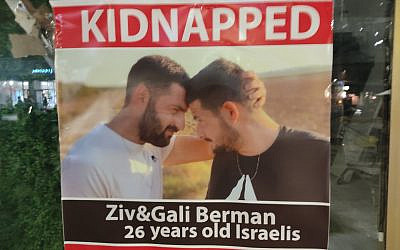
I thought again of my walk on Dizengoff Street. The quiet portraits, the silent faces, the names etched in ink but not forgotten. They are more than symbols. They are lives waiting to be lived, dreams waiting to be fulfilled. And as I remembered Exodus, I saw something clearer: in demanding their release, Israel is not merely echoing Moses’ cry to Pharaoh. Israel is shaping its own future. A nation that fights for every last soul is a nation building a tomorrow rooted in dignity, compassion, and an unbreakable solidarity.
Yes, I hear the debates about war and ceasefires, about politics and negotiations. But above all of that, one truth remains clear to me: the hostages must come home. Every one of them, the living and the dead. Only then can Israel begin to heal, only then can the nation truly honour its shared destiny.
The rally at Hostages Square was not an end but a beginning. The Hostages Families Forum has vowed to intensify its efforts. They have given us a charge: stay with them until the last hostage is returned.
As I left Dizengoff Square that morning, I whispered once more the words of Exodus: “Let my people go.” And I add now: let them come home. For in their homecoming lies not only relief for their families but the renewal of a nation’s soul.