English Professor; Executive Director, Writing on the Wall
Let there be poetry, let there be light!
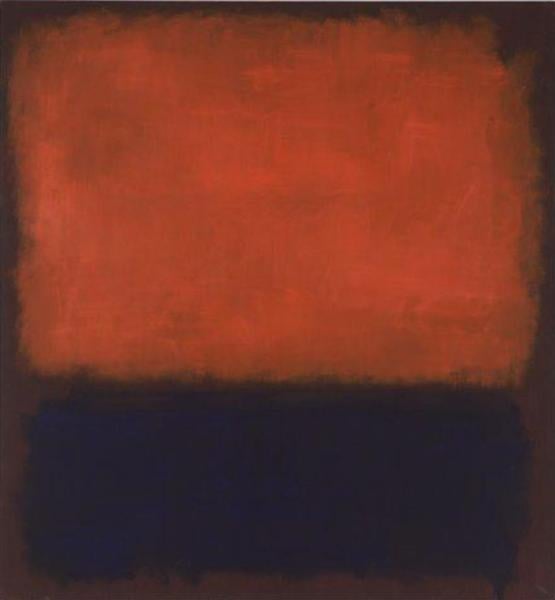
Mark Rothko, 'no. 14,' 1960 (Wiki-Art)
Now, with the war over, we need poetry more than ever — to reflect, to reconstruct, to renew.
Poets, wrote the Romantic poet Percy Shelley, “are the unacknowledged legislators of the world.” The laws they pass are the words they bestow on us. They provide language for the as-yet unimagined and give expression to what we know and feel but have never said. The poet’s task is to make it new—as David of Psalms tells us repeatedly—to sing a new song.
Three decades ago, I left the Columbia English Department to study Talmud in Jerusalem. I spent 15 years in yeshivot, starting in the equivalent of sixth grade and ending in the equivalent of the Institute for Advanced Studies. Not once did we learn a midrash; not once did we read the Prophets; not once did we bring the same attention to Jewish poetry that we devoted to Jewish law.
Logic Uber Alles
In the late 19th and early 20th centuries, Judaism took a wrong turn into the analytical rationalism then in fashion. Most of the Orthodox world still remains faithful to this model of logic über alles.
Rabbi Joseph Soloveitchik, who ordained more rabbis than any other in the 20th-century, turned the Brisk Talmudic method of his ancestors into modern religious philosophy. In doing so, he produced generations of puritanical rationalists—scholars, philosophers, rabbis—who dismiss poetry out of hand. I was one of them, a self-fashioned ‘halakhic man.’ My book on the Rav, The Last Rabbi, is a work of reverence, but it also marked a farewell to a world without poetry.
In turning from the rabbis of Brisk to the rabbis of Midrash, I discovered a different kind of knowing – one that begins not with argument and conquest, but with poetry and relationship.
The First Poet
With “Let there be light,” God illuminates the world with light—and with poetry.
Do not mistake the light of the first day for the light of the sun, or the moon, or a chandelier. The celestial lights are created on the fourth day. The light of the first day is the light beyond light—the light reserved for the righteous. Israel’s first Chief Rabbi, Rav Kook, on a visit to the British Museum in 1917, called Rembrandt a tzadik and saw in his paintings the invisible light of the first day.
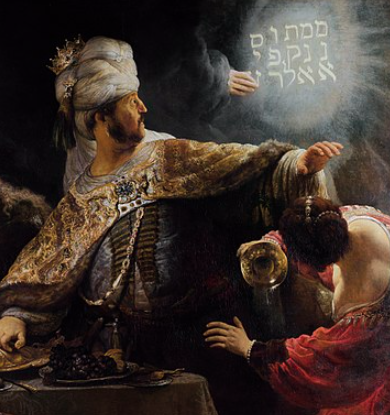
The worshipper of idols denies the light of the infinite God. He is a literalist for whom “it is what it is.” What you see is what you get. But the light of the first day goes beyond the physical. The only way to approach it—to approximate it—is through poetry and metaphor.
Going into the secrets of creation is mostly forbidden, but in the midrash, the advanced seminar on Light is led by a poet. Some secrets can only be whispered.
We are made privy to one such whispered exchange:
“I have heard that you are a master of poetry,” one rabbi says to another. “Tell me—out of what was this light created?”
The question is asked not of the philosopher or the scientist, but of the poet. He answers: “God wrapped Himself in a garment and caused His splendor to illuminate the world.” How to reveal the secrets of another world—perhaps not lawful to reveal—through poetry. Poetry does not merely proclaim, it engages, entangles, invites relationship. Pleasure is not incidental to the process of reading and understanding. The poet teaches through delight, because that is how we learn.
So for the poet/rabbi, to imagine the light beyond light, he clothes in metaphor. The garment shields creation from the unendurable radiance of the divine. But the garment is also poetry, the medium through which invisible light becomes visible. The Rabbi’s poem is Sinai in miniature: both revelation, in the single image of the garment, and concealment, in what remains hidden and unknown.
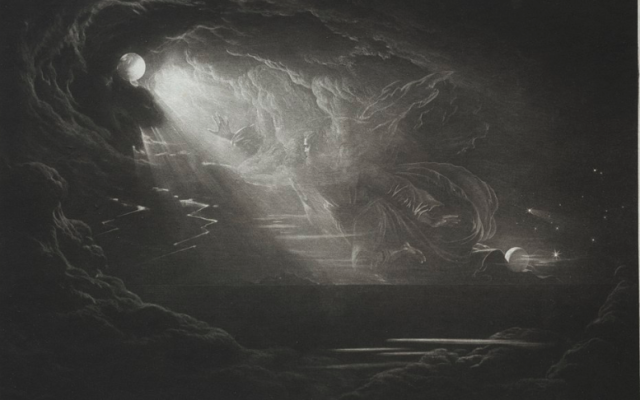
The infinite does not merely demand poetry; poetry is the only human answer equal to its endlessness. Every poem, like every act of interpretation, gestures toward what it cannot say. One image is never enough. Each word requires another, each voice calls for more voices.
This is what is meant by the Oral Law, the Poem Unlimited of the Jewish People, never complete. What poetry teaches still: that truth can only be approached through a discordant harmony – yes, a paradox, of many voices.
After the war, we don’t need clichés or slogans—certainly not the idolatries of religion, politics, or ideology. We need the antidote to all of them, the antidote to fundamentalisms of every kind: poetry.
Make it new!
Let there be poetry. Let there be light.
Related Topics
Related Posts