Former journalist, now a grumpy old man
Liam Byrne, an MP in Birmingham UK, or is it the wider world?
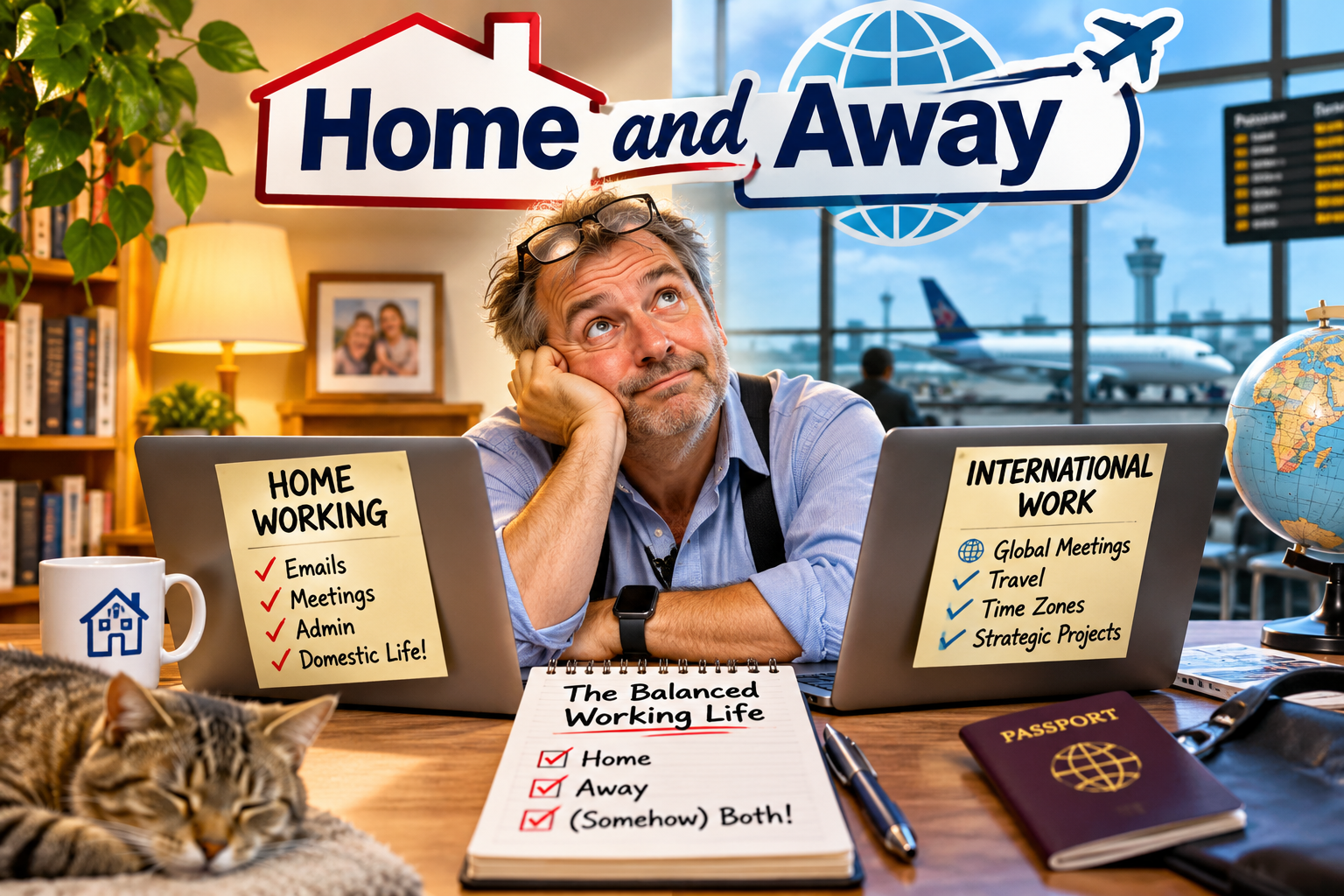
AI generated image with prompts from the author (not an image of the MP in question)
Another examination of the parliamentary priorities of a British MP and his international political campaigning alongside his constituency representation responsibilities.
If you want to be a Member of Parliament in the UK, you will have two very important responsibilities. The first, and sadly, many British MPs need to be reminded of, is to represent the people who elected you and to address the problems affecting their everyday lives. Secondly, you may be expected to participate in national politics, check what the government is doing, contribute to legislative debates and the wider direction the country takes.
The second does not take precedence over the first, more so if you are to take a highly partisan approach to matters that do not directly affect your constituents.
There is no reason why an MP cannot do both. But when an MP becomes prominent in national and international political campaigning, and singles out one particular cause above all others, it’s perfectly reasonable to ask how much attention is being devoted to other international problems.
This is a serious question worth asking of Liam Byrne, Labour MP for Birmingham Hodge Hill and Solihull North. This is not about Mr Byrne’s entitlement to express opinions on international affairs, human rights, foreign policy or any other subject that attracts his political interest. It’s about whether his on-constituency parliamentary time, public campaigning and political priorities are appropriately bipartisan where required.
The Birmingham Hodge Hill and Solihull North constituency has its own unfair share of social and economic problems. It is seen as the sixth most deprived constituency nationally in deprivation ranking. According to the most recently available constituency figures, 51.9% of children are living in low-income families after housing costs. That’s some 16,463 children. Benefit claimant count stood at around 8,000 in September 2026, approximately 10.2% of the working-age population. Overall, the estimated employment rate was 61.6%, while economic inactivity stood at 32.9%.
These are not just statistics for quoting. Behind every percentage point there are families struggling with household finances, young people facing difficult employment prospects, people experiencing financial insecurity and communities requiring sustained investment. There are problems with housing, education, public transport, healthcare provision, community safety, regeneration and opportunities available to local businesses. Both Birmingham Hodge Hill and the Solihull / Solihull North areas see well-documented issues with road potholes and waste/bin or street-cleaning services, as does nearby Birmingham Perry Barr parliamentary constituency, whose politicians were more worried about a Tel Aviv football team playing at Aston Villa than the immediate and pressing welfare of their constituents.
It is only fair that local issues should take up a substantial proportion of the time and attention of the constituency’s elected representative. That is what they are paid quite handsomely to do.
But what does his parliamentary record tell us? Mr Byrne is not just an inexperienced backbencher. He chairs the House of Commons Business, Innovation and Trade Committee and also holds positions on the Liaison Committee and the Joint Committee on National Security Strategy. These responsibilities do involve national and international matters and well done to him for sitting on these committees. They are important parliamentary functions and should not be confused with his personal constituency campaigning.
He has spoken about trade, business and industry, foreign affairs and diplomacy, finance, taxation, employment and defence. His written questions have also included many of the aforementioned, all of which are laudable and what a local MP needs to do. Therefore, it cannot be denied that Mr Byrne has undertaken identifiable and vital constituency work.
He petitioned Parliament in September 2025 for Birmingham Hodge Hill and Solihull North to receive support through the Government’s Plan for Neighbourhoods, with a local enterprise, Glebe Farm community hub, securing £20 million in funding as a result of his and local residents’ campaigning. He has campaigned about speeding on local roads, held residents’ meetings, raised flooding concerns and pursued regeneration and community investment. These are the very activities that constituents should expect from their MP. So it would be unfair to suggest that Mr Byrne ignores his constituency or does nothing to address local concerns.
Mr Byrne’s recent international campaigning has included campaigning on Kashmir, international humanitarian law and, yes, Palestine, and arms exports to Israel. He hosted the Palestinian Ambassador in connection with his Business and Trade Committee responsibilities. Some of these international affairs are very legitimate subjects for parliamentary attention for an MP of Mr Byrne’s political stature.
But this is where a highly unacceptable partisan element creeps in.
There is a distinction between parliamentary scrutiny of international affairs and someone making one particular international cause their prominent feature above all others. More so when that particular international cause was a direct result of the premeditated murderous actions of its leadership, Hamas, who are plain and simply proscribed terrorists.
Giving what is tantamount to distinct, visible and continual support to Hamas, the aggressor that caused the problem, and ignoring the resultant defence by the victim, is not international diplomacy. And not referring to other parties, for example Egypt, which has a very heavily defended and secure 12km barrier border with Gaza, is simply very wrong. Is it not strange that Egypt chooses to have an impenetrable, multi-layered barrier border with Gaza and a very distinct preference for not engaging with Hamas? That says it all about how Egypt feels about the Hamas terrorist regime. Surely that matter should be raised with similar urgency and passion by Mr Byrne?
This is not a suggestion that international human rights concerns are unimportant. It is a question of proportion, accountability and representation. The fact he is recently so busy on Palestinian affairs only yet not mentioning the continued aggression of their leadership cannot go without mention.
Perhaps the most revealing way of approaching this subject is to consider what the people of Birmingham Hodge Hill and Solihull North might reasonably expect their MP to be concentrating on. He simply cannot bow to a minority as a safeguard for votes. That is unacceptable, as residents deserve to be heard equally when it comes to international affairs. And let’s not gild the lily here. Birmingham, as a city, has a pitifully poor political record in this respect since the October 7 massacre in Israel. It has become “No Jews, no news” with some Birmingham politicians who, it cannot be denied, seem to exhibit a severe form of Israel derangement syndrome.
Has Mr Burne perhaps reached the conclusion of some other MPs in the UK? A family struggling with the cost of living, child poverty and housing insecurity, youngsters struggling to find employment, residents concerned about crime, antisocial behaviour, deteriorating public services or inadequate transport and investment in infrastructure, skills and economic opportunities are no longer headline-grabbing subjects. While they are the everyday realities of constituency representation, they do not always attract national media attention or provide opportunities for prominent political statements and votes.
Representation of the people as an MP is an obligation, not simply a platform opportunity. Or a vote generator. An MP’s public profile can sometimes tell us as much about their political interests as their parliamentary voting record does. So are the issues an MP takes to their heart and for public campaigning necessarily those most pressing to the people they represent.
Let’s be fair here. There is no requirement for an MP to devote every parliamentary contribution to a constituency matter. Nor is there anything wrong with having particular interests or campaigning on issues beyond the constituency. But parliamentary office is not a personal platform to be used without regard to the responsibilities that come with it.
The electorate is entitled to ask questions about priorities, time, effort and results. How much sustained attention has been given to the problems identified by local residents? And what measurable improvements have resulted?
Ultimately, this is not about denying Liam Byrne the right to have a voice on international affairs. It is about ensuring that his voice is heard by all of the people living in Birmingham Hodge Hill and Solihull North area. It should not be partisan when it comes to international affairs, railroading and grandstanding on the flavour of the year that ends up ignoring other very serious world matters. As for his recent tirade on Aid to Gaza. Where has his equally passionate and sustained support been for the 35million starving in Yemen and Sudan that has been ongoing for years now?
An MP can legitimately look beyond their constituency. It demonstrates a rounded knowledge of world affairs beyond TikTok and Facebook. But the people who elected him should never have to wonder whether the problems on their own doorstep are receiving the attention they deserve. Or whether he devotes too much time to one particular cause in a very partisan matter to keep the vote of a minority who seem to feel they have a sense of entitlement, or to stave them off from voting for the Green Party.
After all, an MP’s constituency is the community to which they are accountable. And a community that, albeit somewhat simplistically, ultimately pays their MP’s salary and expenses through taxation.
Related Topics
Related Posts