Light shines in the darkness.
When we turn our eyes to the story of Joseph in Egypt, one of the greatest biblical classics, we realize that it is not just an ancient account, but a foundation of Jewish memory and resistance.
Amid dreams, jealousy, and hatred, Joseph was sold by his brothers, betrayed by his own family, and became a slave in a country of strange culture.
One brother asked: do not kill him… let us sell him…
Joseph lost everything!
In the midst of suffering, almost total losses, far from his family and without his beloved father, he became a symbol of resistance and overcoming.
Joseph’s family sank into lies to justify their own mistakes before Jacob, who loved his son.
But there was a purpose!
The young Joseph began to stand out among a nation of strangers, becoming a great administrator of Potiphar’s household. He became prosperous and came to control all of Potiphar’s wealth.
Potiphar became more prosperous!
Joseph’s beauty and leadership attracted Potiphar’s wife, and once again the young Israelite found himself in a web of lies when he refused her advances. The prison doors opened to receive him, and he lost everything again.
From isolation to abrupt losses, there was still Emunah. From despair to memories of the past, the pain seemed recurring.
Darkness seemed to prevail!
Joseph began to stand out in prison and became a great administrator in an unlikely place—dirty, isolated, and scarce.
Again, between dreams and prison, the Israelite was brought before Pharaoh.
In the midst of Egypt’s economic and humanitarian collapse, from slave, betrayed by his own blood, condemned unilaterally in a foreign land, now as prime minister second only to Pharaoh, after 13 years as a slave, Joseph played an important role in the history of the Israelites, saving his people and the gentiles from death.
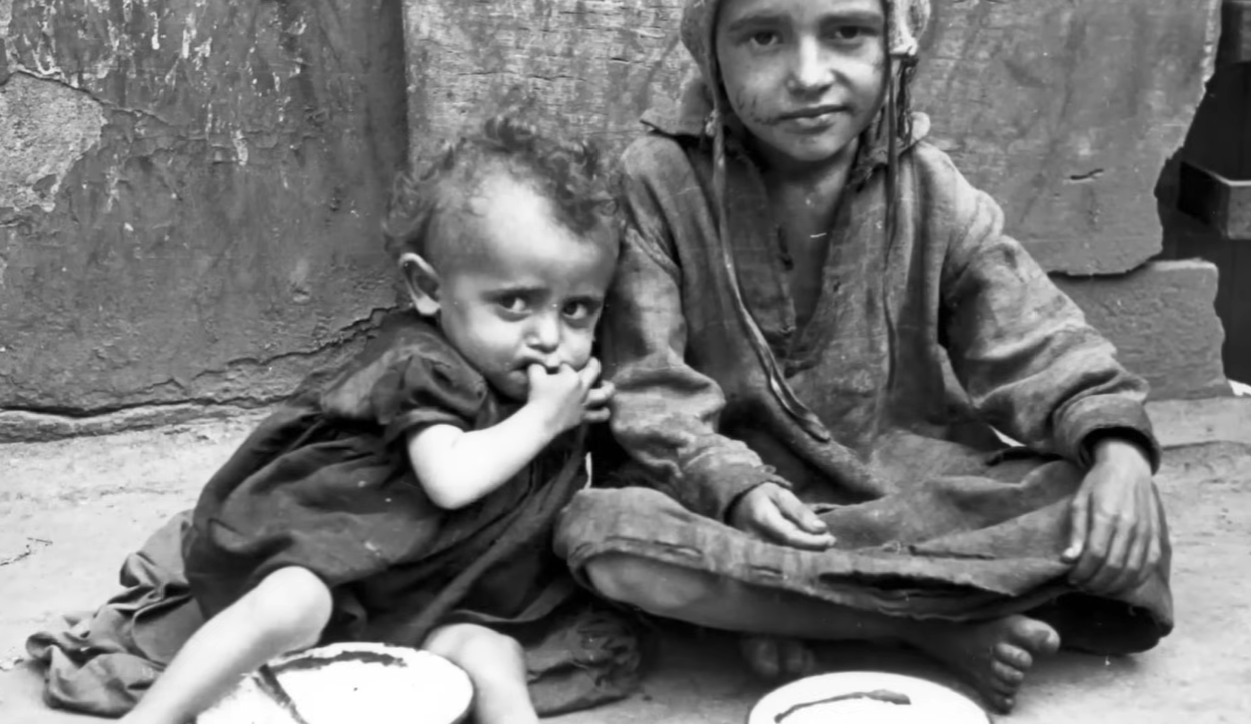
From the Inquisition, pogroms, the Shoah, the one and a half million children murdered in the Holocaust, darkness seemed to prevail.
Antisemitism spread throughout Europe; those who should have protected them betrayed them with false accusations. They were taken to prisons, became slaves, lost their families, money, freedom, and food.
From prison to extermination, from joy to despair, from life to death.
From the normality of life to survival in ghettos, from chicken soups, scraps of dog food, and horse manure in meals in hiding places and on roads.
From the cry of a child whose mouth was covered by strangers so as not to die on the way to Switzerland.
Where was God?
When everything pointed to the end of the Jews, the nations looked with fear at the expansion of war and death; from West to East everything moved toward the radioactive end of nations.
The surprising happened on May 14, 1948.
From misery, chaos, total loss, betrayals, miracles in hiding places, survival, the dry bones of the prophet Ezekiel, fear, terror… Jacob rises again!
A new beginning!
From the USA, Brazil, Israel, Canada, England, Germany, and other nations, light appeared at the end of the tunnel. From DNA research to Oracle, Google, Facebook, Dell Technologies, Waze, Universal Pictures, Warner Bros, Bloomberg LP, Levi Strauss & Co… simply the world changed.
Jews Before and After the Holocaust Who Shaped History
Jonas Salk, Albert Sabin, Paul Ehrlich, Selman Waksman, Elie Metchnikoff, Otto Loewi, Joshua Lederberg…
Albert Einstein, Niels Bohr, Richard Feynman, Max Born, Lise Meitner, Wolfgang Pauli, Emmy Noether, Isidor Isaac Rabi, Leó Szilárd, J. Robert Oppenheimer, Hans Bethe, Edward Teller, Eugene Wigner…
Some of these scientists were Jewish refugees from Europe—especially from Germany and Hungary—who, fleeing the grip of Nazi persecution, transformed the pain of exile into discoveries that changed the destiny of humanity.
Between 1901 and 2025, Jews won about 220 Nobel Prizes—almost 22% of all individual laureates—an extraordinary achievement for a people who represent only 0.2% of the world’s population, but whose knowledge continues to impact generations.