Literary Fiction or Propaganda? A Review of Enter Ghost by Hammad
One of the most prominent Palestinian writers, Ghassan Kanafani, argued in 1967 in On Zionist Literature that “Political Zionism employed [literature] extensively not only for its propaganda efforts but for its political and military campaigns as well.” It’s easy to argue against this claim with writers such as S. Yizhar, A. B Yehoshua, Amos Oz, Assaf Gavron, Nir Baram, Dorit Rabinyan and many more who’ve been criticizing Zionism since the establishment of Israel. But what does Kanafani’s view project about literature’s role? Does Palestinian literature employ Palestinian nationalist propaganda? To what extent? Can it include criticism of Palestinian or religious ideas?
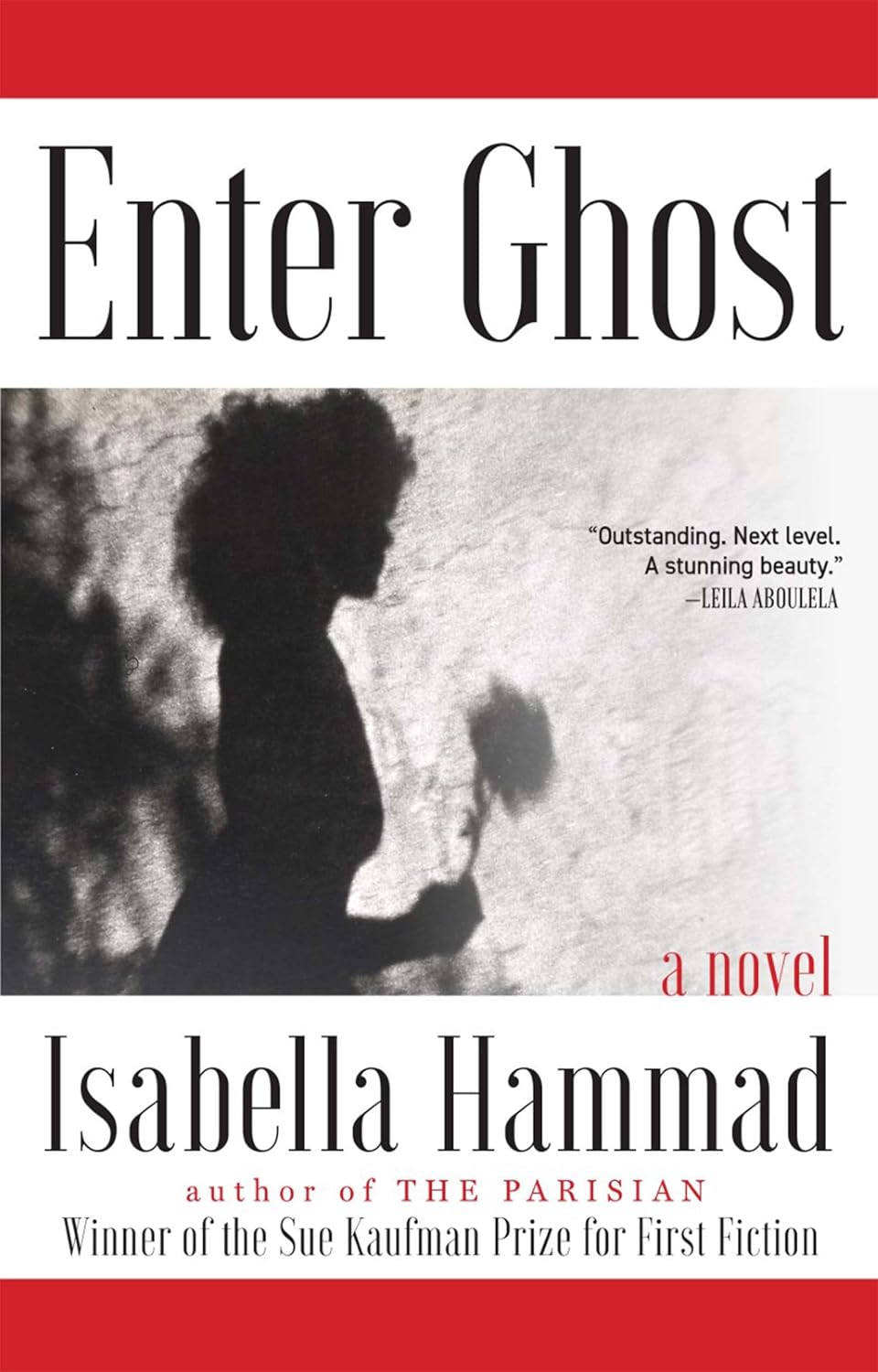
Recently, I have read Enter Ghost by British-Palestinian writer Isabella Hammad. The novel received much praise and literary prizes. I agree it is written beautifully and deeply engages with themes such as theatre and art and their political power. Still, I finished reading it feeling manipulated by the writer, whose political views can be summed up in one sentence.
The main character of the novel, Sonia, is a British-Palestinian actress in her late 30s. She used to spend her childhood summers in her grandparents’ apartment in Haifa, but she hasn’t visited for many years. Now she takes a trip to Israel to visit her sister, Haneen, who lives in Haifa for several years. In Haifa, Sonia meets Mariam, Haneen’s friend and a theatre director, who convinces Sonia to join a Hamlet production in the West Bank. Sonia is reluctant at first but moves to Ramallah to play Gertrude. From this point, the plot is driven by the question of whether the company will manage to put on the play, with the obstacles being checkpoints, arrests, phone surveillance and interrogations, i.e., the Israelis. Life in the West Bank under Israeli occupation is unbearable, as Hammad so nuancely shows.
The writer took some liberties to stress the subjugation of the Palestinians. For example, one of the obstacles the production is facing is a financial one. Miriam’s brother, a politician in the Israeli government, is helping fund the play, but he is arrested on charges of treason. Why? It is not illegal to fund a Palestinian play. As a fiction writer, she’s allowed to do this, but in a world of fake news and literary propaganda, I wonder if she really needed this exaggeration.

Another exaggeration is the confiscation of the play’s setting by the IDF. As the story progresses, it seems that the army maliciously tries to stop the show. I know the IDF in the West Bank commits crimes against the Palestinians who live there, but reading this, I felt the author went too far. Maybe I’m too naïve, maybe it’s just my discomfort reading this novel as an Israeli, or maybe the writer wanted to say that Palestinians are nothing but artists who want to put on plays, and Israelis are nothing but the bad guys. I think the reality is more complex, and literature is exactly the form to explore this complexity.
Regardless, I found the novel interesting, especially when Hammad showed the stereotypes and examined them. In one of the most interesting scenes in the novel, Sonia meets another aggressive, soulless soldier at the checkpoint. He orders her to go back into the car. At this point, she realizes he has a British accent. She asks him: “Are you from Manchester?… What the hell are you doing here?” (155). He replies, annoyed by her questions, “I’m not from Manchester, I’m from Leeds! And I’m here defending my people” (155). Suddenly, the dictated roles of perpetrators and victims are interrupted. Sonia and the soldier are not as different; in England, they could be friendly neighbours to each other.
In her internal speech, Sonia mentions that their exchange is “splashing quite far outside the normal waterways of this scenario: soldier, civilian, military checkpoint” (155). Yet she thinks with disdain and outrage about the soldier’s answer to her questions. Defend. To Sonia, it seems, the soldier only imagines himself defending his country in this game called occupation. “‘Defending.’ Disdain and outrage made me spit the word, compounded, I suppose, by the fact that he was about half my age” (155). Is defending Israel ridiculed? Are Israelis only imagining terror attacks? Are the terror acts Israel’s fault—is that why the narrator finds the presumption of defending disdainful? Or because the word defending disguises the violence of the army? Or maybe because Israel shouldn’t even be there in the first place?
Toward the end of the novel, the writer’s message becomes clearer and troubling, at least for an Israeli reader. When encountering soldiers while protesting in Jerusalem, Sonia says to herself, “Did they believe they were guarding against a group of Muslim fanatics? We, the backward natives. Did they genuinely believe they were waging a war against Islam, or Islamists, as they liked to paint it in the media sometimes, when they claimed solidarity with victims of terror attacks in Western capitals, saying, We know how it feels, it’s just like what we have to go through? Or did some of them know what they were really doing? Or was that something they avoided thinking about?” (271).
Why does Hammad think a bus explosion in the centre of Tel Aviv is different from a public transport explosion in a Western capital? Is it because Israeli citizens deserve to die, while the citizens of London, the centre of imperialism, don’t? And what does she refer to when she writes “really doing”? Does she mean that Israeli soldiers don’t really defend their people? Why not? Because Palestinians only want to put up theatre plays and never have any violent intentions against Israelis? Hammad is only insinuating, writing her opinions in between the lines, but obviously, she has a political message here, not just against the occupation, but against the existence of Israel. In my view, if the Israeli-Palestinian conflict is a play, which I find an apt metaphor, then both sides have their share in this game of victimhood.
After reading Hammad’s novel, I read Kanafani’s well-known story “Returning to Haifa.” I was surprised—I expected propaganda and hatred of Israel and Zionism, but found it quite complex. I felt empathy for all the characters, Palestinians and Israelis. I didn’t feel manipulated into thinking Israelis are bad or stupid or mean, but I thought that the abandoned child represents well the conflict. To whom does this country belong? Kanafani avoids giving a simple answer, and the future he sees for the people is dire.
- Hammad, Isabella. Enter Ghost: A Novel. Grove Press, 2023.