Lithuania Cannot Criminalize Jewish Memory
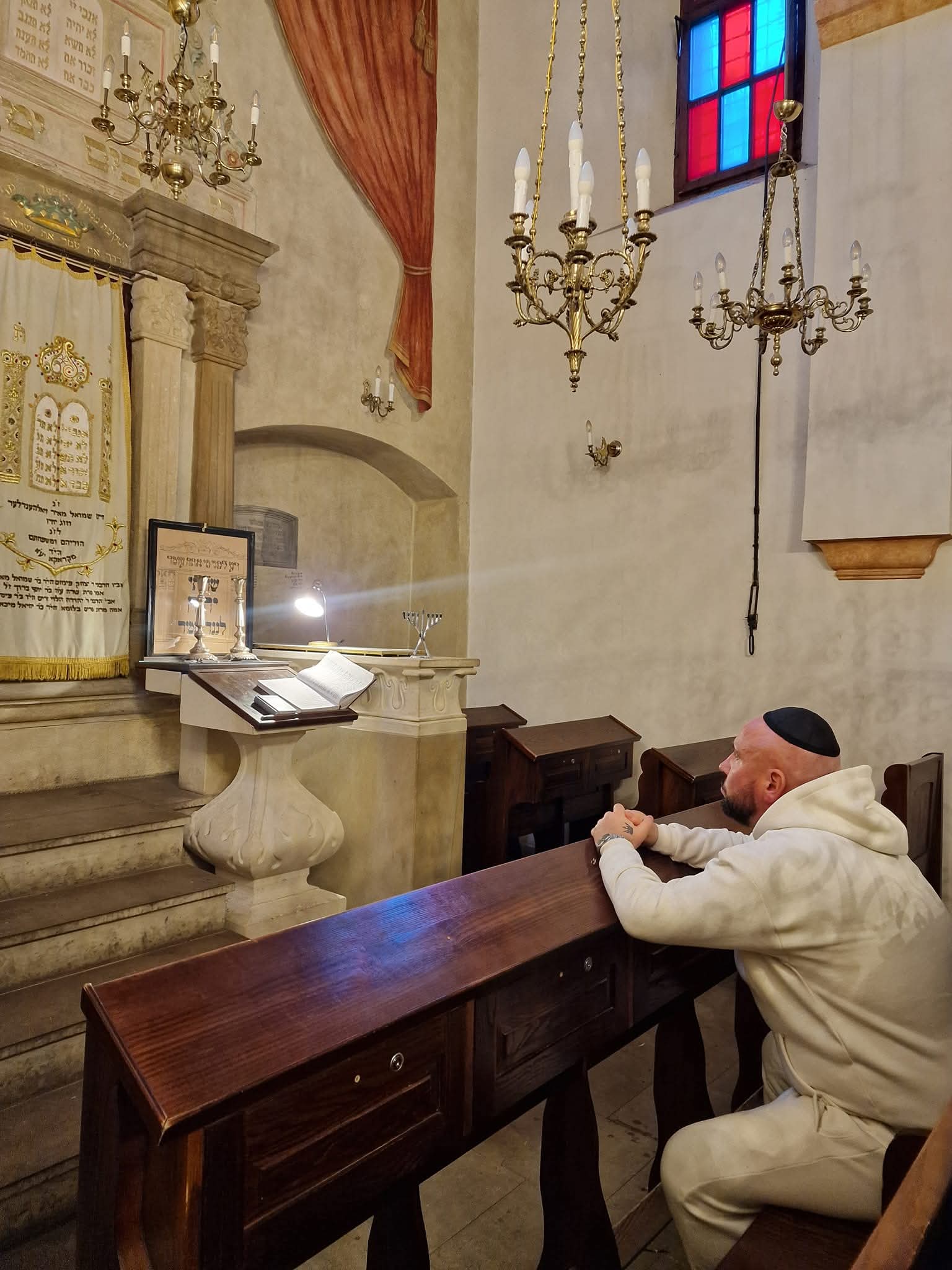
The Fridman prosecution is not law. It is state mythology enforced by criminal statute.
Lithuania does not merely remember the Forest Brothers. It mandates selective and creative fictional memory. It elevates the anti-Soviet chapter, negates the Holocaust chapter, and now prosecutes a Jew for refusing to recite the state’s mandated version.
That is what the Artur Fridman case means.
Fridman criticized the Forest Brothers and the Lithuanian heroic mythology built around them. Lithuania answered with two criminal statutes: Article 170² §1, the statute protecting Lithuania’s official anti-Soviet memory, and Article 313 §2, the statute concerning desecration of the memory of the deceased. The state’s theory is obscene in its simplicity: Lithuanian patriotic memory may be protected by criminal law, while Jewish memory of Lithuanian crimes may be treated as criminal speech.
That is not democracy. That is Soviet method with Lithuanian vocabulary.
The Soviet system did not merely lie. It organized permissible memory. It decided which victims counted, which crimes could be named, which heroes could be questioned, and which historical truths were punishable because they threatened state legitimacy. Lithuania now performs the same operation in reverse. The Soviet hero has been replaced by the Forest Brother. The censored memory has changed. The method has not.
Lithuania does not ask the public to remember the Forest Brother as a freedom fighter only. It mandates that memory. It takes the anti-Soviet chapter, consecrates it, funds it, teaches it, decorates it, prosecutes around it, and then treats the Jewish chapter as defamation.
Jews remember more.
We remember the ghettos. We remember the pits. We remember Lithuanian auxiliary police. We remember white armbanders. We remember Jewish property seized before and after murder. We remember women beaten, raped, and marched to forests. We remember children murdered. We remember Lithuanian men who passed through the machinery of Jewish destruction and were later absorbed into Lithuania’s national-resistance pantheon.
Lithuania may choose to forget that record. It may not prosecute Jews for remembering it.
Juozas Krikštaponis, also rendered as Juozas Krištaponis, shows the fraud. Lithuania commemorated the partisan commander. Jewish memory records the murder trail before the forest.
Mindaugas Pocius’s 2022 article in Genocidas ir rezistencija states that the 2nd Auxiliary Police Service Battalion murdered more than 15,000 Jews in more than fifteen locations in Belarus between October and December 1941. All three companies took part in the massacre. The battalion also murdered at least 2,360 prisoners of Stalag No. 352 in Minsk. Pocius concludes that Krikštaponis commanded the battalion’s 2nd Company on October 10, 1941, when prisoners of the Rudzensk Jewish ghetto were killed, and on October 15–16, 1941, when prisoners of Stalag No. 352 were murdered. Pocius, Genocidas ir rezistencija, 2022
That is not “Russian propaganda.” That is Lithuanian scholarship using archival evidence. Pocius states that his article is based on critical analysis of Lithuanian Special Archives and Lithuanian Central State Archives documents, and that it addresses Krikštaponis’s little-known activity during the Nazi occupation and whether he participated in the mass murder of Jews and other civilians. Pocius, Genocidas ir rezistencija, 2022
Pocius also records the scandal of Lithuanian commemoration itself: Krikštaponis received volunteer-soldier status, colonel rank, the Order of the Cross of Vytis, a memorial stone in Ukmergė, and a street name in Panevėžys. He describes the case as evidence of systemic errors in state historical policy, lack of political will, and the absence of coherence between Holocaust memory and anti-Soviet partisan memory. Pocius, Genocidas ir rezistencija, 2022
Lithuania did not accidentally misplace one biography. It built patriotic honor on top of a murder record.
The same structure appears in Pranas Končius-Adomas. Lithuania remembered him as the last Lithuanian anti-Soviet partisan killed in action. He was posthumously awarded the Cross of Vytis.
Birutė Burauskaitė herself stated that she had convinced the President to revoke the medal because it had become known that Končius was guilty of killing Lithuanian Jews. In the Baltic Worlds article already in the LT file set, Burauskaitė is quoted saying that an award had been granted to a person who did not deserve it.
Jewish memory records what Lithuania’s heroic formula omits: Končius served in the Salantai Auxiliary Police; he was implicated in the murder of Jewish men at the Salantai Jewish cemetery, killings at Šalynas Manor, the beating and escorting of Jewish women to the Šateikiai Forest, participation in their murder, the murder of Jewish women and children, and seizure of Jewish property.
Lithuania remembers “the last partisan.” Jews remember Salantai, Šateikiai Forest, beaten women, murdered children, and stolen property.
That is the conflict. Not between truth and slander. Between Lithuanian state memory and Jewish factual memory.
The record does not stop there. Jonas Semaška-Liepa collapses Lithuania’s artificial wall between Nazi-service biography and postwar partisan honor. The Fridman defense record identifies him as chief of the 7th and 13th Lithuanian Auxiliary Police Battalions, states that both were extensively involved in the Holocaust, identifies the battalion record with the murder of the Jews of Vinnytsia, Ukraine, and records that he was subsequently rewritten by the LGGRTC as a “rescuer.”
This is exactly the memory laundering Fridman criticized. Lithuania isolates the forest chapter and orders Jews to forget the battalion chapter. It remembers the partisan commander and erases the Nazi-formed police structure. It names the Soviet execution and suppresses the road by which some of its honored men arrived there.
The broader institutional record makes the dishonesty worse. The Lithuanian TDA Battalion was organized in the summer of 1941 by the Lithuanian Provisional Government. Its members were known by overlapping terms: auxiliaries, policemen, white armbanders, nationalists, rebels, partisans, resistance fighters, and Schutzmannschaften. That vocabulary matters. Lithuania later pretends these categories live in separate moral universes. They do not. In 1941, the same anti-Soviet and nationalist environment that produced “resistance” also produced auxiliary killing structures.
The TDA and related Lithuanian auxiliary police structures became part of the machinery of Jewish destruction. The Jäger Report records murders by Lithuanian partisans/TDA at the Seventh Fort and elsewhere, and records the daily machinery by which Jewish men, women, and children were murdered across Lithuania. The Jäger Report
That fact destroys Lithuania’s clean memory architecture. Lithuania cannot divide the record into a noble anti-Soviet shelf and an irrelevant Holocaust shelf. The same political universe, the same armed networks, the same anti-Soviet rhetoric, the same “patriotic” terminology, and in some cases the same men passed through both histories.
Lithuania mandates the noble shelf. Jews remember the other shelf.
That is why the Fridman prosecution is so dishonest. The state is not neutrally applying criminal law. It is enforcing an edited national myth. It has written Lithuanian participation in Jewish destruction out of the usable patriotic record, then prosecutes a Jew for remembering what was removed.
The charge under Article 313 §2 is especially grotesque. Lithuania claims to protect the memory of the deceased while prosecuting a Jewish citizen whose speech arose from a visit to his grandfather’s grave. The state that protects monuments to contaminated heroes places a Jew in criminal jeopardy for refusing to honor those heroes as Lithuania commands.
This is not protection of the dead. It is hierarchy among the dead.
Lithuanian dead may be guarded by statute.
Jewish dead must be quiet.
Lithuania says: Forest Brother.
Jewish memory asks: Where was he in 1941?
Lithuania says: patriot.
Jewish memory asks: Did he serve in auxiliary police?
Lithuania says: anti-Soviet martyr.
Jewish memory asks: Whom did he guard, beat, rob, march, rape, or murder before entering the forest?
Lithuania says: national hero.
Jewish memory answers: not to us.
That answer is not a crime. It is historical memory.
Lithuania’s problem is not that Fridman lied. Lithuania’s problem is that Fridman remembered. He remembered in the wrong direction. He remembered from the Jewish grave outward, not from the Lithuanian monument downward. He refused the state’s choreography.
So Lithuania responded as dishonest states respond. It converted memory into procedure. It converted patriotic offense into criminal law. It converted a Jewish historical objection into a prosecution.
That is why this case belongs before every Jewish institution, every Holocaust-memory body, every foreign embassy, and every European human-rights forum. The issue is not whether Lithuania may honor anti-Soviet resistance. The issue is whether Lithuania may criminalize Jews who remember that some of Lithuania’s honored resistance figures were also murderers, rapists, thieves, auxiliary policemen, and participants in the destruction of Jewish life.
No honest court can require Jews to remember Lithuanian heroes only as Lithuania remembers them.
A Jew is entitled to remember Krikštaponis through Rudzensk.
A Jew is entitled to remember Končius through Salantai and Šateikiai Forest.
A Jew is entitled to remember Semaška through Nazi-formed Lithuanian police battalions as well as the Žemaičiai military district.
A Jew is entitled to remember the TDA through the Jäger Report and the mass murder of Jews.
A Jew is entitled to remember the Koniuchowsky survivor testimonies documenting Lithuanian partisan, white-armband, and police-battalion rape, torture, theft, and murder of Jews. The Fridman defense record identifies the Koniuchowsky Archive as 121 signed survivor testimonies, 569 pages, recorded from 1946 to 1948, held in original at Yad Vashem, with certified translations held by YIVO.
A Jew is entitled to remember that murdered Jews were not only slaughtered. They were dispossessed. Their clothes, homes, money, furniture, shops, religious objects, and lives were taken. Theft was not incidental to the killing. It was part of the destruction.
Lithuania wants these memories treated as inconvenient footnotes to national heroism. Jews have the right to treat them as the central record.
The Fridman case is therefore not merely a speech case. It is a state attempt to discipline Jewish memory. Lithuania is telling a Jew that the national myth is legally safer than the Jewish dead.
That is intolerable.
Lithuania can build monuments. Jews can name what those monuments conceal.
Lithuania can praise the Forest Brothers. Jews can answer that some of those “brothers” were murderers and thieves before they became symbols.
Lithuania can remember Soviet crimes. Jews can remember Lithuanian crimes.
What Lithuania cannot do is turn its edited memory into criminal law and call that justice.
That is not rule of law.
That is memory control.
That is Soviet.
That is why Fridman must be released. Lithuania owes an apology to the Jewish dead whose memory it has falsified, and to the Jewish defendant it now prosecutes because he remembers what Lithuania commands him to forget.