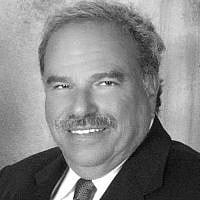
Lithuania Never Judged Lileikis

An American federal court tested the archival record, accepted its authentication, and stripped him of citizenship. Lithuania got the man, the evidence, and criminal procedure rewritten to keep the case alive. It still never delivered a verdict.
Aleksandras Lileikis, chief of the Lithuanian Security Police — the Saugumas — for Vilnius Province during the Nazi occupation, died in Vilnius in September 2000 while Lithuania’s genocide case against him was still unfinished. The Prosecutor General’s Office said illness and death had prevented a judicial decision. By then Lithuania had the defendant, the archives, authenticated wartime orders, an American judgment, years of international assistance, and criminal-procedure amendments designed to keep the case moving. It still never reached a verdict.
The problem was not that the evidence had vanished. Much of it survived because persecution had been administered. Names entered prison files. Orders moved prisoners from Lithuanian custody to German security authorities. Execution cards recorded what happened next. The bureaucracy that helped destroy Vilnius Jewry preserved enough paperwork for a later court to reconstruct the machinery.
America tested the record
On May 24, 1996, U.S. District Judge Richard Stearns entered a detailed denaturalization judgment. The government submitted 194 Lithuanian archival documents comprising more than 1,000 pages. The Director of the Lithuanian Central State Archives authenticated the copies; Lithuania’s Foreign Ministry attested that authentication; a U.S. consular official certified it; and American forensic examiners tested selected documents for alteration, dating and handwriting. The federal court accepted that authentication and rejected the forgery challenge.
Lileikis did not deny personally ordering officers under his command to cooperate with the Germans in arresting, detaining and delivering Jews to the killing apparatus. His defense was that his role had been “purely ministerial and custodial.” The court rejected that line. It held that his conduct plainly constituted personal participation in persecution and wrote that Congress could not have intended to exclude the triggermen of genocide while admitting their commanding officers.
The same opinion recorded an uncomfortable fact about the United States itself. Lileikis argued that Washington should be barred from denaturalizing him because American authorities had long known that he had headed the Vilnius Security Police and had been reported as “possibly connected with the shooting of Jews.” The court refused to let earlier American knowledge become his shield.
The surviving files put names and dates inside the administrative chain. On November 21, 1941, Lileikis personally signed the order confining Chaja Lapyda after her escape from the ghetto. Three days later he signed her transfer to the German Security Police. Her execution card records that she was killed on December 5.
On December 1, Gita Kaplan and her six-year-old daughter Fruma were arrested after fleeing the ghetto. Lileikis signed a decision sending them to the Vilnius Hard Labor Prison. The same decision imprisoned Adolfas Domeikas and Juozapatas Domeikas — the Lithuanians who had hidden them — and placed all four “at my disposition.” The next day he signed the transfer of Gita and Fruma to German Security Police. Their execution cards record their deaths on December 22. The man later defended as a rescuer had signed an order imprisoning two Lithuanians for rescuing Jews.
On December 11, Lucija Pojevanskaitė-Sutarskaitė, a Roman Catholic woman born in the United States, was arrested in Vilnius as “suspected of being a Jew.” Lileikis signed the order holding her at his disposition. She was transferred on December 17. Her execution card records her killing on December 22.
Judge Stearns’s conclusion was not tentative. He wrote that even if Lileikis had saved one Jew, it could not answer for the “tens of thousands” who died under his command of the Saugumas. The record did not describe a clerk accidentally trapped in a system. It described the chief who signed the system into motion.
I have already set out the broader institutional and victim record in The Murder Was Administered, Part 1 and Part 2. The question here is narrower: what did Lithuania do once the evidence and the defendant were both within its reach?
Lithuania received the man and the case
After the May 1996 judgment, Lileikis returned to Lithuania. Washington did not conceal the basis of the case: the denaturalization judgment and the evidence behind it were public. When Lithuania forwarded genocide charges in February 1998, the Justice Department said it had shared its evidence with the Lithuanian government “fully and completely” and publicly applauded the prosecution.
On the Centre’s own account, the clock began on May 2, 1995. In Arūnas Bubnys’s chapter Lietuvių saugumo policija ir holokaustas, published in the Genocide and Resistance Research Centre’s 2011 volume Holokaustas Lietuvoje 1941–1944 m., page 370 states that the Prosecutor General’s Office instituted a criminal case against Lileikis that day under Article 18(6) of the Criminal Code and Article 1 of Lithuania’s law on responsibility for genocide. The same passage says that Lileikis was accused of handing seventy-five Lithuanian Jews to the German Security Police and the Ypatingasis būrys. Its apparatus identifies Lileikis criminal file No. 09-02-14-95, nine volumes, then held in the Vilnius Regional Court archive. I cite that as the Centre’s own assertion, not as independent proof. On the Centre’s chronology, Lithuania had the case for more than five years and four months before Lileikis died. On February 6, 1998, Lithuanian authorities forwarded genocide charges to the Vilnius district court; the Justice Department called it the first prosecution for Second World War crimes in any successor state to the Soviet Union. By then it was Lithuania’s prosecution. The obstacle that came to dominate was his health and the procedure for trying a defendant who could not reliably appear.
Three years after the case opened, prosecutors were still testing the documentary foundation of that seventy-five-person charge. In May 1998 the trial was postponed while prosecutors examined original wartime documents. Contemporary reporting said that one of those originals concerned the transfer of seventy-five Jews held in a Vilnius prison to Nazi killing units. The 1998 report therefore confirms the documentary trail behind a charge the Centre says had already been framed in 1995; it is not the origin of the seventy-five-person figure.
The medical barrier moved. The case did not reach judgment.
On November 5, 1998, Lileikis appeared in court in a wheelchair after a court-appointed panel had concluded that he was healthy enough to stand trial. He complained of heart problems and was taken from the court by ambulance. In January 1999, a medical commission found Gimžauskas unable to attend court and had not yet decided whether Lileikis could stand trial. Later reporting identified Gimžauskas’s condition as a progressive psychiatric disorder and said he had suffered from an incurable psychiatric disease since 1998. The deputy’s incapacity cannot be retroactively assigned to the chief.
On September 10, 1999, a Vilnius court suspended Lileikis’s trial because he was too ill to attend. The case had now reached a procedural dead end: the defendant was in Lithuania, the prosecution remained alive, and ordinary first-instance procedure still depended on his physical participation.
On February 15, 2000, parliament amended criminal procedure so these genocide cases could proceed without the defendant physically present, including through remote participation. But the mechanism had a built-in ceiling. An in-absentia proceeding could produce a verdict without a prison sentence; imprisonment had to wait until the accused became healthy enough to appear. MP Rimantas Smetona said the amendment had been passed because of Lileikis. Lithuania had created a route to conviction that, by design, could not imprison the incapacitated defendant whose condition had triggered the law.
On June 23, 2000, Lileikis appeared by video uplink from his bed. The questioning lasted about ten minutes before physicians stopped it and he was rushed to hospital with acute circulatory failure caused by chronic arterial hypertension. On July 4, Judge Algimantas Pivoriūnas halted the proceedings after doctors said Lileikis was too ill to follow them. He ordered monthly reports on Lileikis’s health and said a resumption was unlikely. The mechanism designed to keep the trial alive had still not produced a merits judgment.
The rescuer defense collapses inside the same file
Lileikis claimed that he had helped persecuted people, and his defense invoked the story of Šifra Grodnikaitė. Judge Stearns confronted that claim directly. The newspaper material offered for it was inadmissible hearsay; even if the rescue story were true, it did not displace the signed arrest, detention and transfer orders.
The Kaplan file is the cleaner answer. Gita and Fruma Kaplan survived as long as they did because Adolfas and Juozapatas Domeikas hid them. Lileikis signed the decision imprisoning the rescuers along with the people they had saved. A rescue story cannot erase a document showing the same office punishing rescue.
The deputy reached judgment. He still received no punishment.
Lileikis died before Lithuania delivered a verdict. That fact permits an obvious rebuttal: no court can convict a dead man. The combined Lithuanian prosecution supplies the comparator.
On February 14, 2001, the Vilnius Regional Court found Lileikis’s deputy, Kazys Gimžauskas, guilty of genocide. An October 2000 report, citing a psychiatric examination, described a progressive, incurable psychiatric disorder dating from 1998. At the February 2001 judgment, the court separately found him incapable of understanding or controlling his behavior. The 2000 procedure supplied a second, structural limit: a defendant too ill to appear could receive a verdict, but not imprisonment. Gimžauskas was handed to his relatives.
So the two senior Vilnius Saugumas cases ended by different routes and at the same practical destination. The chief died before judgment. The deputy was adjudged guilty, but the procedure Lithuania had written for an incapacitated defendant separated conviction from imprisonment. Lithuania had the archive, the defendants and a special mechanism built for these cases. It still produced no punishment.
The unfinished record is still sitting in the archives
The American case no longer has to be reconstructed from citations. The National Archives at Boston has identified five physical boxes from the federal litigation in three archival holdings. The docket identifies the government’s summary-judgment record, forensic affidavits, five volumes of exhibits accompanying Yitzhak Arad’s affidavit, litigation over classified material and Lileikis’s own opposition memorandum. Those records can be ordered and examined.
Lithuania’s criminal file also survives. Bubnys’s chapter cites the earlier Lileikis investigation as case No. 09-02-14-95 in nine volumes and the Gimžauskas investigation as case No. 09-2-036-97, a separate seven-volume file in the Vilnius Regional Court archive. The Vilnius Regional State Archives now confirms a later combined Gimžauskas-Lileikis criminal case, No. 1-4/2001, in twenty-two volumes under F. 2355, ap. 4, b. 469-490, totaling approximately 5,132 leaves. The different numbers and volume counts appear to reflect successive procedural stages: separate investigative files followed by a larger combined court record. The archive currently refuses access and copying because of personal-data restrictions. The restriction does not make the record disappear. It tells the next researcher where to resume.
What Lithuania did not supply
Lithuania did not acquit Aleksandras Lileikis. It did not convict him. It never reached judgment.
That distinction has to be preserved. The absence of a Lithuanian verdict is not itself proof of guilt. But it cannot be turned into doubt about the documentary findings that the American court tested and accepted. Nor can the rescue narrative erase orders bearing Lileikis’s signature, named prisoners, rescuers jailed for hiding Jews, transfers to German security authorities and execution records.
Independent Lithuania opened its archives to American investigators and helped authenticate the records. That cooperation deserves credit. It also sharpens the question. Once Lileikis came home, Lithuania possessed the evidence generated by that cooperation. Its prosecutors investigated. Its parliament rewrote procedure. Its courts received the case. The chief died without judgment; his deputy was found guilty and received no sentence.
The arithmetic behind the memory war
The scale of the destruction cannot be separated from the record of accountability. Michael MacQueen, writing in the United States Holocaust Memorial Museum Center for Advanced Holocaust Studies symposium volume Lithuania and the Jews, estimated that almost 95 percent of Lithuania’s prewar Jewish population — as many as 220,000 people or more — perished in the Holocaust. Independent Lithuania has not punished a single Lithuanian Holocaust perpetrator for those murders. The record after independence is not one of punishment delayed. It is punishment never imposed.
The contrast becomes harder to defend because the state did not merely fail to punish. It also elevated, defended or preserved public honor around men implicated in Holocaust-era persecution and collaboration. Speaking to the Seimas in 2023, Yad Vashem chairman Dani Dayan warned Lithuania against the glorification of war criminals associated with the murder of Jews and named Jonas Noreika, Kazys Škirpa and Juozas Krikštaponis. Lithuania’s post-Soviet memory system has repeatedly treated such figures as resistance symbols first and Holocaust-era actors second.
That is why the Lileikis case belongs in the same institutional frame as Lithuania’s present role in European Holocaust-memory projects. The Genocide and Resistance Research Centre now participates in PRISMA, a European initiative concerned with Holocaust distortion and collaboration. I examined that contradiction separately in What Was PRISMA Thinking?. Lileikis supplies the prosecutorial half of the problem. A state that did not punish a single Lithuanian perpetrator for the destruction of its Jewish population, while converting other implicated men into national symbols, now participates in teaching Europe how to recognize distortion. The issue is not whether Lithuania may participate. The issue is whether its partners are willing to examine the record Lithuania brings with it.
After Lileikis died, the Prosecutor General’s Office said the authorities had done their best to bring him to court and that the pursuit of historical justice would continue. Twenty-six years later, that promise can be measured against the result.
I am publishing a companion research note with this article. It identifies the surviving American and Lithuanian files, the documentary chains, unresolved contradictions, outstanding requests and the exact next steps. The next researcher should not have to spend years rediscovering where Lithuania and the United States left the evidence.
Lileikis is dead. The file is not. Lithuania never supplied the verdict. The evidence should not have to die with the defendant.
Research Status
As of October 12, 2026, the central documentary findings used here are verified for publication. Several nonessential records remain outstanding: the complete federal exhibit set, Lithuania’s seventy-five-person victim schedule, selected medical reports, and immigration and intelligence records. The companion research note identifies those gaps and draws no inference from records not obtained.