
Long read: When blasphemy has returned to the West
For several centuries, Western society believed it had solved one of the most destructive problems in its history, namely the policing of belief. The brutal conflicts that once tore apart Europe eventually produced a fragile but revolutionary insight. The state should not arbitrate theological truth, and societies remain stable precisely when ideas, doctrines, and convictions may be openly criticized.
The secular liberal order that emerged from this history rested on a demanding but clear principle. Beliefs may clash, but individuals remain free to challenge them. In recent years, after October 7 to be precise, that principle has begun to erode in so many ways. Across Europe and North America, the concept of blasphemy is re-entering public life, not necessarily as a formal criminal offence yet, but as a social mechanism through which a certain group attempts to regulate speech by defining what counts as offensive.
The power to define offence has always been politically significant. Once a community succeeds in establishing that criticism of its beliefs constitutes a form of harm, the boundaries of acceptable speech begin to narrow rapidly. The language used to justify this process is almost always the language of tolerance, respect, and inclusion. Yet the result is often the opposite of what liberal societies historically tried to achieve. Instead of a neutral public sphere in which all convictions can be debated, the public sphere becomes gradually reorganized around the sensitivities of those who are most willing to demand protection.
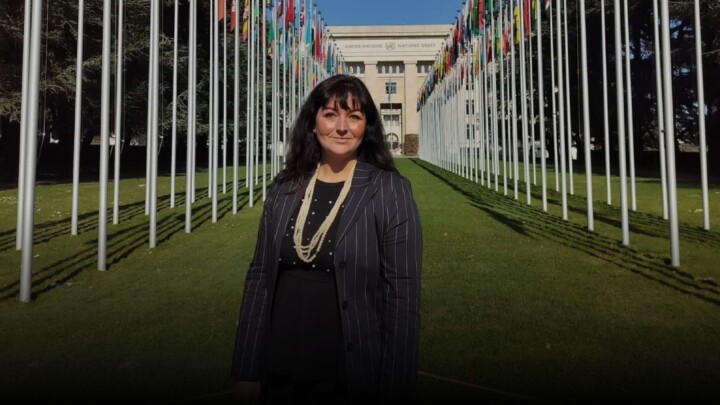
@dinaperlaportnaar Dina-Perla Portnaar: At the 61st Session of the UN Human Rights Council at the Palais des Nations, a side event hosted by Global Human Rights Defence focused on blasphemy laws and the persecution of minorities in Asia. Discussions highlighted concerns over the alleged misuse of such laws in Pakistan and rising cases in Bangladesh, with references also made to Iran. Dutch author and analyst Dina-Perla Portnaar said testimonies underscored how these laws can lead to coercion, exclusion, and serious human rights violations. She emphasised that freedom of religion and freedom of expression should reinforce, not oppose, each other, but acknowledged the moral dilemmas involved. Portnaar also noted that blasphemy laws are sometimes enforced by state and non-state actors, resulting in persecution, extortion and, in extreme cases, death. I’ll put the link below. #UnitedNations #humanrights #blasphemy #MemosFromTheEdge #DinaPerla TOI Bharat – Your Window to India And Its Neighbourhood TOI Bharat delivers the latest news, biggest voices, sharpest views and in-depth coverage of India’s political, social and economic landscape. Stay updated will all things making news in India and the subcontinent. We keep you informed. Your Nation. Your Voice
Recent developments in England illustrate how far this dynamic can extend into everyday life. The Telegraph reporter Craig Simpson found out how the local authorities in several parts of the country have advised schools to exercise caution in classroom activities that might conflict with religious sensibilities held by some families.
In guidance circulated to teachers, even ordinary drawing exercises were discussed in relation to possible objections to depictions of living beings under religious interpretations and ideological traditions. What might once have been an unremarkable art assignment can therefore become a matter requiring cultural and religious risk assessment. Being just a kid is now offensive and even punishable. What a world…
At first glance such precautions appear harmless. Schools understandably wish to avoid unnecessary tensions among pupils from diverse backgrounds. Yet the broader cultural implication is more profound. When a child’s drawing must be evaluated through the lens of potential theological offence, the boundaries of ordinary civic life begin to shift. Activities that belonged to the neutral domain of education are reinterpreted through religious categories. The classroom becomes a place where secular institutions adapt themselves to the most sensitive interpretations of religious doctrine.
A similar transformation can be observed in the civic sphere of New York City. Recently, religious gatherings have been organised inside government buildings and municipal institutions, often presented as expressions of solidarity during the fasting month. In a city celebrated for its cosmopolitan lifestyle, freedom, and cultural pluralism, such gestures are framed as signs of respect for religious diversity.
Yet they also raise a more fundamental question about the meaning of institutional neutrality. The classical liberal understanding of the secular state was that public institutions should neither privilege nor oppose religious practice. They should remain outside it. Once the state itself begins to host or organize religious observances, even in the name of inclusion, that neutrality becomes more difficult to sustain.
Each individual accommodation may appear modest. Officials emphasize goodwill, dialogue, and social harmony. However, when such measures accumulate over time like we’ve seen in recent years everywhere around the globe, they reshape expectations about how public institutions should function. The public sphere no longer appears as a neutral framework within which all beliefs coexist. Instead, it becomes structured around the sensitivities of the group most capable of asserting claims.
When I gave my speech about blasphemy laws in Asia at the United Nations in Geneva – mostly because I believe we cannot operate in a bubble anymore; we need to learn from other regions of the world because the same can happen anywhere – the first thing I saw when I walked into the building were massive banners with Ramadan messages sponsored by countries such as Saudi Arabia. We all know how the UN hasn’t been neutral for decades. We know the major problems there are – integrity breaches, me too, finances, corruption, and bias.
Stronger still, the question is to what extent this entity actually exacerbates global problems rather than navigating them diplomatically, despite the large number of people within its ‘umfelt’ who genuinely have good intentions, many of them women. I believe the underlying principle of the United Nations is sound, but the institution itself would need to start again, this time on entirely new foundations. Even so, although I’m fully aware of these realities, witnessing such blatant partiality in what is supposed to be a neutral diplomatic building felt like a punch to the stomach.
@dinaperlaportnaar Dina-Perla Portnaar: My speech at the United Nations about one of the most important dilemmas of our time. The freedom to believe, is not the freedom to coerce. With Global Human Rights Defence. #PhilosophyAndBooks #DinaPerla #UnitedNations #humanrights #blasphemy
The Netherlands provides another example of how this process unfolds within established democratic institutions. The parliamentary agenda was recently adjusted so that debates would conclude slightly earlier during the fasting month, allowing members of parliament to break their fast (a party that doesn’t fit our government to begin with). Supporters of the decision presented it as a gesture of collegiality and basic human consideration.
Yet institutional symbols carry weight precisely because they shape expectations. A national parliament is not merely a workplace but a central organ of the state itself. When the timetable of such an institution begins to reflect the rhythm of a particular religious observance, the line separating secular governance from religious accommodation becomes problematic. What appears to be a minor procedural adjustment signals a broader willingness of public institutions to organize themselves around religious practice and to shift toward religious and ideological dominance.
This is how cultural shifts usually occur. Dominance rarely starts through dramatic declarations, although the events after October 7, 2023 are pretty much the definition of dramatic. It doesn’t get worse than that. But in general, it emerges through a sequence of seemingly reasonable accommodations that gradually alter the underlying principles governing public life.
@dinaperlaportnaar Dina-Perla Portnaar: Short item made by ANI on the gathering at the United Nations in Geneva, discussing the blasphemy laws and dilemmas in Asia. #MemosFromTheEdge #blasphemy #DinaPerla #UnitedNations #humanrights
The deeper issue is the disappearance of reciprocity. Liberal societies function only when every conviction accepts that it may be criticized, questioned, or even ridiculed in public debate. European societies internalized this principle after centuries of religious conflict. Jews, Christians, atheists, secular thinkers, you name it eventually accepted that no belief system could claim immunity from scrutiny.
When one group abandons that principle while continuing to criticize others, tolerance becomes asymmetrical. It ceases to be a shared civic norm and instead becomes a strategic instrument. Some convictions receive protection from offence while others remain open targets. This is why initiatives such as ‘Restoring the West’ are now emerging. Although as a Christian counter-reaction rather than from a unifying and overarching framework like my philosophy Humanecy, whose principles I shared earlier, for example via The Liberum.
However understandable this large-scale Christian counter-movement may be, it is neither sustainable nor wise. It does not offer a lasting solution, unlike the beginning of a new way of thinking and acting that lies far beyond this entire period, religion, and ideology…
Now, consider the slogan “from the river to the sea,” which has become common at political demonstrations in Europe and North America. Whatever the intention of individual protesters, the phrase implies the disappearance of the State of Israel. For many Jews, however, Israel represents far more than a modern political entity. It’s embedded in a religious and historical narrative extending back thousands of years in Jewish scripture and identity. To call for the erasure of that state therefore touches not only a geopolitical dispute but also the symbolic core of a religious tradition. Blasphemy!
Historical narratives are increasingly manipulated in similar ways. In contemporary political rhetoric it has become fashionable to describe Jesus as a “Palestinian,” an assertion that functions less as historical analysis than as symbolic positioning within modern conflicts. Such claims disregard the chronological reality that Judaism precedes Christianity within the Abrahamic traditions and that Jesus himself lived and taught within a Jewish religious context. History becomes flexible, adjusted to the political needs of the present. Blasphemy!
In earlier centuries such distortions would have been recognized immediately as attacks on religious identity. Today they are often defended in the name of political expression. In the coming period, we may have to do the same in return, namely call matters social blasphemy. What a times to live in for people like me who are freethinkers and who’ve suffered enough because of religious trauma…
@dinaperlaportnaar Dina-Perla Portnaar: Global Human Rights Defence recorded this after the conference at the United Nations in Geneva. We need to learn from other regions and not operate within a bubble. #DinaPerla #blasphemy #UnitedNations #humanrights #MemosFromTheEdge
If societies begin to regulate speech through the language of religious offence, then intellectual consistency requires that the same protection be granted to every belief system. No religion or ideology claim exclusive sensitivity. Even satirical traditions such as the Church of the Flying Spaghetti Monster or the Pastafarian followers would have to be included within the same framework.
The logic is unavoidable. Anyone who demands protection for their sacred symbols must recognize that others possess sacred symbols as well. Anyone who expects institutions to shield religious feelings must also acknowledge the vulnerability of Jewish communities in contemporary Western cities, where synagogues and cultural centers often require heavy security simply to function safely. Where more and more attacks occur.
An open society can endure disagreement only when its rules apply symmetrically. The moment a single conviction claims immunity from criticism while continuing to criticize others, the balance collapses. The Western world discovered that the most effective way to prevent religious domination was to ensure that the state remained distant from religion altogether. That discovery formed one of the foundations of the modern liberal order. The unsettling reality today is that this principle is being eroded. It starts with a gradual cultural shift and ends with explicit legislation and physical dominance of others.
Blasphemy, it seems, has returned to the West, while reclaiming its old function as an instrument of power. And to think that, in my view, all of this is entirely created by humans. God never asked for religion or ideology, let alone for the darker sides that come with them. I couldn’t care less which version it is. Spaghetti Monsters and Pastafarians included. There is nothing divine about any of it. But that, in the end, is secondary here.