
Lost Tribe, New Challenges: The Bnei Menashe’s Long Road Back to Israel
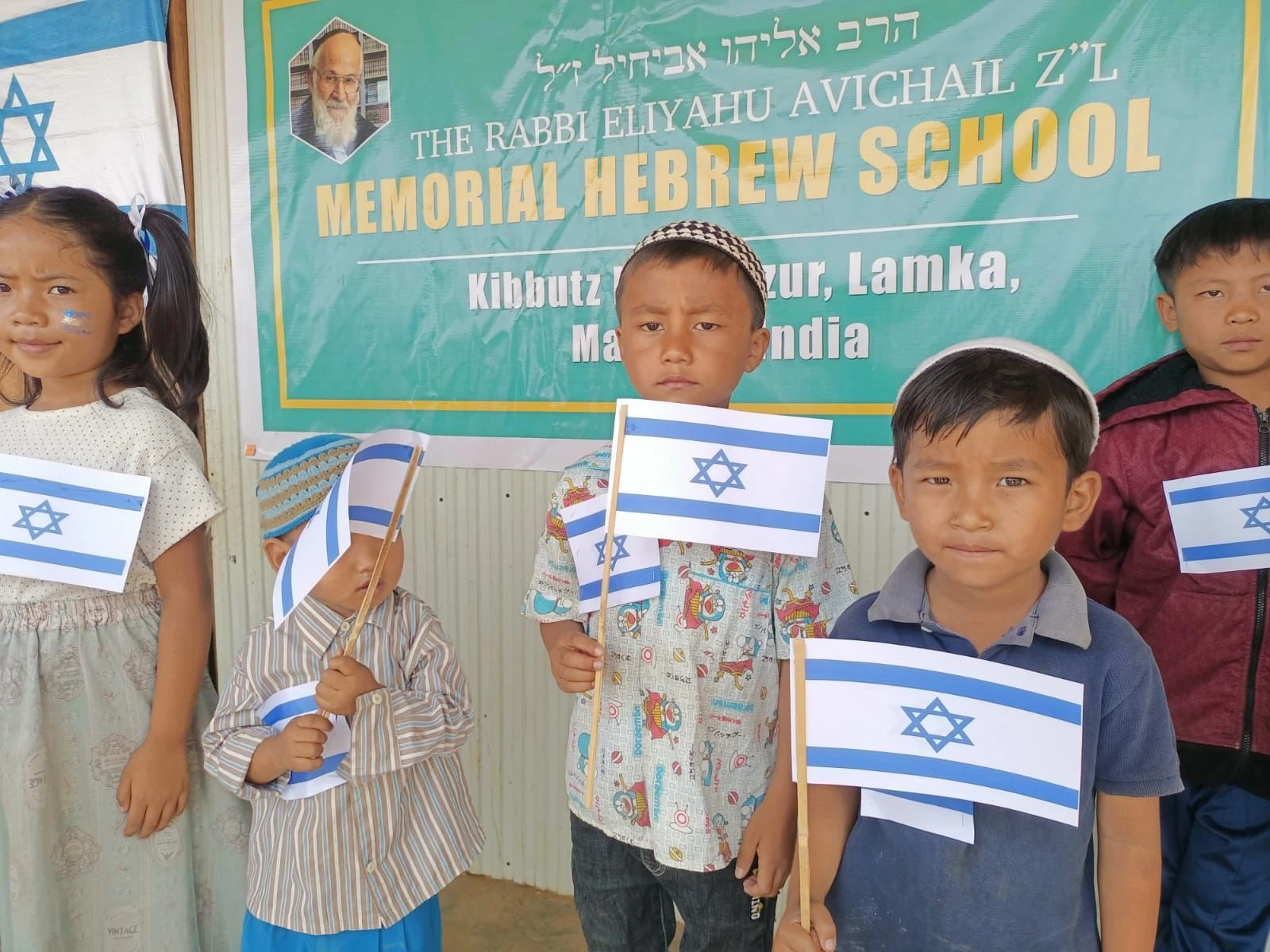
The recent developments in Israel concerning the Bnei Menashe community, one of the four Indian Jewish groups alongside the Cochin Jews from Kerala, the Bene Israel from Mumbai, and the Baghdadi Jews from Kolkata have been received warmly by the global Jewish diaspora as well as by many in India, especially in the northeastern states where the community resides. The Israeli government has announced its decision to bring back the remaining Bnei Menashe to Israel and reunite them with community members who migrated over the past three decades. Under the plan, the remaining 5,800 individuals are expected to make aliyah by 2030, with the first group of 1,200 slated to arrive as early as 2026. Prime Minister Benjamin Netanyahu has described this move as both a Zionist mission and a religious fulfilment
As a PhD student working on this community, it fascinates me to witness the curiosity the Bnei Menashe evoke among many Indians and Israelis. But this renewed interest raises a fundamental question, who are the Bnei Menashe?
Hailing from the northeastern Indian states of Manipur and Mizoram, the Bnei Menashe are a unique tribal community within Judaism, having undergone an extraordinary historical trajectory in their return to the Judaic fold and eventual migration to Israel. The community, as we refer to them today, is composed of three distinct tribal groups Kuki, Chin, and Mizo often collectively called as Zo. Though popularly believed to be part of the Ten “Lost Tribes” mentioned in the Old Testament, the Bnei Menashe trace their ancestry specifically to the tribe of Manasseh. This claim was long met with skepticism, until the early 2000s when Israel’s Chief Rabbinate accepted their lineage and allowed immigration contingent on formal Orthodox conversion. Migration to Israel began in 1989, initially mostly by youth on tourist visas. About 5,000 Bnei Menashe now live in Israel, with another 5,000 remaining in India.
Bnei Menashe and Judaism
Before the 1890s, these tribes practiced animistic traditions and were labelled “head hunters” by the British. Following British colonial expansion and the Anglo-Manipur War of 1891, Christian missionaries, especially Baptist and Presbyterian arrived in Mizoram and Manipur in 1894. While most missionary groups adopted a puritanical approach, the Welsh missionaries in 1908 offered a framework that incorporated prophecy, possession cults, and “speaking in tongues,” which sowed the seeds of revivalism within their millenarian theology.
A significant impact of missionary teachings was the effort to connect tribal practices with biblical Old Testament traditions. With a rich heritage of ritual sacrifices, the tribes found parallels between their customs and biblical narratives once exposed to missionary interpretation. This enabled them to reinterpret their rituals and identity, leading to the emergence of prophetic visions within the community. By 1936, members reported receiving revelations identifying themselves as part of Israel. In 1946 another influential vision, received by a Pentecostal pastor, proclaimed that for the “Zo” people to survive the coming Armageddon, they had to restore biblical religious practices and eventually return to the Promised Land (Israel). In 1951, revivalist leaders claimed that the Mizo’s were in fact “the lost tribes of Israel.”
The 1970s marked a turning point. The Manipur Jews Organization was established, largely Christian Zionist in outlook. Between 1972 and 1976, its leaders sought contact with established Jewish communities in Mumbai and Calcutta, as well as with Israeli consulates, seeking guidance on Jewish practice. Some travelled to Mumbai to learn Judaism, and in April 1976, during Passover, Judaism was formally embraced in the region. The first synagogue, Beth Shalom, was also built that same year in Churachandpur, Manipur. Meanwhile, in October 1974, a new group called the United Jews of North East India (UJNEI) formed, separating themselves from other Christian Zionist organizations.
Further developments followed, in 1979, Rabbi Eliyahu Avichail contacted the community, and in the subsequent years, several young men were brought to Jerusalem to study Judaism. Between 1989 and 2003, Rabbi Avichail facilitated the migration of around 850 members to Israel. From 2004 onwards, the organisation Shavei Israel, led by Michael Freund, took charge of aliyah efforts. In 2019, Degel Menashe was founded to support the integration of the community in Israel. Taken together, this represents one of the most dramatic religious transformations in modern history: in less than a century, the community transitioned from Animism to Christianity and then to Judaism.
Life After Migration to Israel
Informal migration began in 1989 with just nine young adults, and by the early 2000s hundreds had already undergone Giyur (formal Jewish conversion) in Israel. Today, nearly 4,500 have migrated, settling primarily in northern Israeli towns such as Kiryat Shmona, Ma’alot, Afula, and Migdal HaEmek, as well as in Judea and Samaria (West bank) and in Sderot in the south.
Despite their strong faith and resilience, the Bnei Menashe have faced numerous challenges in Israel. They are often misidentified as Thai workers, leading to stereotyping and even xenophobia, especially during COVID-19. Orthodox rabbinic conversion remains mandatory, sometimes creating tensions between ancestral identity and institutional validation. Yet it is important to note that none in the community expressed reluctance toward conversion, many emphasise its significance. Access to higher education is often hindered by financial barriers, Hebrew language difficulties, and limited institutional support.
One incident starkly exposed these vulnerabilities: the murder of Yoel Lhanghal, a young Bnei Menashe man, on October 7, 2022. Yoel had travelled to Kiryat Shmona from his home in Nof-Hagalil to meet a fellow immigrant when he became a victim of a violent altercation. His tragic death highlighted deep-rooted racism and systemic neglect. Israeli Knesset member Pnina Tamano-Shata, herself of Ethiopian origin, stressed that the case showed “how immigrant youth often lack institutional support and feel helpless; she criticized law enforcement and demanded justice for Yoel’s family”. A subsequent Knesset committee led by her recommended a dedicated five-year plan for the Bnei Menashe, including education, housing, and integration resources. This demonstrates how their identity negotiation is not only cultural, but also institutional and political.
Looking Ahead
Israel’s recent plan to bring the remaining Bnei Menashe to the country is commendable and answers the long-standing hopes of many who continue to face harsh circumstances in Manipur, including the ongoing Kuki–Meitei conflict, economic hardships, and limited opportunities in the region. However, precautions must be taken to prevent incidents like the murder of Yoel Lhanghal, rooted in racism and marginalization. As a vulnerable community, the Bnei Menashe require concentrated efforts to ensure integration into mainstream Israeli society, rather than being confined to northern settlements where many are currently placed. Their integration depends not only on policies and opportunities but also on perceptions and social acceptance.
But policy design matters. Bringing 5,800 people to Israel is not simply a logistical operation: it is a long-term social and political project. The government will need to ensure sustained investments in language education, higher education access, employment pathways, culturally competent social services, and anti-racism initiatives in host communities. Concentrating newcomers in a few towns risks both social isolation and the perpetuation of stereotypes; dispersal combined with strong local support and public-education campaigns about the Bnei Menashe’s history and contribution to Israeli society would help foster genuine integration and mutual acceptance.
To conclude, the government’s decision answers a long-standing request by many Bnei Menashe for return. It is a hopeful development, but hope alone is not enough. If Israel and the partners involved in facilitating the migration are serious about successful integration, the promise of aliyah must be matched by long-term resources, safeguards against racism, and a public conversation that welcomes the Bnei Menashe as full participants in the country’s civic and cultural life. Only then will this homecoming truly feel like belonging.