
Flydubai: Luck is not a security policy
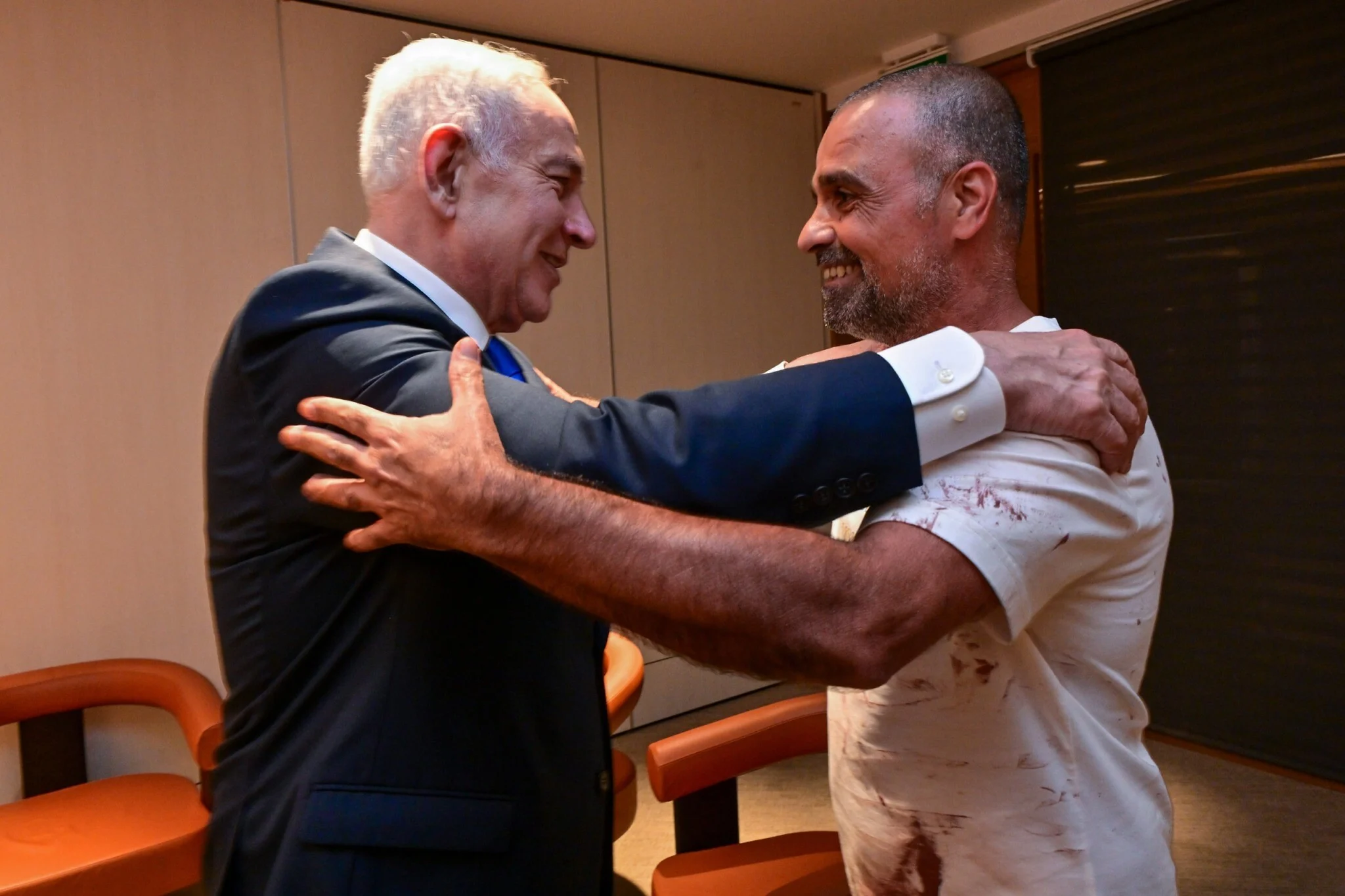
The flydubai plane was saved only because of the quick thinking of ordinary citizens, while the system failed. When authorities evade investigation and pass the blame, the next disaster is already waiting around the corner.
It has been several days since the flydubai flight from Dubai to Ben Gurion Airport, and I find myself watching the same familiar ritual once again. The prime minister waits at the terminal, embraces people, poses for photographs with the rescuers and salutes the heroes. The prime minister said that the passengers “prevented a major disaster.” He is right. They did prevent one. They did – not him, not the transportation minister, and not any of the people whose job it was to prevent such a disaster in the first place.
And amid all the celebration, the most important question disappeared: How the hell did this happen, and why?
So let us ask it. And let us begin with an unpleasant exercise: let us treat the incident as though it actually happened. If we do not, it will be filed away under “near miss.” And in that file, as we know all too well, no one is investigated and no one learns anything.
Wednesday morning. A Boeing carrying 174 passengers, most of them Israelis, including 27 children, is about an hour from landing. The copilot, an Omani citizen, takes the cockpit’s emergency axe, attacks the captain and sends the aircraft into a dive of thousands of meters. According to a report by the American network ABC, he told investigators that he had intended to crash the plane in Israel.
Inside the cabin, people are screaming. Parents clutch children who have no idea what is happening. Now imagine that no one happened to be standing near the cockpit door at that moment; that no one heard the shouting; that the door remained locked from the inside because the heroic Indian captain was unable to reach it.
A passenger plane packed with people crashes on a weekday morning into the heart of Jerusalem or Tel Aviv, into towers or crowded streets. One hundred and seventy-four passengers never make it home, and beneath them hundreds more are killed and tens of thousands injured. An entire country once again watches the images unfold on screens, for the second time in three years.
Our own September 11.
All of this was prevented by a series of circumstances that were entirely random. An Israeli passenger happened to be standing near the cockpit, waiting for her young daughter, who had gone to the restroom. She heard the shouting and called for help. The captain, Smit Machchhar, an Indian pilot who had been stabbed repeatedly, somehow managed to drag himself to the cockpit door and open it from the inside. Only then did three Israeli passengers enter, overpower the attacker and restrain him with the cables from the flight headphones.
The lives of 174 people depended on a little girl needing to use the bathroom and on the sheer willpower of a wounded pilot.
That is called luck.
And luck is not a security plan.
The larger failure revealed over the past two days is truly horrifying. It turns out that the co-pilot had been grounded by Oman’s airline because of his extremist views. And if that were not enough, this man – who was planning a mass-casualty attack – had entered Israel freely several times, without anyone apparently bothering to check him.
This was a monstrous failure that, by sheer miracle, did not end in catastrophe.
And now to the question of responsibility.
In recent days, we have heard that the Shin Bet will be investigated, and that the Mossad will also be investigated. They should be, of course. But they are supporting bodies. The direct responsibility for the safety of passengers flying on foreign airlines rests with the Ministry of Transport: with the head of its security division, above whom sits the director general, and above them the transportation minister.
They issue the approvals. They are supposed to ensure that the rules are followed. They are also responsible for the foreign crews operating flights under wet-lease arrangements for El Al, Israir and Arkia.
There is a name for this. And there is an address.
The Shin Bet, which is responsible for securing Israeli airlines, has for a long time prohibited, for security reasons, flights by Israeli airlines to and from the Emirates. In other words, what was considered too dangerous for El Al was apparently safe enough for 174 passengers, most of them Israelis, traveling aboard a foreign airline.
Who approved it? Who checked? Who signed off?
And one more small detail: before the repatriation flight from Saudi Arabia, according to reports, the names of the crew members were submitted for approval by Israeli intelligence authorities. In other words, checks are possible.
So why only after one pilot stabbed another, rather than before?
Ask the transportation minister. Ask the prime minister, who is celebrating a miracle without understanding that, in doing so, he may already be setting the stage for the next disaster. Ask the head of the Shin Bet, who, rather than immersing himself in an intensive investigation, is photographed studying Torah in a tent.
It is appalling.
I remember Rabin after the failed attempt to rescue Nachshon Wachsman. He did not go looking for scapegoats or shift responsibility onto the army chief of staff. He stood before the cameras and said: “I am responsible.”
I was there. It was one of only two times I saw him shed a tear.
Responsibility is something you take – not something you pose for photographs with.
Simchat Torah was the day of the worst massacre suffered by the Jewish people since the Holocaust. It was the day when all of us should have been out in the streets, demanding a commission of inquiry and calling for every person responsible to be sent home.
The fact that nothing is being investigated is precisely why another horrific disaster almost happened here.
Because when you do not investigate, you do not fix.
And the corrupt culture that brought Netanyahu to appoint loyalists at the expense of professionals continues to roll relentlessly toward the next disaster.
This is a direct continuation of the failure of October 7. The same complacency. The same flawed assumptions. And the same pattern in which civilians rescue what the state has abandoned, while the leadership rushes to take the credit.
Israel’s systems are collapsing before our eyes. There is no management, no execution, and no one willing to take responsibility. Every institution points to the one next to it; every minister points to the official beneath him. And in the end, it becomes clear that the only thing that worked – on October 7, just as in the attempted hijacking and crash of the aircraft – was the quick thinking of ordinary citizens who happened, by chance, to be in the right place at the right time.
And if we do not investigate this near-disaster, just as we have failed to investigate the October 7 catastrophe, the only thing we can know for certain is that, before long, we will wake up to yet another.