Luiz Sayão: The aesthetics of terror and the light of the Lord
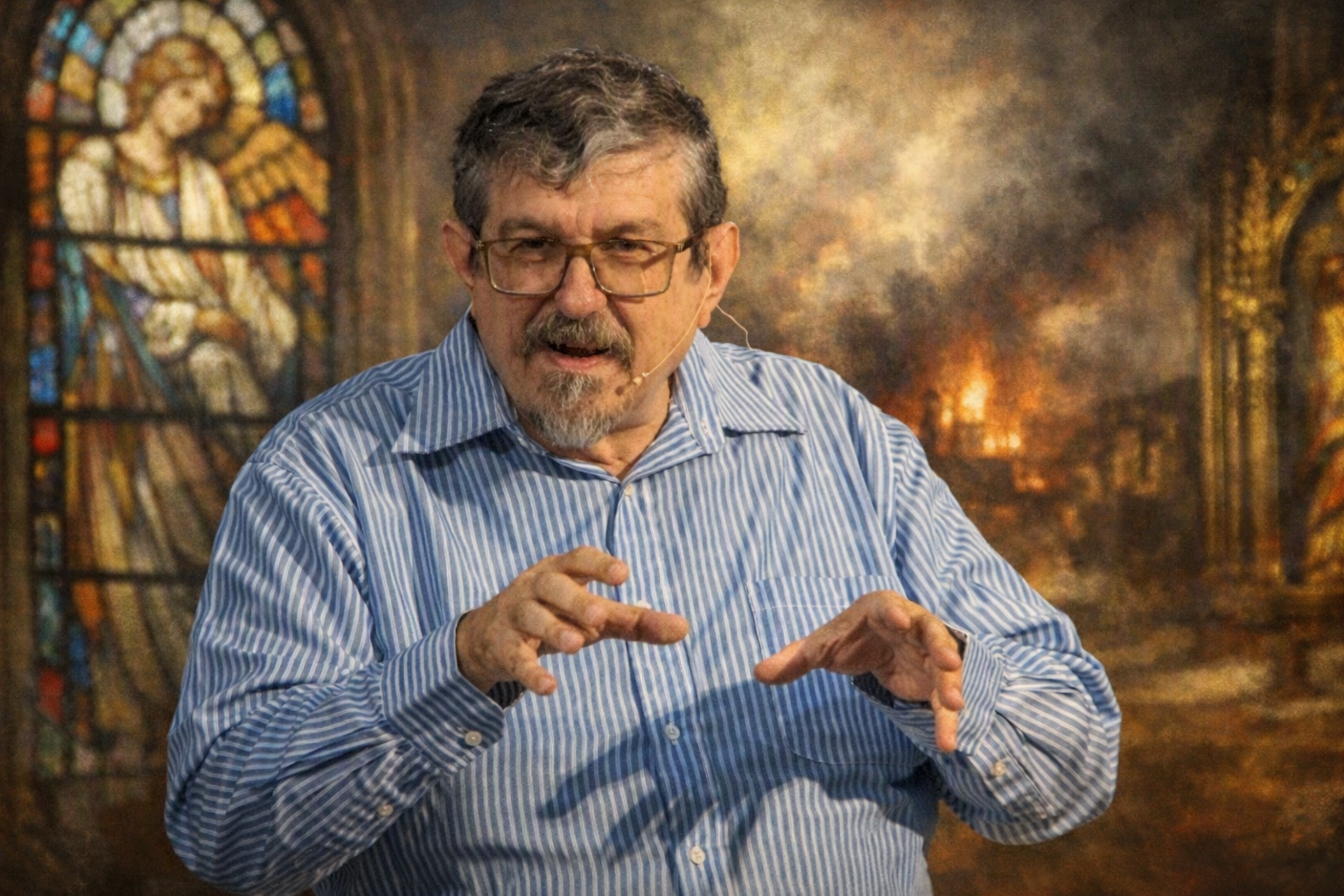
Luiz Sayão — one of Brazil’s foremost theologians, Hebraists, and linguists — leads us into a profound reflection on how evil ideologies transform aesthetics into terror, and on how the light of the Eternal, revealed through sacred art, renews hope, offering deep insights into faith, art, and the human condition.
The cruel Hamas attack in Israel, with its uniquely monstrous profile, was terrifying. What drew attention was the aesthetic element: the art of death. We witnessed horrors filmed and broadcast; yet the unexpected was that the terrorists destroyed the art gallery of Kibbutz Be’eri. Why? What meaning lies in that?
The power of art goes beyond explanation. Its relationship with the sacred and with aesthetics demands careful reflection. Every evil ideology—religious or not—turns beauty into the gateway to hell. Nazism was born of Hitler’s aesthetic obsession.
Peter Cohen’s documentary Architecture of Destruction shows how the “aesthetic dream” became the greatest humanitarian nightmare in history.
Jihadist acts of aesthetic destruction are well known. This “aesthetic-ethical-spiritual” sickness of the soul, with its frenzied multiplication of diseased images, seems to have unleashed the deepest forces of chaos across the world. A horror indeed.
When we read the Tanakh, we see that God created everything good and beautiful (tôv – Genesis 1:31). The Eternal is the Lord of all art! This is evident in Exodus 31:1–7, where Bezalel and Oholiab are filled with the Spirit to craft the Tabernacle with artistry. But didn’t God forbid carved images? The restriction concerned idolatry and the destructive misuse of art. God not only commanded the making of the Tabernacle (Exodus 25–40), but also of two cherubim for the Ark.

Thus, we see spatial aesthetics in Solomon’s Temple, elaborate music in the Psalms, and richly wrought poetry. Even prophetic enactments (Ezekiel) resemble theatrical performance. Spirituality without art is a body without life. Art that obliterates the sacred is death. Every aesthetics without ethics deserves prophetic rebuke.
Therefore, our greatest desire must be to contemplate the beauty and goodness of the Eternal in the sanctuary (Psalm 27:4). It is fascinating to see how Israel’s liberation from Pharaoh’s power is crowned with the aesthetic theophany of the Eternal. In a redemptive victory against evil—external (Pharaoh) and internal (the golden calf)—Moses longs to see the glory of HaShem. The text is striking: the Eternal replies, “I will cause all my BEAUTY to pass before you, and I will proclaim my name, YHWH.” In Hebrew, tôv means both beauty and goodness. All I need is beauty and the NAME. I will always love the beautiful, the good, and the holy.
Gottlieb, Chagall, and Heschel join this chorus. Without the aesthetics of love, only terror remains.
Source: Luiz Sayão