
Israel as a global geostrategic axis
Lula’s defeat is a victory for Brazil-Israel relations
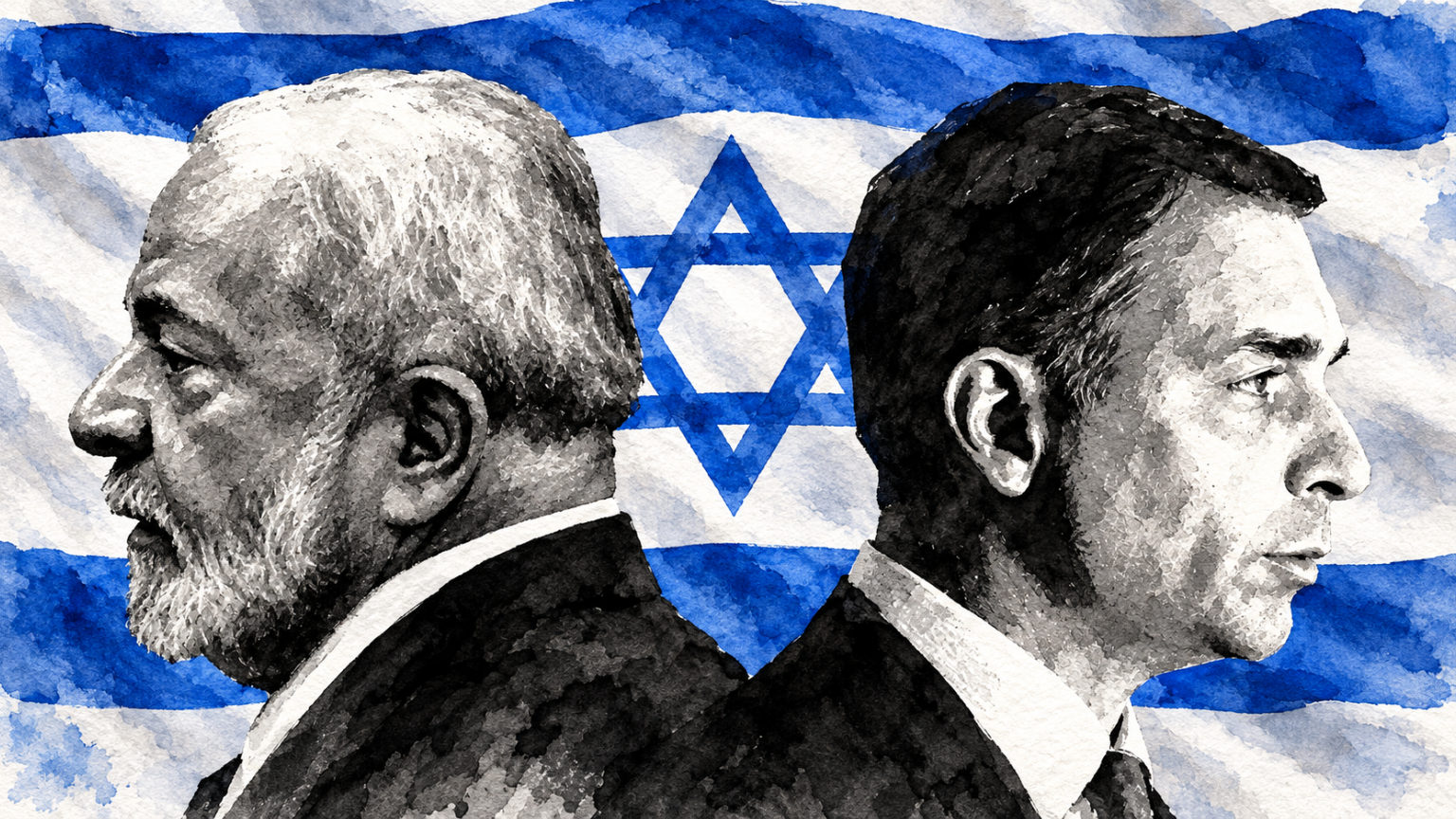
Lula (Workers' Party) and Flávio Bolsonaro (Liberal Party) in the race for the Brazilian presidency (AI-generated image)
This article argues that a defeat for Luiz Inácio Lula da Silva in the October 25, 2026, runoff would give Brazil and Israel the chance to rebuild the historic friendship between the two nations and their bilateral ties. Lula has not yet been defeated. In the first round, on October 4, Flávio Bolsonaro took 47.03 percent and Lula 45.16 percent, the narrowest gap between the top two finishers since Brazil’s return to democracy.
Foreign policy rarely decides elections. Voters go to the polls thinking about prices, safety and wages. Still, the relationship with Israel works as a fault line, because it condenses the contest between two ideas of Brazil. And one figure deserves the attention of any careful reader: among evangelicals, Bolsonaro polls at 62 percent to Lula’s 29 percent. Brazilian evangelicals are the country’s strongest supporters of Israel, a love that transcends geography. The “moral geography of the vote” and the “moral geography of diplomacy” thus coincide more than political scientists tend to admit.
Under Lula, Brazil has played one of the most shameful roles in the history of its foreign relations. It has become a militant for the “Palestinian cause,” an ally of Iran’s terrorist regime and a collaborator of Russia in its invasion of Ukraine, whose victim Lula has gone so far as to blame for the invasion of its own territory.
Lula represents the collapse of a worldview that, for four years, treated the Foreign Ministry (Itamaraty) not as an instrument for defending national interests but as a platform for anti-Western ideology. At the center of this diplomatic shipwreck lies the relationship with Israel. The Jewish state declared him persona non grata, the first time a Brazilian head of state has received that designation.
To grasp the scale of the damage, one must dissect the anatomy of the disaster. Brazilian foreign policy, hostage to a retrograde moralism that invariably confuses the defense of human rights with apologia for terrorism, has isolated the country from its most important partners in the Middle East. Rhetorically equating the State of Israel with terrorist organizations such as Hamas was not a diplomatic slip. It was the pure expression of ideological subservience. Brazil abandoned its strategic policy to align itself with dictatorial regimes in international forums.
Behind the scenes, the rupture with Jerusalem cost Brazil the freezing of vital cooperation. Agribusiness, the backbone of the trade balance, saw doors close in markets allied with Israel. The defense industry lost access to cutting-edge technology, and intelligence cooperation, essential to fighting terrorism and transnational organized crime, was reduced to ashes. There is no moral neutrality in equating a liberal democracy in the Middle East with the Nazi regime.
A victory for Flávio Bolsonaro in the 2026 election would therefore serve as an inexorable course correction. It would mean a partnership built on technological innovation, cybersecurity, water management and aerospace defense. A responsible pragmatism, recovered from the ashes of ideological adventurism, demands the immediate restoration of ties.
Lula’s defeat would thus seal the end of a dark era that forged closer ties with jihadist and autocratic regimes accused of crimes against humanity. A victory for Brazil-Israel relations is, ultimately, a victory for Brazil itself.
Shema Yisrael שְׁמַע יִשְׂרָאֵל
Related Topics
Related Posts