Solicitor & foreign policy adviser
Mahmood’s £10m sermon on selective virtue
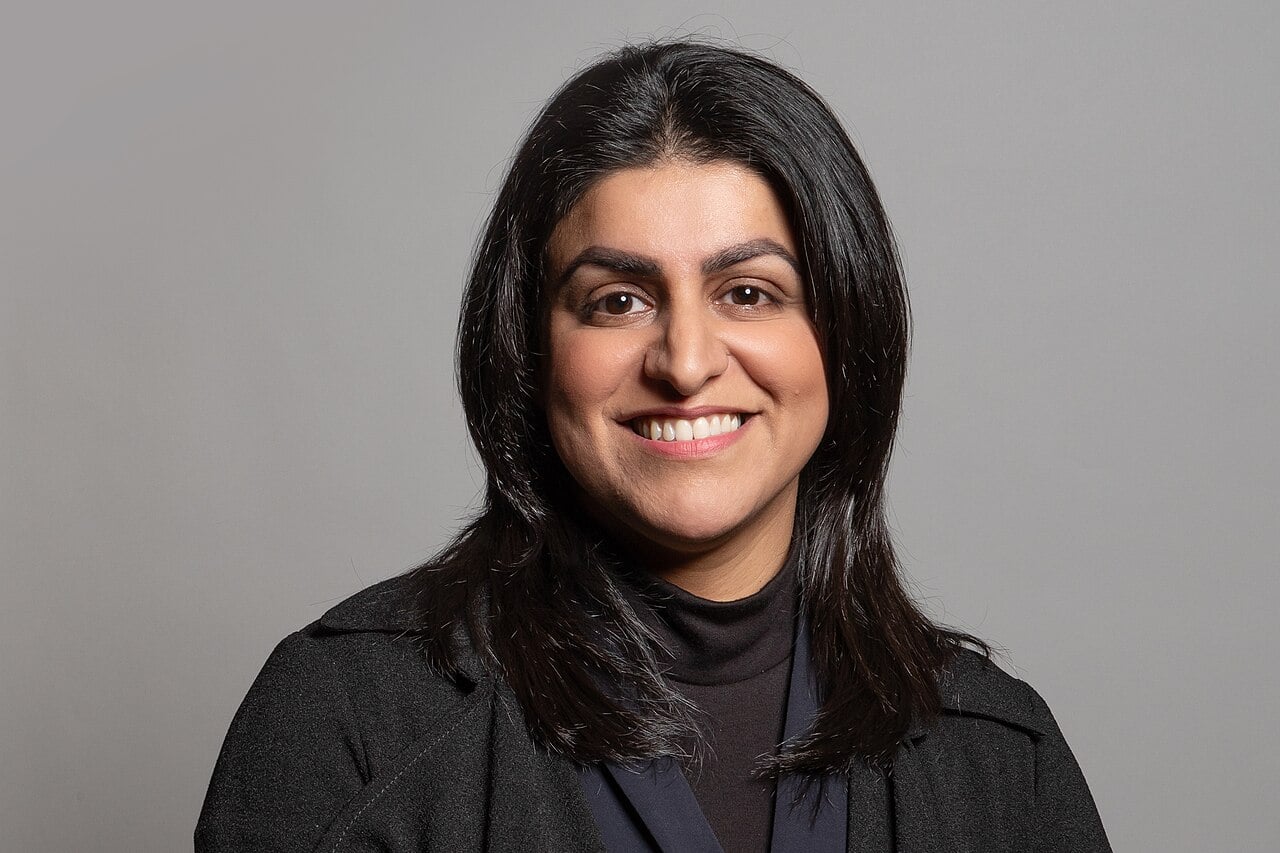
Shabana Mahmood Official Portrait (Photo by Richard Townshend - Wikipedia Commons)
When the British Home Secretary confuses her ministerial pulpit with a Friday sermon, something has gone wrong in the secular order. Shabana Mahmood’s £10 million pledge to “protect Muslim communities” was pitched as inclusivity; in fact, it was identity politics at public expense—another moral subsidy for one creed under the pretext of national unity. In her language of compassion lies a subtle act of division: the state taking sides, declaring that certain fears count more than others.
The announcement
The Home Office, with all the solemnity of government virtue, announced that Muslim communities have “endured unacceptable hate and threats of violence,” and that “an attack on any community is an attack on us all.” What followed was not a general pledge to secure all British citizens equally but a targeted allocation, £10 million specifically for Muslim institutions. The press release came wrapped in inclusivity but delivered exclusivity.
It might have passed without debate had it not been for one dissenting voice in public life—Ben Habib, leader of Advance UK and one of the few politicians who still speak the language of nationhood. His reply to Mahmood’s post on X cut through the bureaucratic sanctimony with the clarity of someone not afraid of stating what is constitutionally obvious.
An inappropriate post from Shabana Mahmood revealing her bias. Freedom of worship applies to everyone. To overtly identify as a Muslim and make the case for Muslims but not people of other faiths, is wrong. Bear in mind this is constitutionally and culturally a Christian country. The Union flag is a Christian flag. As Home Secretary you should reinforce our Christian roots and values. You have never once spoken of the importance of Christianity in the United Kingdom.
Habib was instantly attacked, of course, for daring to invoke the words “Christian” and “country” in the same sentence; in a sign of how far the political class has drifted from its own foundations. Yet his statement distilled what the rest of Westminster was too timid to articulate: that freedom of religion is meant to protect faith from the state, not empower the state to act as a denominational sponsor.
The illusion of inclusivity
Mahmood’s defense of her policy—that “an attack on any community is an attack on us all”—sounds humane but collapses on inspection. If an attack on any community is indeed an attack on all, why single out one? Why not secure every synagogue, church, gurdwara, and temple under the same banner? The problem is not the desire to protect Muslims from hate crimes, which is proper and necessary; it is the creation of a moral hierarchy through fiscal preference. The state’s role is to ensure equal protection, not to dispense safety allowances by identity category.
Such targeted funding inevitably becomes political theater; it is a message to specific constituencies rather than a coherent security strategy. There are few votes in defending synagogues, but entire boroughs to win by appeasing Muslim voters. Mahmood’s gesture, though wrapped in the rhetoric of compassion, fits perfectly into Labour’s pattern of constituency-specific appeasement: cultural patronage disguised as equality.
A question of neutrality
In a truly liberal polity, neutrality is sacred. The government does not express allegiance to any creed. Yet under Mahmood’s Home Office, neutrality has been replaced by selective empathy. The state that once saw faith as a private matter now performs religion as a public ritual, except the faith being performed is never Britain’s own.
Habib’s reminder that the Union Flag itself carries the cross of St George, St Andrew, and St Patrick was not chauvinism but historical accuracy. The United Kingdom remains constitutionally Christian; its monarchy is formally the Defender of the Faith; its law is rooted in common-law morality shaped by that tradition. For a home secretary to posture as the tribune of Muslim victimhood while ignoring the Christian roots of the country she governs is not tolerance. It is denial.
The selective conscience
The irony, of course, is that while the Home Office finds millions to protect mosques, it leaves synagogues to raise private funds for their own security. Jewish communities, which face the highest per-capita threat level of any religious minority in Britain, have received little comparable political theatre. After the Hamas pogrom of October 7 and the eruption of anti-Jewish riots in London and Manchester, no minister pledged a £10 million “defence fund” for Jews. When the hate is anti-Semitic, the Home Office prefers silence to solidarity.
The asymmetry is glaring. Mahmood’s policy speaks of unity but practises segregation. It tells Muslims they are uniquely vulnerable and tells everyone else their safety is a footnote. In doing so, it deepens the very divisions it pretends to heal. Britain does not need a ministry of religious balance sheets; it needs a government confident enough to defend all citizens under one standard: the law.
The broader malaise
This episode also exposes something larger: the hollowing of Britain’s secular liberal tradition by a politics of apology. A generation of politicians raised on diversity training now mistakes impartiality for indifference. They believe the state must emote rather than govern, atone rather than administer. What Mahmood offered was not policy but penance, a confession of national guilt wrapped in fiscal compassion.
To the ordinary taxpayer — Christian, Jewish, atheist, or simply British — the message is unmistakable: the government divides its citizens into categories of grievance, and only some categories receive cash. In that calculus, the moral value of a citizen depends not on shared belonging but on identity utility.
The price of moral vanity
Ben Habib stands almost alone in calling this out. His words may sound unfashionable to London’s progressive ear, but they express the sentiment of a silent majority who still believe that equality under the law is not a negotiable concept. A government that truly valued cohesion would protect its people equally, without reference to creed, constituency, or political usefulness. Mahmood’s £10 million gesture is not an act of national solidarity; it is the purchase of communal loyalty at the expense of civic unity.
Faith doesn’t need government protection — only governments that have lost faith think it does.
Related Topics