Jewish values, leadership, and honest conversation
MAiD, Halakhah, and the Bedside
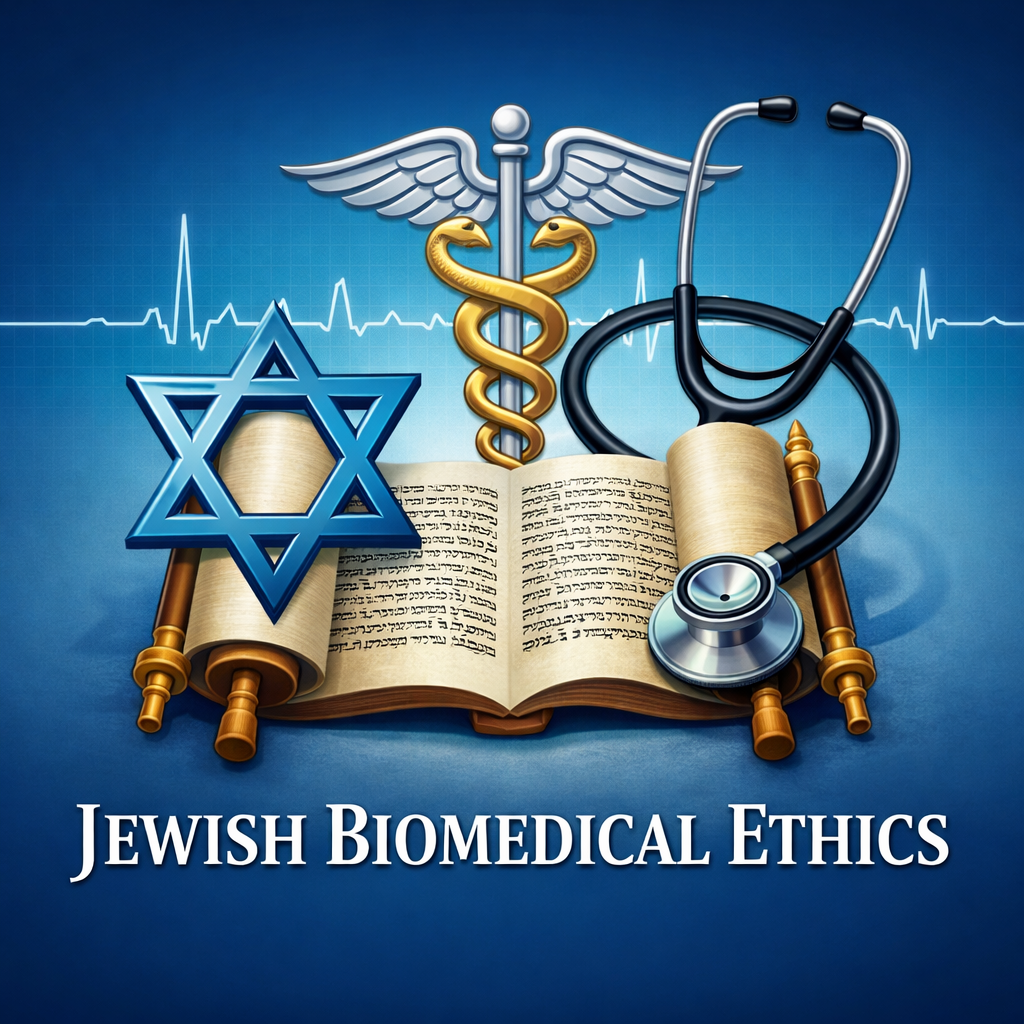
Jewish Biomedical Ethics created by ChatGPT
There is a moment in Jewish life when law feels clear — and life does not.
Canada’s ongoing expansion of Medical Assistance in Dying (MAiD) is one of those moments.
More than 76,000 Canadians have died through MAiD, and roughly 2.5% of deaths nationally now occur this way. What was once extraordinary has become normalized medical practice. Further expansion, including eligibility for mental illness as a sole underlying condition, continues to be debated.
For rabbis, physicians, and families, these questions rarely begin as policy debates. They begin with suffering.
They begin at the bedside.
And Jewish tradition has something to say there — even when what it says is complicated.
Sinai and the Sanctity of Life
At Sinai, the Jewish people receive the Ten Commandments — the moral foundation of Jewish civilization.
Among them is the commandment:
“Lo tirtzach — You shall not murder.” (Exodus 20:13)
Jewish tradition understands this commandment as more than a prohibition against violence. It is a statement about the sacredness of human life itself. Human beings are created “b’tzelem Elohim” — in the image of God (Genesis 1:27), and life therefore does not belong entirely to us.
That conviction shapes Jewish moral resistance to deliberately ending human life.
Classical Jewish law states clearly:
“Ha-goses harei hu k’chai l’chol devarav”
“A dying person is considered fully alive in every respect.”
(Shulchan Arukh, Yoreh De’ah 339)
Even in the final moments of life, dignity and sanctity remain intact.
From a halakhic perspective, MAiD — understood as a direct act to end life — cannot be endorsed.
But Jewish tradition does not stop with prohibition.
Removing Obstacles to Death
In one of the most striking passages in Jewish medical ethics, the Rema writes:
“Im yesh davar she-me’akev etziat ha-nefesh… mutar lehasiro”
“If there is something preventing the soul from departing… it may be removed.”
(Yoreh De’ah 339:1)
This teaching, rooted in the Talmudic story of Rabbi Hanina ben Teradyon (Avodah Zarah 18a), establishes a crucial distinction between causing death and allowing death.
Modern Jewish medical ethics builds on this distinction.
Judaism permits:
- hospice care
- aggressive pain management
- withholding extraordinary treatment
- allowing natural death
The goal is not to prolong suffering, and not to hasten death — but to preserve dignity while honoring life.
Jewish law rejects both extremes: “do everything” and “end life.”
Instead, it insists on compassion guided by moral restraint.
The Bedside Is Never Individual
Jewish ethics also insists that suffering is never purely individual.
The mitzvot surrounding illness and death are communal obligations:
Bikkur cholim — visiting the sick
Gemilut chasadim — acts of lovingkindness
Kavod habriyot — human dignity
Nichum aveilim — comforting mourners
The Talmud teaches:
“Mah Hu mevaker cholim, af atah mevaker cholim.”
“Just as God visits the sick, so must you visit the sick.” (Sotah 14a)
End-of-life suffering calls forth presence.
Not abandonment.
Not judgment.
Presence.
Halakhah and Pastoral Reality
This is where the moral tension becomes real.
As a rabbi, I may be obligated to say that Jewish law does not permit MAiD as a positive act.
But pastoral care requires something else as well.
If a person, after profound suffering and reflection, chooses MAiD, Jewish tradition does not abandon them. The obligation of compassion does not disappear when moral disagreement remains.
The covenant at Sinai commands both moral boundaries and human responsibility.
We must hold both.
Recently, at Beth Tzedec Congregation in Toronto, we hosted a public panel on MAiD with a physician, a lawyer, and a rabbi. What became clear in that conversation was how deeply this issue resists simple answers.
MAiD is not primarily about law or ideology.
It is about vulnerability.
It is about fear.
It is about dignity.
It is about care.
A Jewish Voice in Canada’s MAiD Debate
Public debate about MAiD often collapses into slogans: autonomy versus sanctity, freedom versus prohibition.
Jewish tradition refuses that simplicity.
It insists simultaneously that:
- life is sacred,
- suffering is real,
- dignity matters,
- community matters,
- and moral clarity is rarely easy.
That complexity is not weakness.
It is covenantal responsibility.
At Sinai, the Jewish people learned that holiness is not found only in belief or prayer, but in how we care for human life — especially when it is most vulnerable.
That lesson remains as urgent today in hospital rooms as it was in the wilderness.
And it may be the most important contribution Jewish tradition can offer to Canada’s conversation about MAiD.
Related Topics
Related Posts