
Past President, Hadassah Oakland Ruach Chapter, Hadassah Writers' Circle
Make Challah in a Bag Your New Year’s Resolution
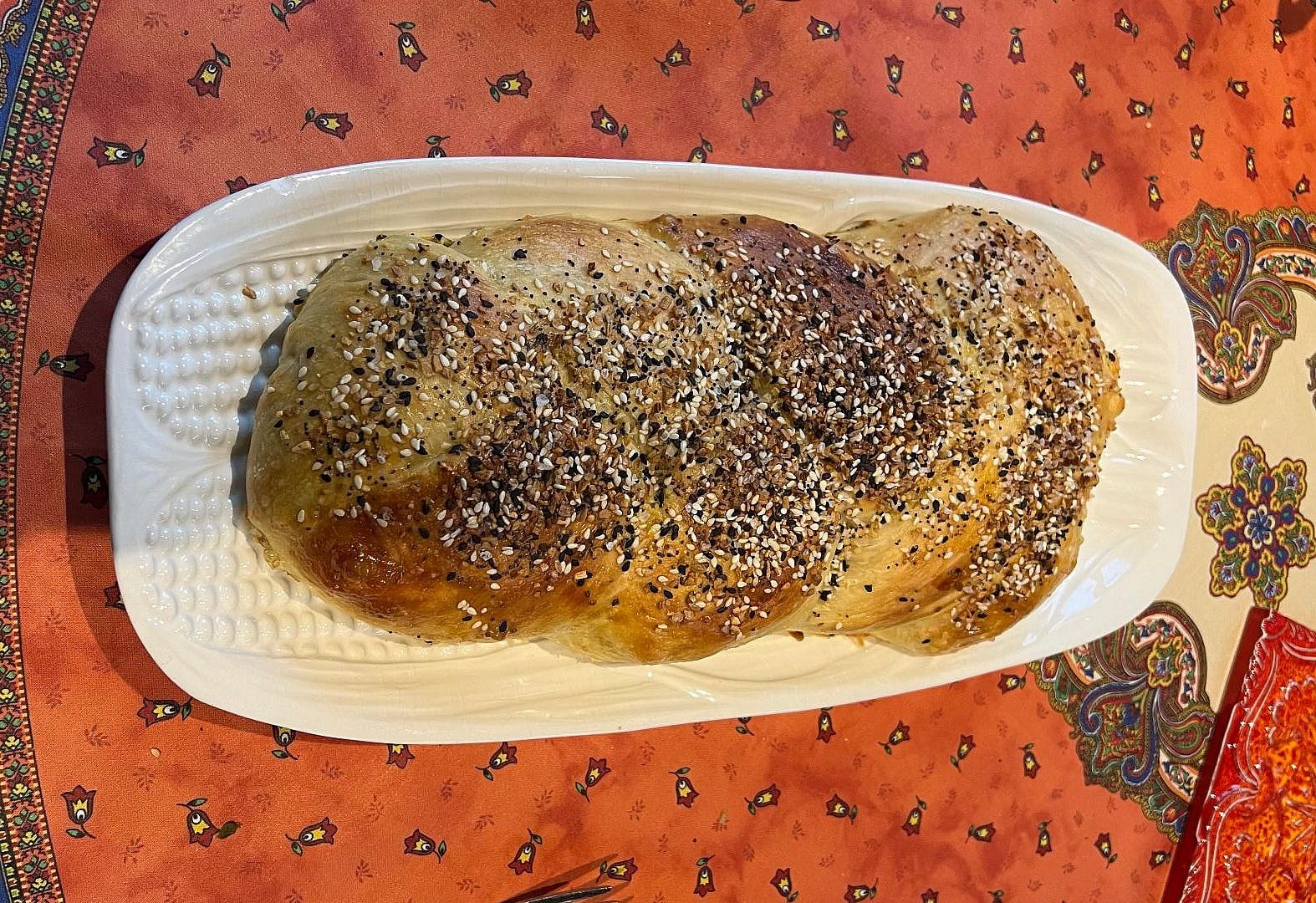
Challah-in-a-Bag finished product. Photo courtesy of the author Faith Kramer.
As the secular year ends and New Year’s looms, it is traditional to make resolutions for the coming year. One resolution that will add meaning in 2026 is learning how to bake challah (or making it more often) for Shabbat and holidays. This recipe for “challah in a bag,” developed specifically for a Hadassah workshop, reduces muss and fuss by mixing and kneading the dough in a plastic bag. The technique makes it even easier to accomplish this delicious mitzvah.
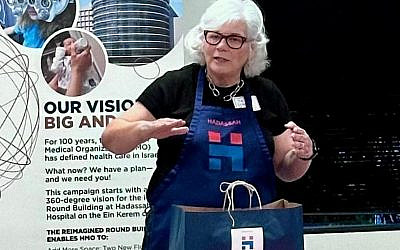
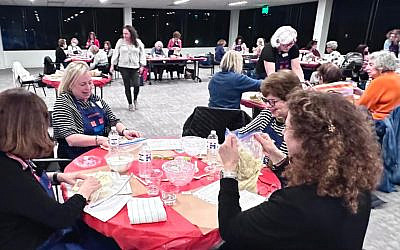
The recipe, adapted from one in my 52 Shabbats: Friday Night Dinners Inspired by a Global Jewish Kitchen cookbook, was first used at a challah-making event for the Marin (California) Chapter of Hadassah. Almost 40 Hadassah members and friends mixed and kneaded challah in one-gallon plastic bags and then shaped the dough into foil pans, which they brought home to bake.
Veteran challah makers helped novices. For some, it was the first time they had ever made and braided this familiar Shabbat bread. For others, making challah was like a visit with an old friend, comfortable and comforting but with a new twist.
Below is my recipe for Challah in a Bag. (I also give directions on how to traditionally mix and knead the bread in the notes below the recipe.) Challah in a Bag is a great recipe to make with kids of all ages since it contains an element of squishy fun without the messy hands.
Challah in a Bag
Makes 1 large loaf
3 Tbsps. vegetable oil plus as needed
3 large eggs, divided
¾ cup water plus as needed
3-4 cups bread flour
1 ½ tsp. salt
2 Tbsps. sugar
1 packet instant yeast (2 ¼ tsps.) (See notes)
Topping of choice – everything bagel mix, sesame seeds, coarse salt, etc.
Pour oil into a sturdy 1-gallon plastic bag with zip lock seal (I use the heavier freezer bag). Seal well and shake or rub to coat. (Whenever instructions say to seal bag, always make sure air is pressed out of bag and seal is secure.)
Crack 2 of the eggs into the bag with the oil. Seal the bag. Shake or rub to thoroughly mix. Pour 3/4 cup water into bag. Seal. Shake until well blended.
Open bag and add 3 cups bread flour, salt, sugar and yeast. Seal. Shake, rub and/or press to thoroughly combine liquid with dry ingredients.
Open bag again. Feel dough. If it is either very sticky or dry, add flour or water accordingly by the tablespoon. Seal bag. Mix again. The dough should be tacky. It is better for the dough to be a bit wet than too dry.
Knead dough in the sealed bag (if not properly sealed, the dough may blow out of the bag). Lay bag down flat and push and pull dough or hold between hands and knead for 8-12 minutes. (Dough may stick to plastic.) Open bag to check if dough is ready. Pinching a bit of dough should feel like pinching your ear lobe.
Seal bag. Leave dough to rise until double in size — about 30-45 minutes (timing varies).
Once the dough has doubled, sprinkle a Tbsps. of flour on work surface and sprinkle a Tbsps. of flour into the bag. Knead dough in sealed bag and work the flour around to help loosen dough from plastic. Pull dough out (It may come out in pieces). Gather up and place on floured surface. Correct for too wet or dry dough. Knead 2 minutes. Dough should be slightly tacky.
Cut dough into 3 equal pieces. Roll each into a ball and then roll each ball between hands or on work surface to make even ropes about 14-16 inches long (all about the same width and length). If dough is uncooperative, let sit for 5-10 minutes and try again.
Line a baking sheet with parchment paper. Use a pastry brush or crumpled paper towel to lightly grease the paper with oil.
To braid, place the 3 ropes parallel to each other with ends of ropes toward you. Pinch them together on one end. Pick up the rope on your right and pass it over the center rope. The rope that started on the right is the new center rope.
Take the rope on the left. Pass it over the center one. (The original center is on the right; the original right is on the left; and the original left is now the center.) Repeat to continue braiding. Braid should not be too tight or too loose, but it should keep its shape and have room to rise. Pinch the ropes together at the other end. Tuck both ends underneath the loaf.
Place braided loaf on pan. Cover with a kitchen towel and let rise until doubled in size and a knuckle firmly pressed into the loaf leaves a depression that fills slowly and incompletely (about 30-60 minutes, timing varies).
About 20 minutes before second rise is complete, heat oven to 350 degrees F. Beat third egg and brush over top and sides of challah. Sprinkle with topping if using.
Place on middle rack in oven and bake 10 minutes. Quickly brush any exposed white areas of crust with egg and sprinkle additional topping on the newly egg-washed areas.
Continue baking about 20-25 minutes more, rotating in oven if needed, until top is golden and bottom is browned, and the bread sounds hollow when tapped on bottom. An instant-read thermometer should register 190 degrees. Let cool on pan for 5 minutes and then transfer to a wire rack. Cool completely and serve.
Challah Not in a Bag Recipe
Combine 2 Tbsps. oil with 2 beaten eggs and ¾ cup water in a large bowl. Mix well. Stir in dry ingredients, including yeast. Mix with a sturdy spoon or hands until a rough, shaggy dough balls forms, adding flour or water as described above. Turn dough out onto floured surface, flour or oil hands and knead for 8-12 minutes. Put dough into a clean, oiled bowl and turn to coat. Cover with kitchen towel. Let rise as above. Once doubled in size, continue as above.
Notes: To make two smaller loaves, divide into 6 balls instead of 3 and make ropes about 12 inches long. Do not double the recipe (it won’t fit in the bag). Only use instant yeast, also called fast or quick-rising yeast. Be sure it well within expiration date.
Related Topics