Making Yom Kippur count
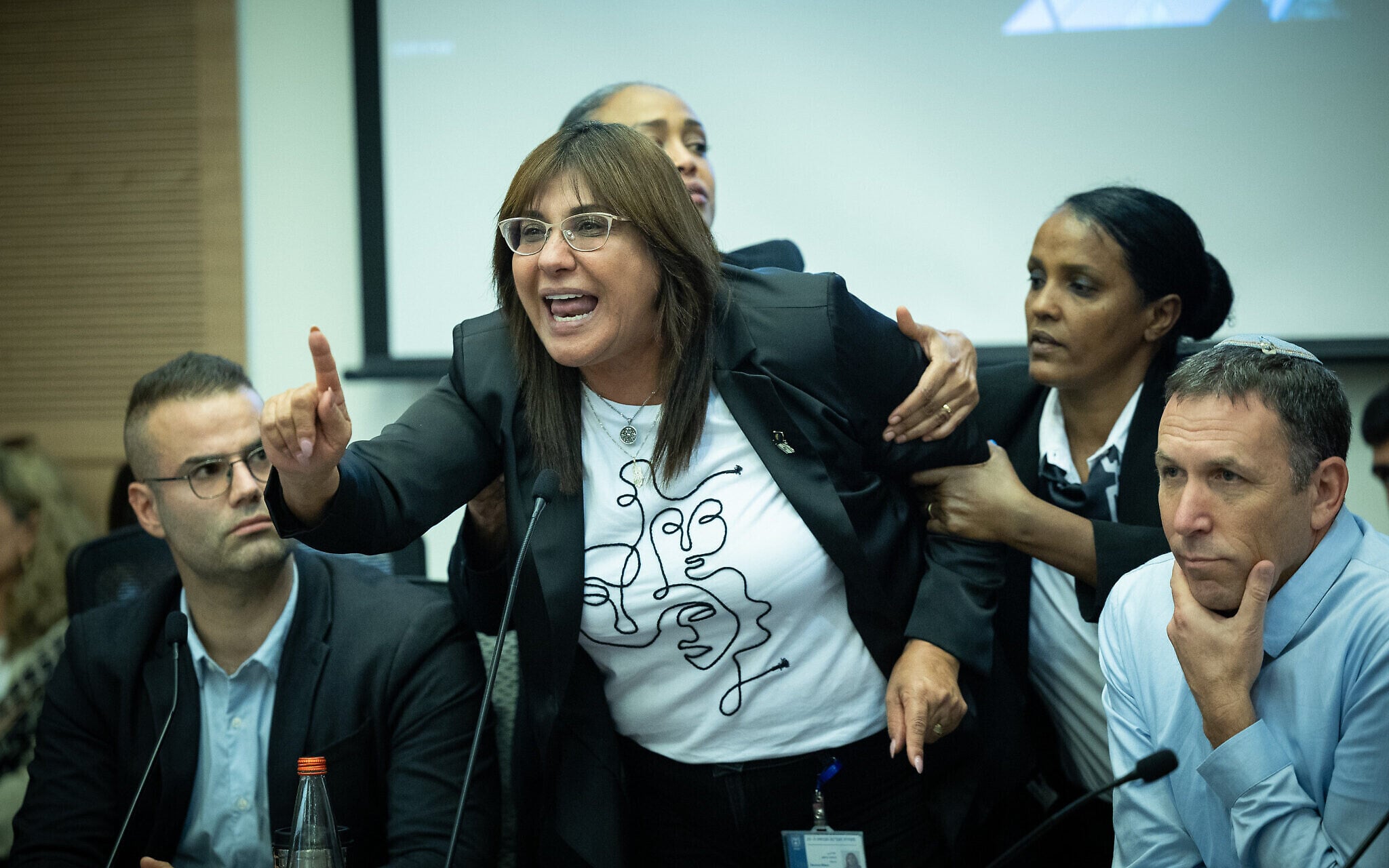
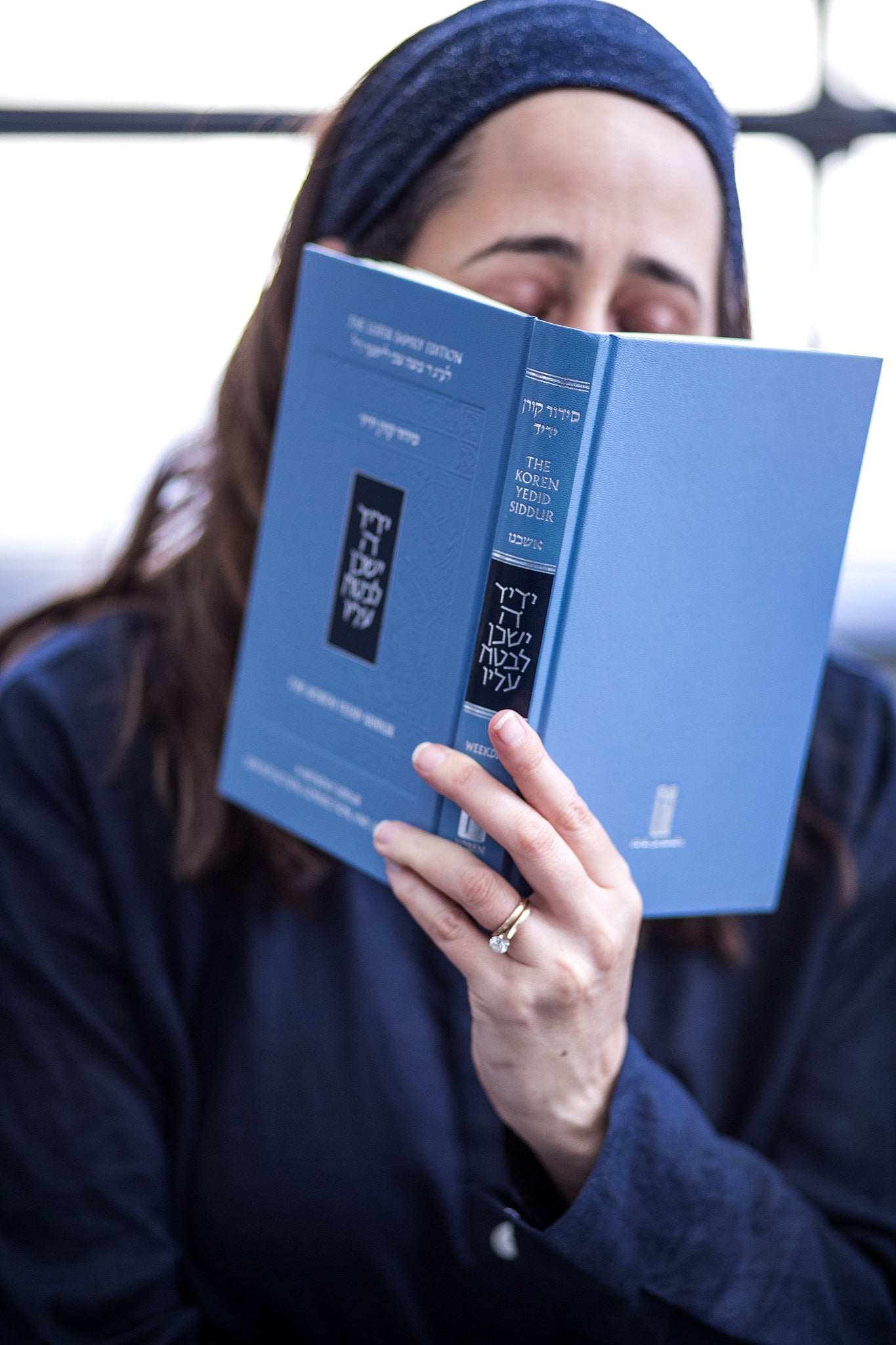
By the time we read the Haftara on Yom Kippur morning, we are well into our fast. Some of us may be home in bed just hoping to make it through, others are wrangling children, but all those able to read it, whether in shul or on their own, will find something that is (in my opinion) wonderful, painful, and relevant.
We are so careful on Yom Kippur. We don’t eat or drink. We don’t wear leather shoes and we aren’t intimate with our spouses. We wear white to show our intent to be good. We beat our chests and confess our sins.
We do the things we are required to do.
But comes Isaiah in the middle of our chest beating to say: “Is this the fast I desire?“
Wait, what?
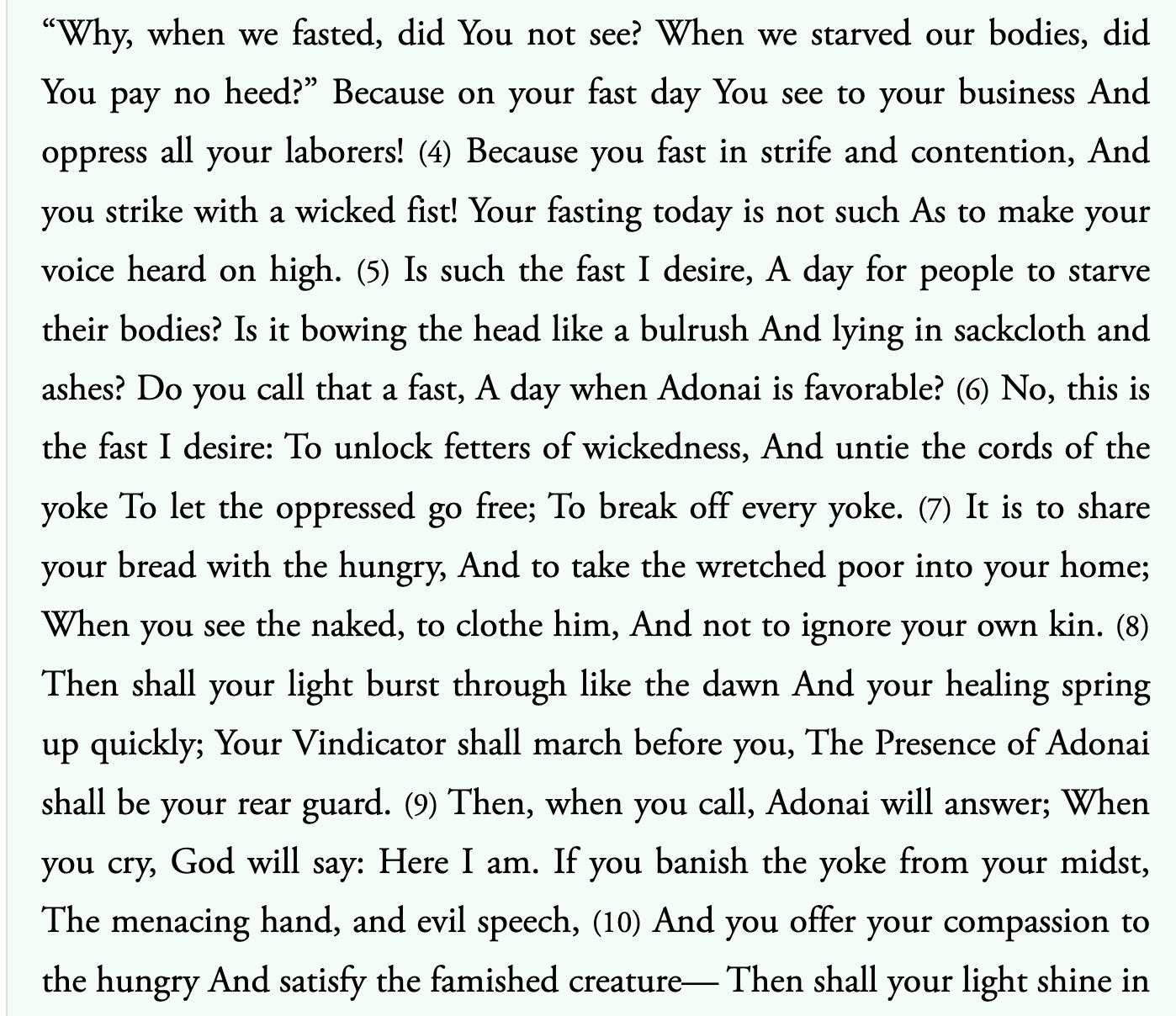
“…you fast in strife and contention,” he says. “And you strike with a wicked fist! Your fasting today is not such as to make your voice heard on high. Is this the fast I desire? A day for people to starve their bodies? Is it bowing the head like a bulrush and lying in sackcloth and ashes? Do you call that a fast?”
Um.. I thought so…
But then he tells us what God does desire: …
“This is the fast I desire: To unlock fetters of wickedness. And untie the cords of the yoke. To let the oppressed go free. To break off every yoke. It is to share your bread with the hungry, And to take the wretched poor into your home. When you see the naked, to clothe him, And not to ignore your own kin.”
Reading this in 2026/5787 is… tough. If we solely take the verses at face value we may see little that is relevant to us. How often do we have the chance to break off a yoke, share our bread with the hungry, or clothe the naked? And surely we would if the opportunity arose!
But we don’t have the luxury of pretending the words are meant to only be taken literally or that they are only incumbent upon us if we happen to see someone naked on the streets.
Like so much else in Judaism, these are proactive commandments. They demand that we seek injustice, oppression, poverty – and alleviate them.
Our Torah is filled with demands of responsibility for other people.
“Justice, justice shall you pursue.”
“Do not stand idly by the blood of your fellow.”
“You shall surely rebuke your fellow.”
“All Israel is responsible for one another.”
But this can be so hard when those suffering are not in our camp. Or worse, when it’s those in our camp causing the suffering and we choose not to see it…
As I hear across Shabbat tables “leftists,” “feminists,” “Arabs”…and I see on my WhatsApp groups: “Haredim,” “settlers.”
I think, How are we going to come back from this?
For the religious Zionist (Dati Leumi) community, “Do not stand by your brother’s blood” has taken on a painfully literal meaning. Our children serve in the IDF. Our spouses serve. Our neighbors disappear for months into reserve duty. Families are stretched to their breaking points. Young men and women carry a burden they may never be able to put down.
“Should your brothers go to war while you sit here?” doesn’t feel like an ancient verse anymore.
Our anger at those who refuse to share that burden is understandable.
But Yom Kippur demands action, not anger.
“What have you done about it?” one imagines the prophet asking.
If Haredi children are denied the education that would allow them to earn a living; if Haredi families live in poverty because the law that says they don’t have to serve also says they can’t work; if Haredi men have been taught that entering society will destroy the heritage of their forefathers; if Haredi women are given 90 percent of the burden and none of the representation – what is our obligation to them?
So too, Haredi society cannot look away from those within their camp who disdain the soldiers who carry burden of defending this country. It must confront those in its society who call IDF soldiers “Nazis” and chase them down the streets. It must condemn those who relegate women to the backs of buses and deny domestic violence. And it must start to see other Jews as brothers.
The national-religious community must be honest about the extremism in parts of our camp. We must be able to say – out loud – that attacking innocent Palestinians, burning property, and terrorizing families are all abhorrent.
So too, secular society must examine the disdain it holds for religion and how long that will sustain a society surrounded by those happy to watch us destroy ourselves.
And we must all be honest about the political rhetoric that is poisoning us. The fear mongering that shuts off our critical thinking, that turns us into mindless followers.
We are so good at seeing it in others – and so good at ignoring it in ourselves.
When political opponents are called “traitors,” “enemies,” or “destroyers of Israel… or democracy,” those words do not disappear after the rally or the shiur, class. They linger. They rot.
Fasting is easy.
Looking across the divisions we have created and saying, “That person is also my brother and my responsibility,” is much harder.
A God who insists that we help the donkey of our enemy that has collapsed under his burden is not a God impressed by 25-hour piety. If we need to see and feel and recognize the pain of the lowest animal of our foe under stress. If we are not allowed to say, “Magiya lo/ He deserves it,” how much more so are we not allowed to say that about a fellow Jew?
Perhaps our show of compassion, of mercy, of humanity will impact that enemy in ways we can’t imagine. But even if it doesn’t, it makes us better and moreover, it is what God wants from us.
This year, I’m going to think about how I can get a bit closer to this ideal. How I can see others as oppressed and help lift their burden. Even when their views are diametrically opposed to mine.
I have to hope that if I do the things that God asks of me, then perhaps God will consider doing the things that I ask of Him and save us from ourselves.
G’mar chatima tovah to all of you and all of Am Yisrael.