
Mamdani’s Day One Was Antizionism, Not Governance
On his very first day in office, Mamdani made his priorities clear. Instead of addressing crime, housing, or basic needs for New Yorkers, he focused his attention on the Jewish community by reversing existing executive orders that had adopted the IHRA definition of antisemitism and provided Jews in New York with varying degrees of protection against antizionist harassment. But he went even further, reversing the City’s ban on BDS.
Founded in 2005, the Boycott, Divestment, and Sanctions (BDS) movement operates as one of the central delivery mechanisms of antizionism, an anti-Jewish hate movement that seeks to eliminate the world’s only Jewish state and that targets Jews in the diaspora by rebranding them as “Zionist” villains. Marketed as a peaceful civil-rights campaign, BDS, in reality, functions as a vehicle that legitimizes hostility toward Jews far beyond Israel’s borders. The consequences are not theoretical. A 2015 report by the AMCHA Initiative found that BDS activity on campus correlates with increased incidents of anti-Jewish hostility and harassment.
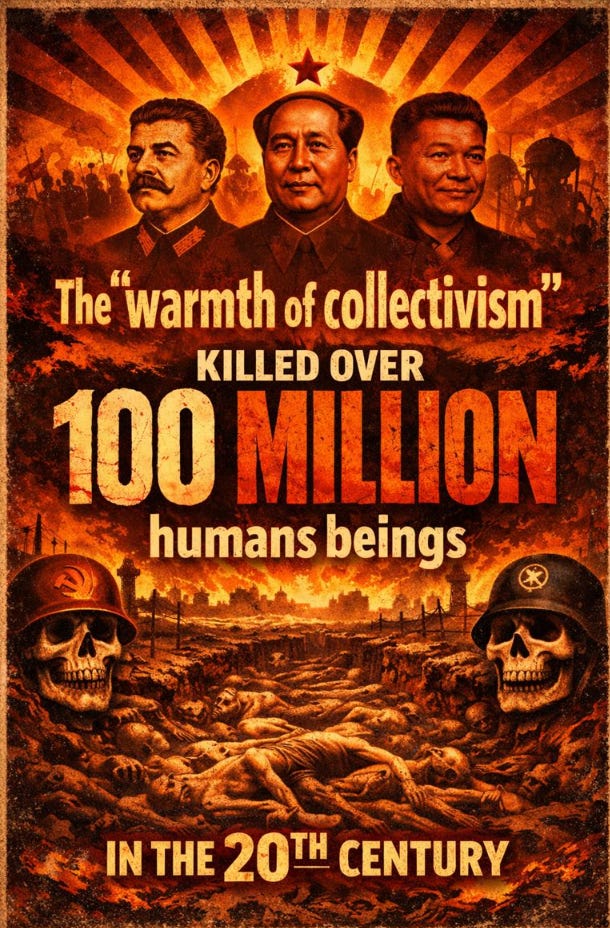
Critically, Mamdani’s overt hostility toward Jews is paired with a distinctly anti-American message. In declaring a new era in which “rugged individualism will be replaced by the warmth of collectivism,” Mamdani betrays historical ignorance: the “warmth of collectivism” killed an estimated 100 million human lives under communist regimes in the twentieth century. Furthermore, by dismissing individualism, the cornerstone of the American experiment, as “rugged,” Mamdani sends yet another clear signal and an echo from Barack Obama’s promise to “fundamentally transform America” (2008), a phrase that clearly framed individual liberty as a moral failing rather than a civilizational achievement and set in motion the undoing of the American experiment.
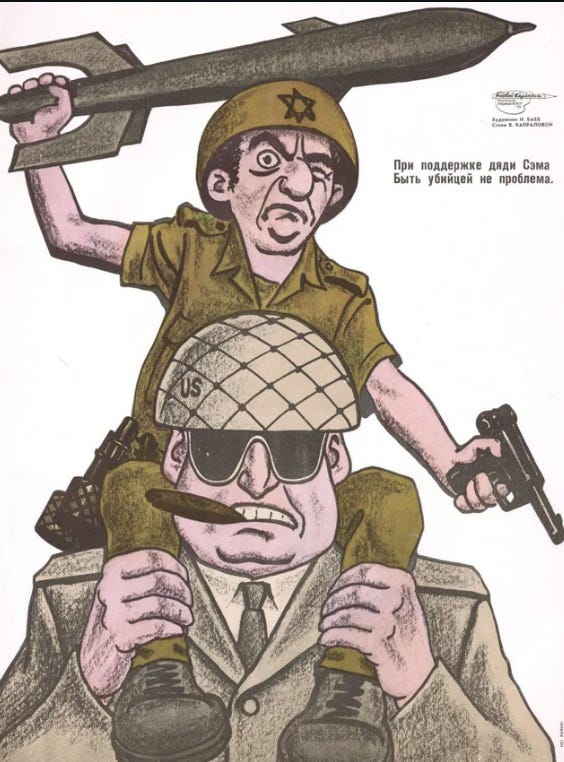
While the connection may not be immediately obvious to some, antizionism and anti-Americanism are sustained by the same ideological framework, one that demonizes the West for the “sins” of colonialism and oppression. This is not accidental. Antizionism was deliberately engineered by the Soviet Union as a tool to malign the United States and to subvert and destabilize democratic societies from within. In the aftermath of the Second World War, the Soviets scanned the global landscape and perceptively identified a growing attitude in the West toward moral self-punishment over human-rights abuses. Exploiting this impulse, they recoded Israel, and, by extension, its allies, as racist, imperialist, and even Nazi. This framing supplied anti-war and radical activists in the 1960s with a ready-made ideological toolkit, one that could be deployed not only to delegitimize Israel, but also to undermine America and the broader Western world.
Mamdani’s rise to power must thus be read not as a rupture but as a continuation of a sub-current in America that has quickly become the main wave, and we have been riding it in our schools, NGO, universities, and city halls. We are no longer confronting abstract theories or academic posturing, but sworn-in officials who now wield real power and actively shape American policy. For anyone paying any attention, these signals reveal that Mamdani is not interested in governing a diverse city, but in weaponizing public office for ideological agitation and social destabilization, and, most alarmingly, in resurrecting dangerous ideologies that have, on record, been responsible for the deaths of millions.